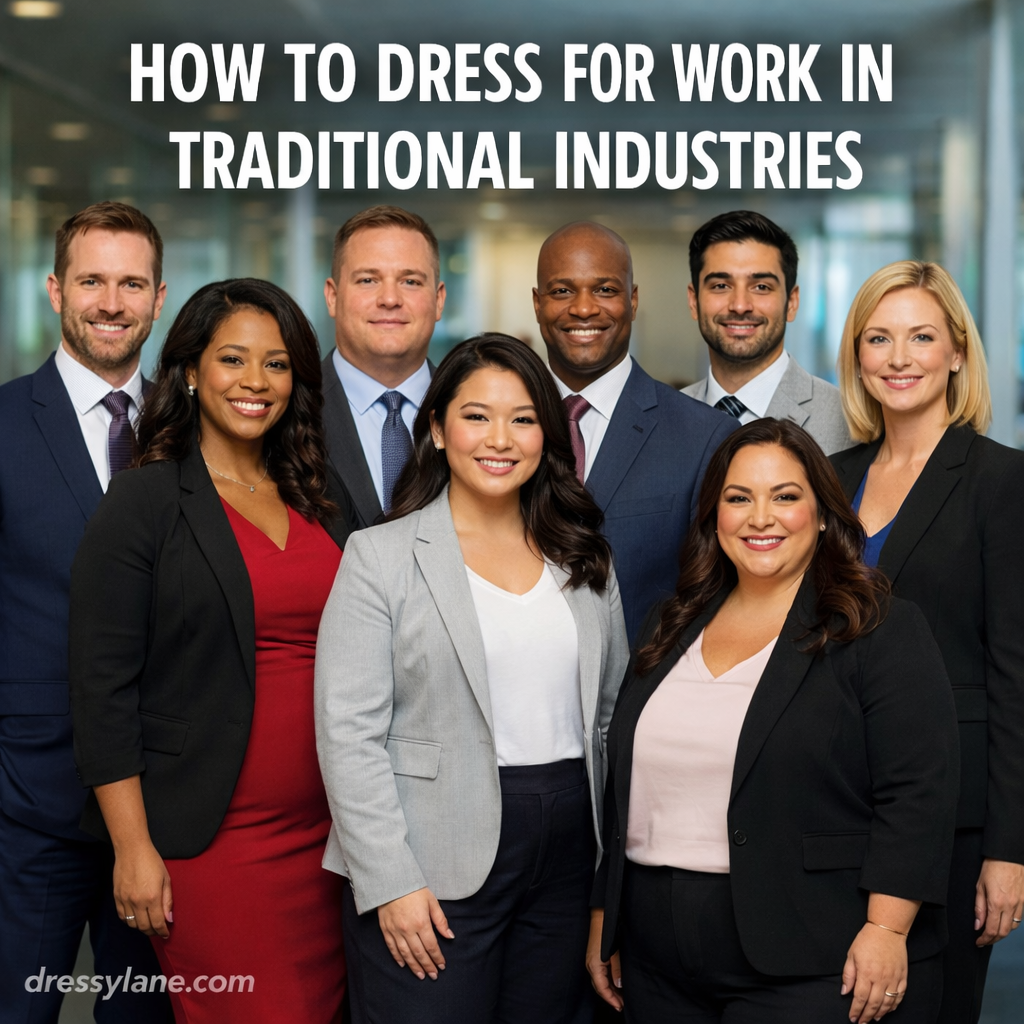
Dressing for work in traditional industries can feel restrictive at first, but understanding the expectations actually makes getting dressed easier—and more strategic. Fields like finance, law, government, corporate consulting, and legacy manufacturing still value professionalism, consistency, and subtlety over trends. The goal isn’t to stand out with fashion-forward choices, but to look competent, trustworthy, and appropriate for the environment you’re in.
This guide breaks down what “traditional” workplace attire really means today, how expectations vary slightly by industry, and how both men and women can dress well while still feeling like themselves.
What Are Traditional Industries?
Traditional industries are workplaces where conservative dress codes are still the norm. These environments often involve client-facing roles, regulatory oversight, or long-established professional cultures.
Common examples include:
- Law firms
- Banking and finance
- Accounting and consulting
- Government and public administration
- Corporate management roles
- Insurance and real estate offices
- Manufacturing leadership and operations offices
While dress codes have relaxed slightly over the years, these industries still prioritize polished, predictable, and professional clothing.
Core Principles of Dressing Professionally
Regardless of gender or role, traditional work attire follows a few universal rules.
Fit Comes First
Clothes should fit cleanly without being tight or oversized. Tailoring matters more than brand names.
Neutral Colors Are the Foundation
Navy, gray, black, beige, white, and soft blues dominate traditional offices. These colors signal professionalism and are easy to mix.
Quality Over Quantity
Fewer well-made pieces are better than a crowded closet of trendy items. Durable fabrics and clean lines age better.
Minimal Is Safer Than Bold
Accessories, patterns, and colors should enhance—not distract from—your presence and work.
How to Dress for Work as a Man
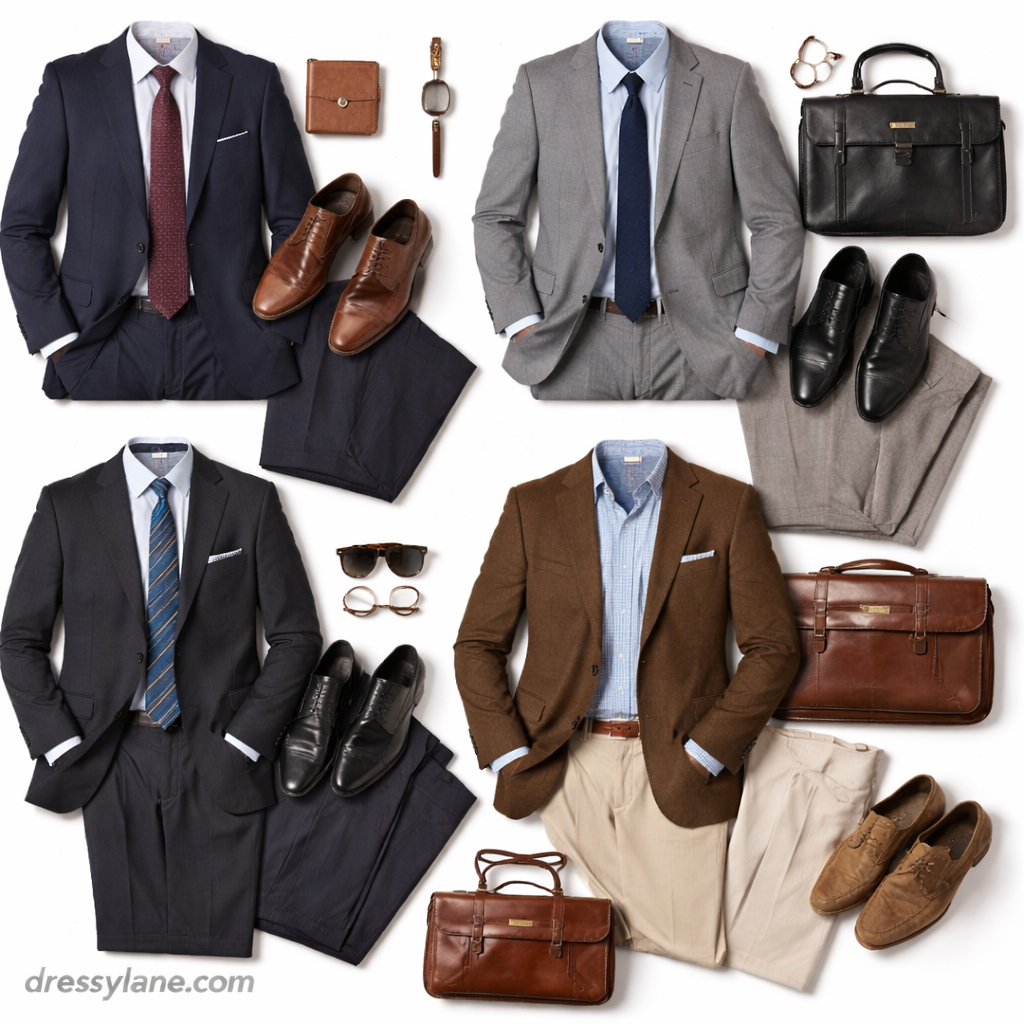
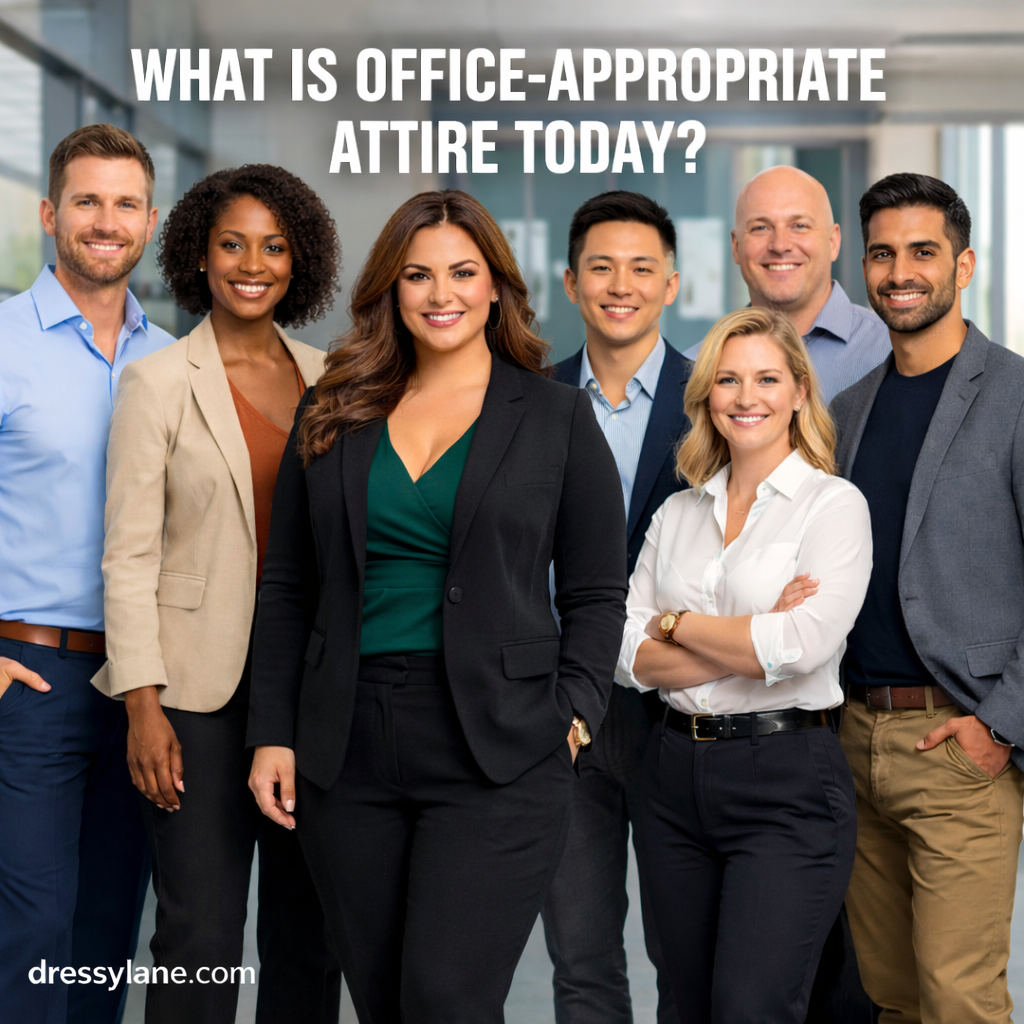
Men’s professional attire in traditional industries is structured and consistent, with subtle room for personal preference.
Essential Clothing Pieces
- Tailored suit or blazer in navy, charcoal, or gray
- Dress shirts in white or light blue
- Dress trousers with a straight or slim fit
- Leather dress shoes (oxford or derby styles)
- Coordinated belt and shoes
Smart Styling Tips
- Keep shirts pressed and collars crisp
- Avoid loud patterns or novelty ties
- Stick to dark socks that match trousers
- Grooming matters as much as clothing
What to Avoid
- Casual sneakers or loafers
- Short-sleeve dress shirts in formal offices
- Wrinkled or shiny fabrics
- Overly trendy cuts or colors
In many traditional offices, consistency builds trust. Dressing similarly day to day can actually work in your favor.
How to Dress for Work as a Woman
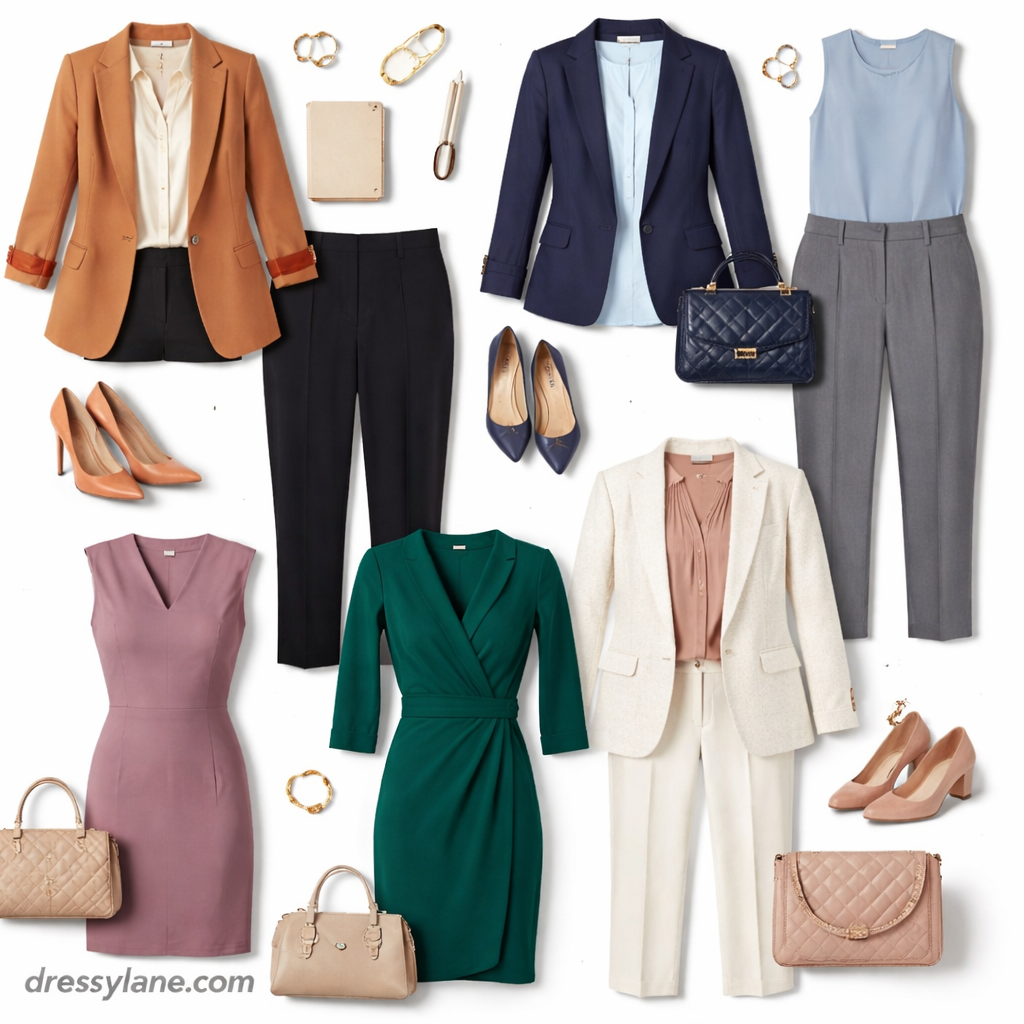
Women often have more flexibility—but also more pressure—to balance professionalism with personal style. In traditional industries, restraint is key.
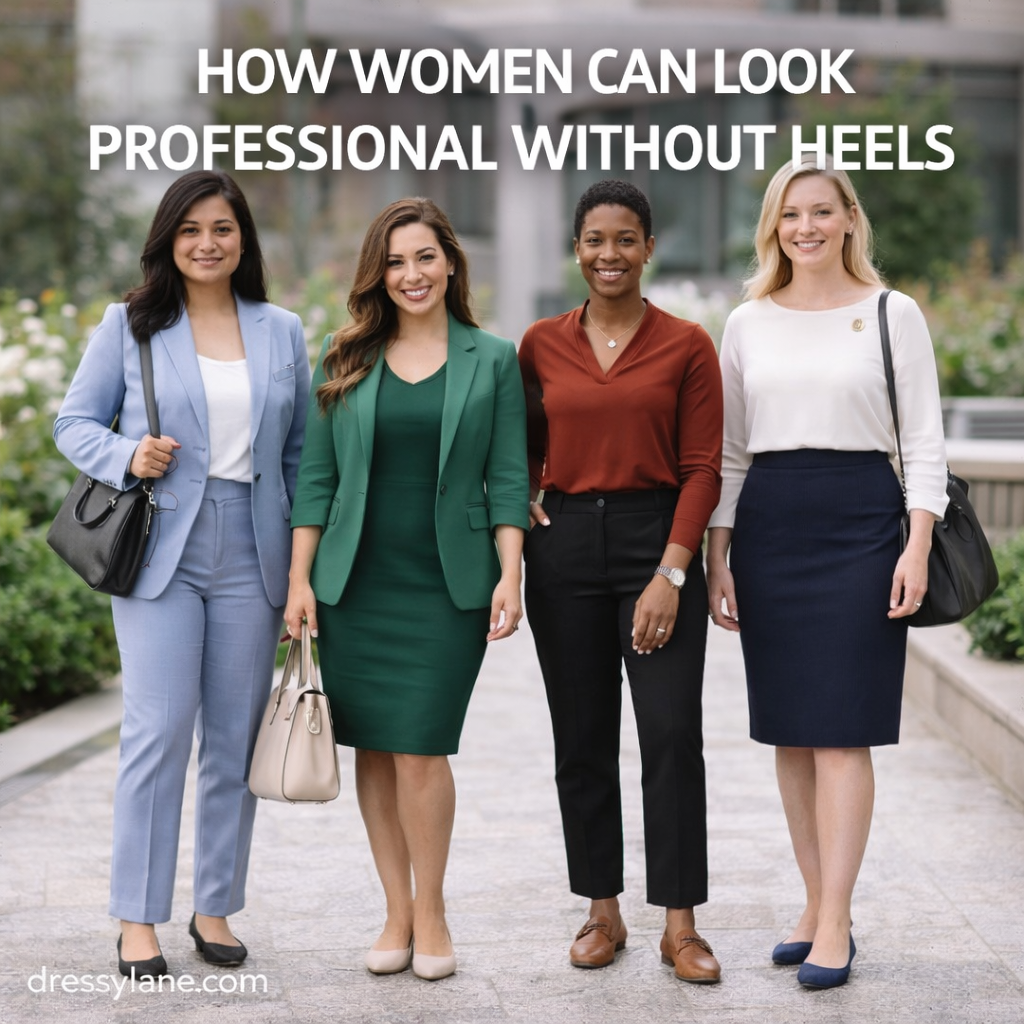
Essential Clothing Pieces
- Tailored blazer or structured jacket
- Blouses in neutral or muted tones
- Knee-length or midi skirts
- Dress pants with a straight or tapered fit
- Closed-toe flats or low heels
Smart Styling Tips
- Choose breathable, structured fabrics
- Keep necklines conservative
- Opt for subtle jewelry
- Neutral makeup and clean hairstyles read as polished
What to Avoid
- Overly tight or revealing clothing
- Casual fabrics like jersey or denim
- Loud prints or bright colors
- Excessive accessories or fragrances
Professional doesn’t mean dull—it means intentional. A well-fitted blazer or elegant blouse can still express personality within boundaries.
Industry-Specific Expectations
Even within traditional industries, dress codes can vary slightly.
Law and Finance
These fields are the most conservative. Full suits, formal shoes, and muted colors are standard—especially in client-facing roles.
Corporate Offices
Business professional or business formal is common, though some offices allow business casual later in the week.
Government Roles
Expect conservative dress with minimal variation. Clean, neat, and understated is always appropriate.
Manufacturing and Operations Leadership
Office staff may dress business casual, but still lean professional—especially in leadership or management roles.
Business Casual vs Business Professional
Understanding the difference helps avoid underdressing.
Business professional typically includes:
- Suits or coordinated blazers
- Formal shoes
- Structured silhouettes
Business casual may allow:
- Blazers without ties
- Dress pants without full suits
- More flexibility in colors and patterns
When unsure, dress slightly more formal than required—it’s easier to relax later than to recover from being underdressed.
Seasonal Dressing Without Breaking the Rules
You can adapt to the seasons while staying professional.
Warm Weather
- Lightweight wool or cotton blends
- Lighter shades of gray or blue
- Breathable dress shirts and blouses
Cold Weather
- Layer with structured coats
- Stick to darker neutrals
- Use scarves and gloves sparingly and professionally
Seasonal comfort should never override polish.
Final Thoughts
Dressing for work in traditional industries is less about fashion and more about signaling reliability, competence, and respect for the workplace culture. Once you understand the expectations, building a professional wardrobe becomes simpler and more efficient.
By focusing on fit, neutral colors, and timeless pieces, both men and women can dress confidently without sacrificing comfort or individuality. In conservative environments, consistency and subtlety are powerful tools—and when done right, your clothing quietly supports your career rather than distracting from it.