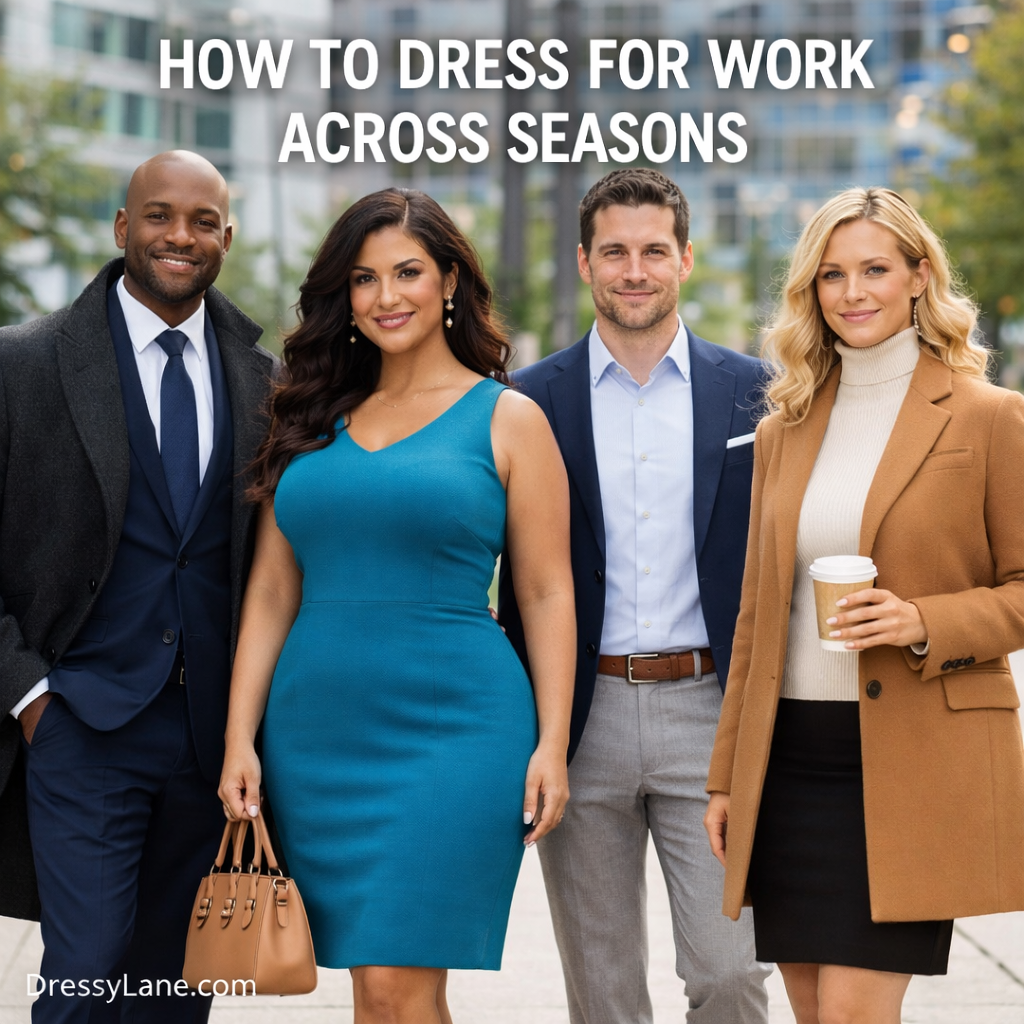
Dressing for work isn’t just about professionalism—it’s also about adapting to changing seasons without rebuilding your wardrobe every few months. The goal is a flexible, polished work style that looks appropriate year-round while keeping you comfortable and confident.
This guide explains how to dress for work across seasons using smart layering, versatile fabrics, and timeless pieces, with clear guidance for both men and women.
Why Seasonal Work Dressing Matters
Seasonal dressing impacts more than comfort—it affects how put-together and capable you appear.
A season-aware work wardrobe helps you:
- Stay comfortable in varying temperatures
- Maintain a consistent professional image
- Reduce unnecessary clothing purchases
- Transition outfits easily from season to season
The smartest work wardrobes evolve with the weather instead of starting over.
Core Principles of Year-Round Work Style
Build a Seasonless Foundation First
Your core work wardrobe should work in any season.
Focus on:
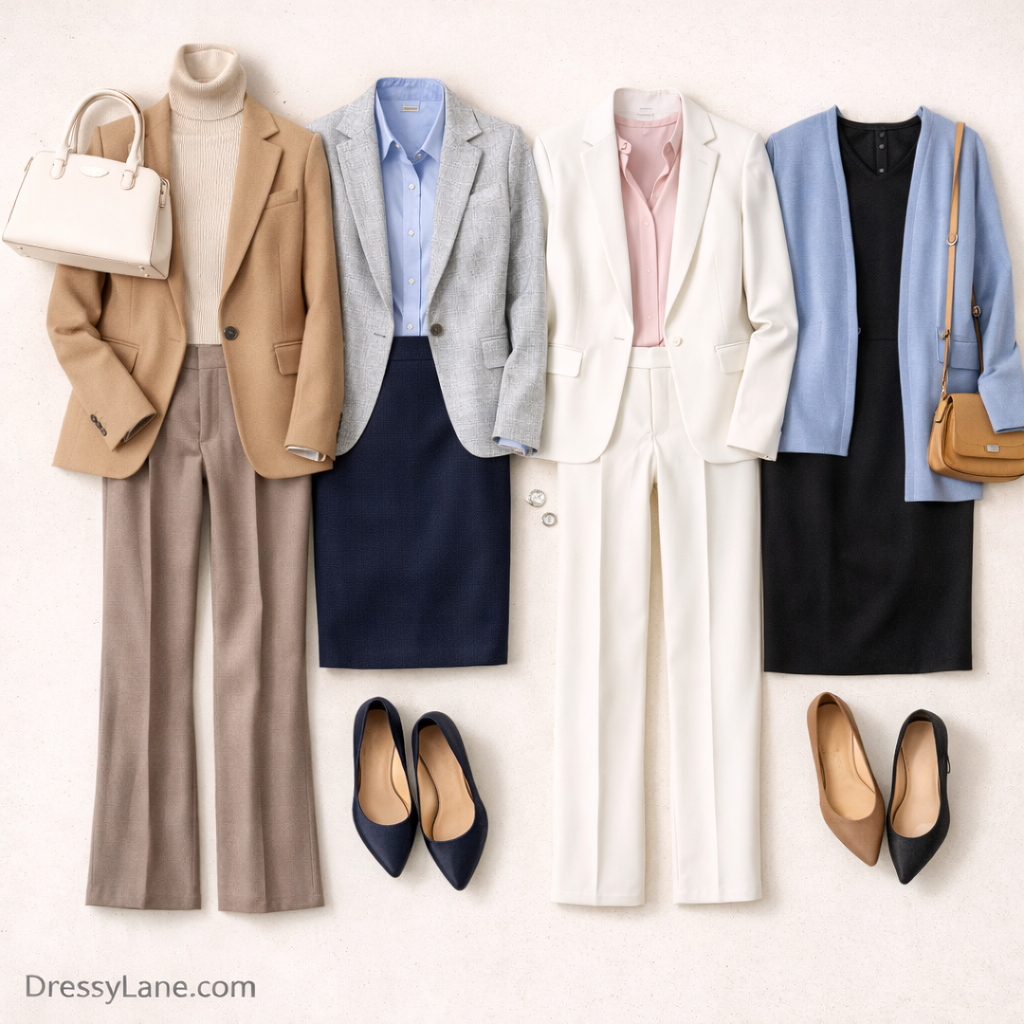
- Neutral colors like black, navy, gray, beige, and white
- Clean silhouettes that layer easily
- Pieces that look complete on their own or under layers
Once the foundation is solid, seasonal adjustments become simple.
Prioritize Layering Over Bulk
Layering allows flexibility without sacrificing polish.
Effective layers include:
- Lightweight blazers
- Fine-knit sweaters or cardigans
- Structured vests
- Tailored outer layers
Avoid overly thick items that limit movement or look heavy indoors.
Choose Fabrics That Adapt Well
Fabric choice plays a major role in year-round comfort.
Look for:
- Wool blends for temperature regulation
- Cotton and breathable synthetics for warmer months
- Stretch fabrics for comfort and mobility
- Wrinkle-resistant materials for long days
Quality fabrics help outfits transition seamlessly across seasons.
How to Dress for Work in Warm Months
Summer and warmer seasons call for lighter construction without losing structure.
Key strategies:
- Choose breathable fabrics
- Lighten color palettes slightly
- Reduce unnecessary layers
Workwear Tips for Men (Warm Seasons)
- Lightweight suits or blazers
- Crisp dress shirts or polos
- Tailored trousers in breathable fabrics
- Leather loafers or refined dress shoes
Focus on clean lines and proper fit rather than heavy layering.
Workwear Tips for Women (Warm Seasons)
- Structured dresses or skirts
- Sleeveless or short-sleeve blouses with polish
- Lightweight blazers for air-conditioned offices
- Comfortable yet professional footwear
Balance airflow with workplace appropriateness.
How to Dress for Work in Cold Months
Colder seasons allow for richer textures and more layering.
Key strategies:
- Add warmth through layers, not bulk
- Use darker, deeper tones
- Invest in quality outerwear
Workwear Tips for Men (Cold Seasons)
- Wool or structured blazers
- Layered shirts with fine-knit sweaters
- Tailored trousers with heavier fabrics
- Professional coats suitable for commuting
Layering should enhance, not hide, your outfit.
Workwear Tips for Women (Cold Seasons)
- Long-sleeve dresses and skirts
- Tailored pants with structured tops
- Sweaters layered under blazers
- Polished boots or closed-toe shoes
Choose warmth without sacrificing shape.
Transitional Dressing for Spring and Fall
Spring and fall require adaptability due to fluctuating temperatures.
Best practices:
- Keep removable layers handy
- Use scarves, light jackets, or cardigans
- Mix lighter fabrics with structured pieces
Transitional seasons reward flexibility and planning.
Creating a Seasonal Capsule Work Wardrobe
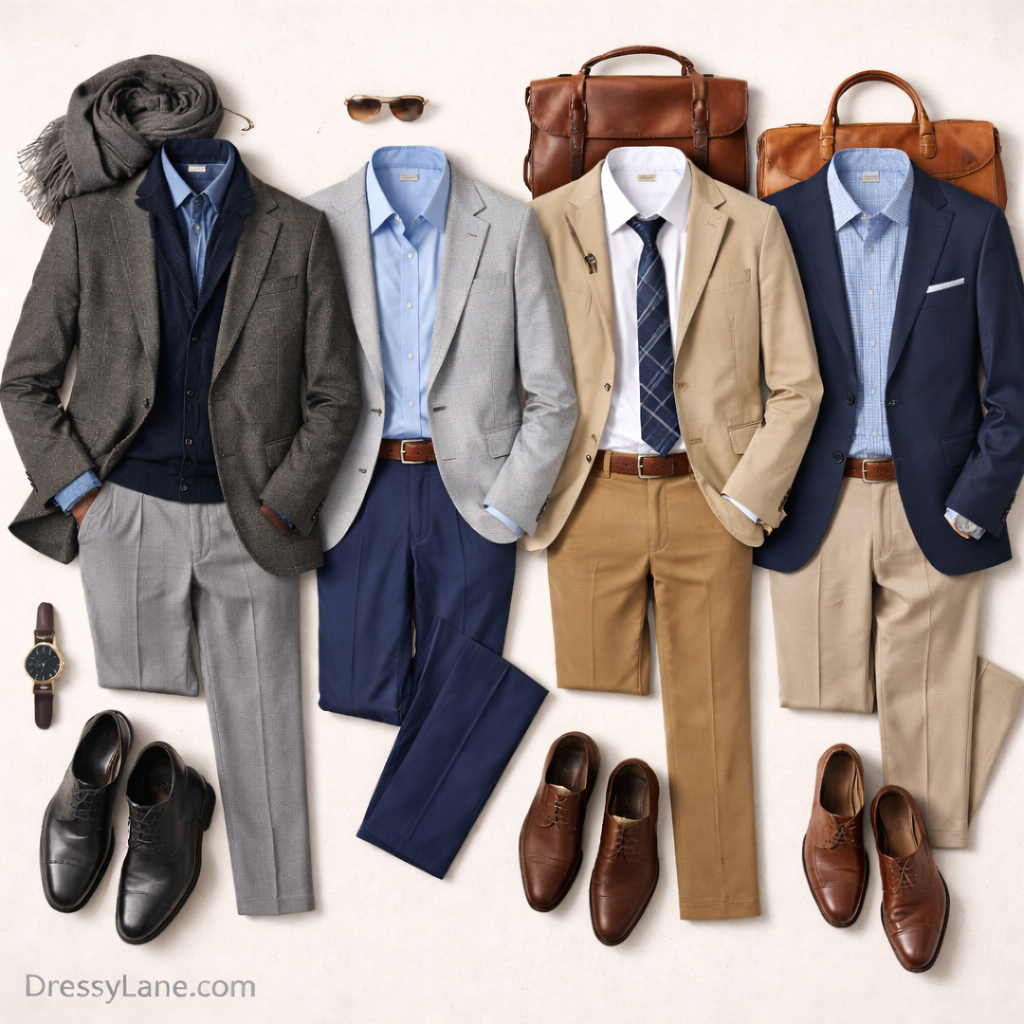
A capsule approach simplifies dressing year-round.
Include:
- 2–3 blazers
- 4–6 tops suitable for layering
- 2–3 pairs of trousers or skirts
- Season-appropriate footwear
- One reliable outer layer
This approach reduces clutter and decision fatigue.
Common Seasonal Workwear Mistakes
Avoid these issues to maintain a professional look year-round:
- Dressing too casually in warm weather
- Over-layering indoors during winter
- Ignoring fit when adding layers
- Wearing fabrics that wrinkle easily
Seasonal adjustments should feel intentional, not reactive.
Final Thoughts
Dressing for work across seasons doesn’t require constant shopping or dramatic style changes. By building a versatile foundation and adjusting with smart layers, fabrics, and accessories, you can maintain a professional appearance all year long.
The best work wardrobes are adaptable, intentional, and designed to support both your comfort and your career.