Introduction
Travel rarely goes exactly as planned. Flights get delayed, weather shifts, schedules change, and activities get added or canceled at the last minute. Dressing for travel when plans change means choosing outfits that stay comfortable, adaptable, and presentable no matter how the day unfolds. This guide shows how to dress smartly for unpredictable travel days without overpacking or sacrificing style.
Why Flexible Travel Dressing Matters
When plans change, your outfit becomes part of the problem—or part of the solution.
Flexible travel outfits help you:
- Move comfortably through long or unexpected days
- Transition between activities without changing clothes
- Handle weather or temperature shifts
- Look put-together in unplanned settings
- Reduce stress when schedules change
The right clothing keeps you prepared without thinking ahead for every scenario.
Start With Adaptable Core Pieces
The foundation of flexible travel dressing is choosing pieces that work in multiple situations.
Strong core travel items include:
- Neutral tops that layer easily
- Comfortable pants with a polished fit
- Lightweight outer layers
- Shoes suitable for walking and sitting
- Accessories that add or reduce polish
Avoid items that only work for one activity or setting.
Dress in Layers That Adjust Easily
Layering is essential when plans and environments change.
Effective travel layering includes:
- Lightweight jackets or overshirts
- Cardigans or thin sweaters
- Scarves that add warmth or style
- Breathable base layers
Layers allow you to adapt to planes, airports, outdoor walking, and indoor venues without discomfort.
Choose Fabrics That Perform Well All Day
Fabric choice matters more than style when plans stretch longer than expected.
Look for fabrics that:
- Breathe and regulate temperature
- Resist wrinkles
- Stretch slightly for movement
- Dry quickly if needed
Avoid stiff, heavy, or delicate fabrics that limit comfort or flexibility.
How to Dress for Travel When Plans Change (Women)
Clothing That Transitions Easily
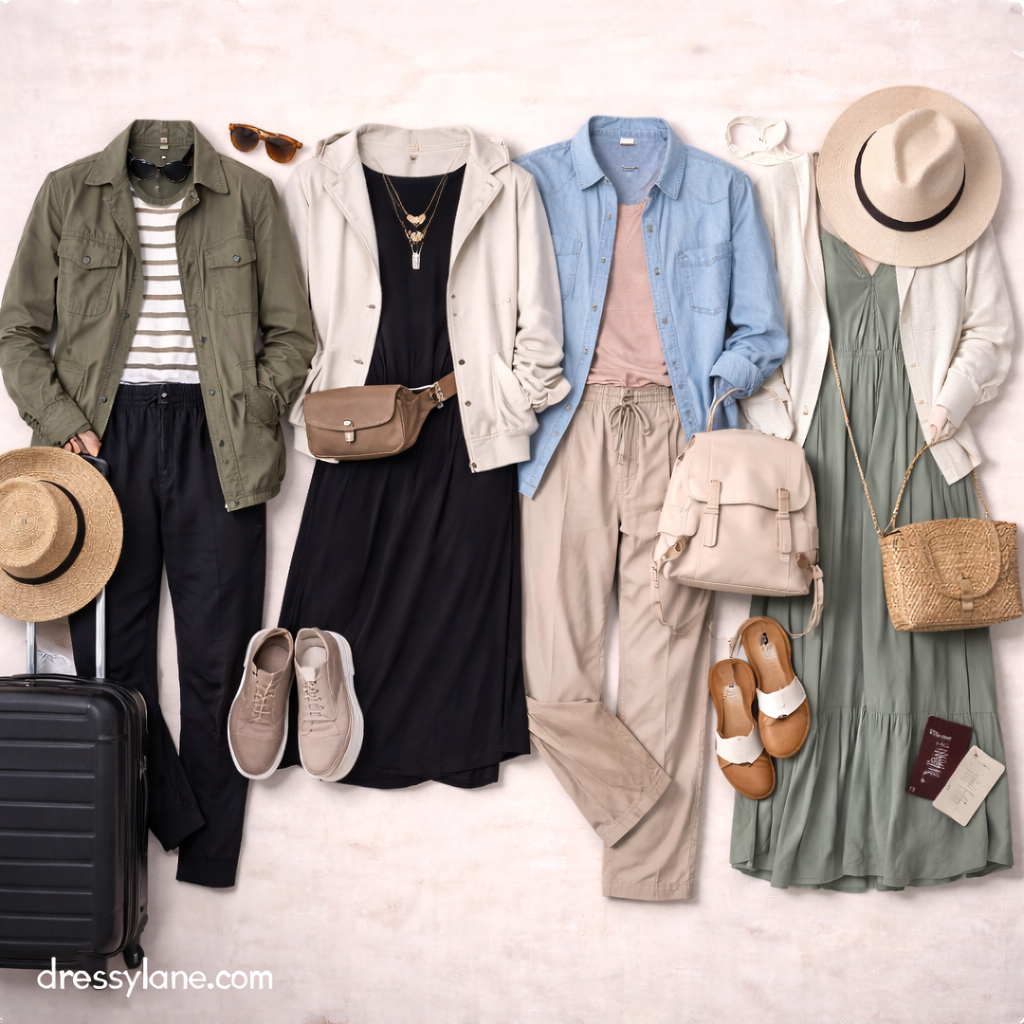
Women benefit from versatile silhouettes that work across settings.
Reliable options include:
- Dresses that layer with jackets or sweaters
- Tailored pants that feel comfortable for sitting
- Neutral tops that work day or night
- Lightweight knits or structured cardigans
Avoid outfits that feel restrictive or require specific shoes or accessories.
Shoes That Can Handle the Unexpected
Shoes often determine how adaptable your outfit is.
Smart travel shoe options include:
- Clean, comfortable sneakers
- Flats or low-profile sandals
- Ankle boots suitable for walking
Choose shoes that can handle delays, extra walking, or casual dining without discomfort.
Accessories That Add Flexibility
Accessories can change the tone of an outfit quickly.
Useful travel accessories include:
- Scarves for warmth or polish
- Crossbody bags for hands-free movement
- Simple jewelry that travels well
Small details help outfits adapt without extra packing.
How to Dress for Travel When Plans Change (Men)
Versatile Clothing Essentials
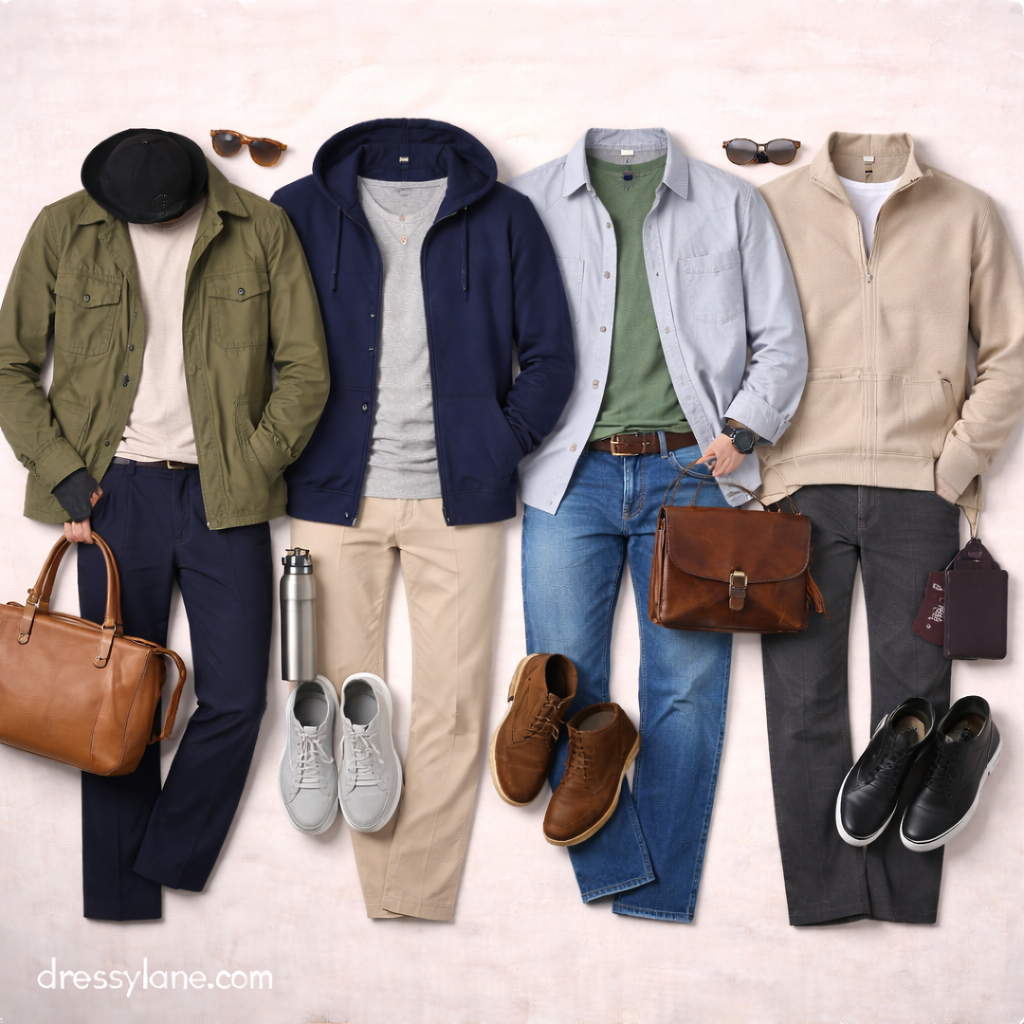
Men’s travel outfits should focus on adaptability.
Strong choices include:
- Neutral shirts that layer easily
- Lightweight jackets or sweaters
- Chinos or versatile trousers
- Dark denim when appropriate
Avoid overly formal or overly casual pieces that limit flexibility.
Shoes That Balance Comfort and Style
Men’s shoes should support long days and varied settings.
Good options include:
- Clean leather or hybrid sneakers
- Casual loafers with supportive soles
- Comfortable boots for cooler climates
Avoid shoes that only work in one scenario.
Layers That Elevate or Relax the Look
Layering helps adjust to unplanned changes.
Helpful layers include:
- Zip-up jackets
- Lightweight blazers
- Fine-gauge sweaters
Layers allow you to dress up or down without changing outfits.
Plan for Temperature and Schedule Changes
Unpredictable travel often means changing environments.
Helpful strategies include:
- Dressing for the coldest part of the day
- Carrying a light layer even in warm climates
- Avoiding outfits that rely on one temperature range
Prepared layering prevents discomfort.
Common Travel Dressing Mistakes When Plans Change
Avoid these common issues:
- Wearing outfits that require frequent adjusting
- Packing clothes that don’t mix together
- Choosing shoes that can’t handle delays
- Dressing only for one planned activity
Flexibility should guide every outfit choice.
Final Thoughts
Dressing for travel when plans change is about preparation, not prediction. By choosing adaptable layers, versatile pieces, and comfortable fabrics, you can handle delays, detours, and spontaneous moments with confidence. When your clothes work with you—not against you—changing plans become easier to manage and far more enjoyable.