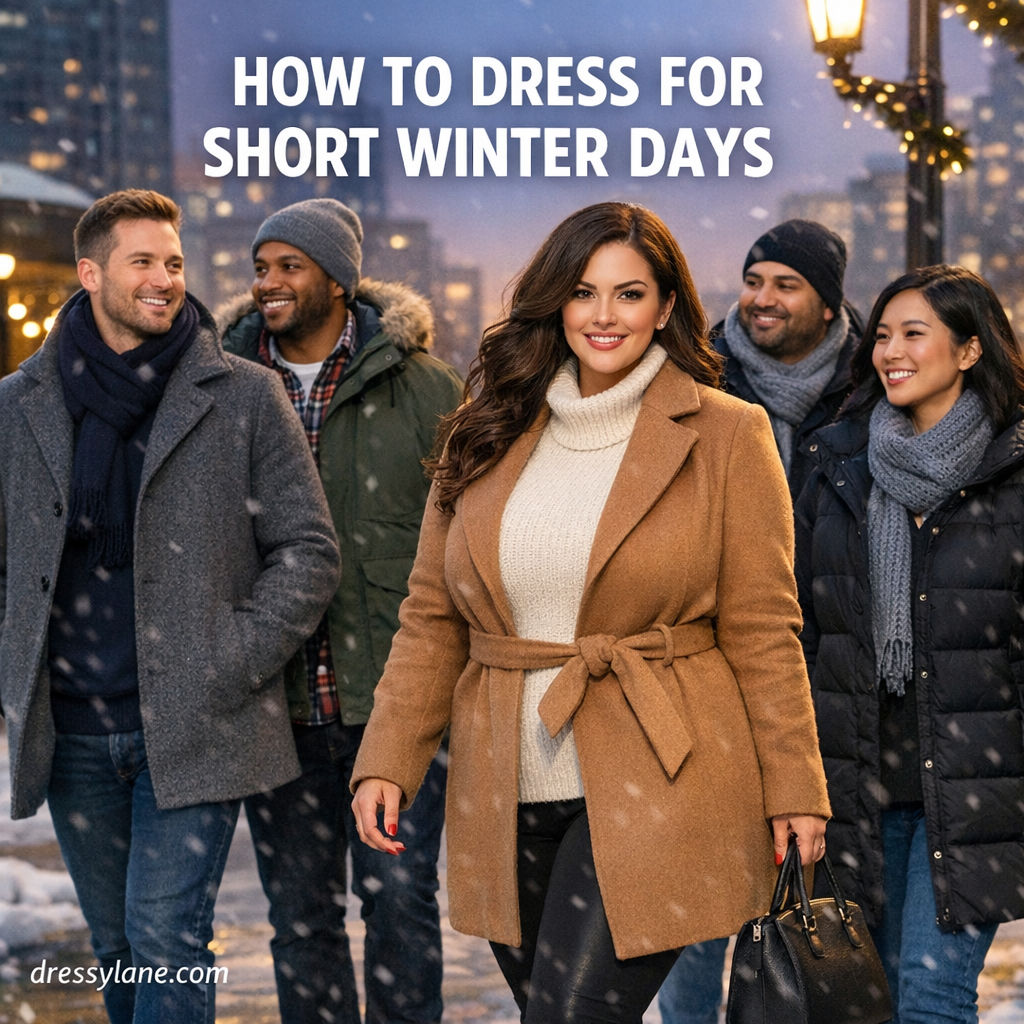
Short winter days can feel rushed and draining. Limited daylight, colder temperatures, and packed schedules mean your clothing needs to work harder—keeping you warm, comfortable, and put together from morning through evening. Dressing well during short winter days isn’t about piling on layers; it’s about choosing smart, efficient pieces that make the day feel easier.
This guide shows you how to dress for short winter days with practical, realistic outfit strategies for both women and men.
Why Short Winter Days Require a Different Approach
Short winter days often involve:
- Cold, dark mornings
- Warmer indoor environments
- Quick transitions between work, errands, and evening plans
- Limited time to change outfits
Your winter wardrobe should support warmth, mobility, and efficiency without feeling heavy or restrictive.
Build Around Efficient Layering
Layering is essential during winter, but efficiency matters.
Smart layering principles:
- Start with a breathable base layer
- Add an insulating mid-layer
- Finish with a warm, easy-to-remove outer layer
Avoid bulky pieces that are uncomfortable indoors or hard to manage during the day.
Choose Fabrics That Keep You Warm Without Weight
The right fabrics make a big difference during shorter days.
Look for:
- Wool and wool blends
- Thermal knits
- Fleece-lined fabrics
- Soft cashmere or merino layers
Avoid:
- Thin synthetics that trap moisture
- Overly heavy materials that limit movement
Warmth should feel natural, not cumbersome.
Stick to a Cohesive Winter Color Palette
Winter dressing becomes easier with a reliable color palette.
Effective winter tones:
- Black, charcoal, navy
- Camel, taupe, cream
- Deep greens, burgundy, muted blues
These colors transition easily from day to evening and pair well with winter layers.
Dressing for Short Winter Days: Women
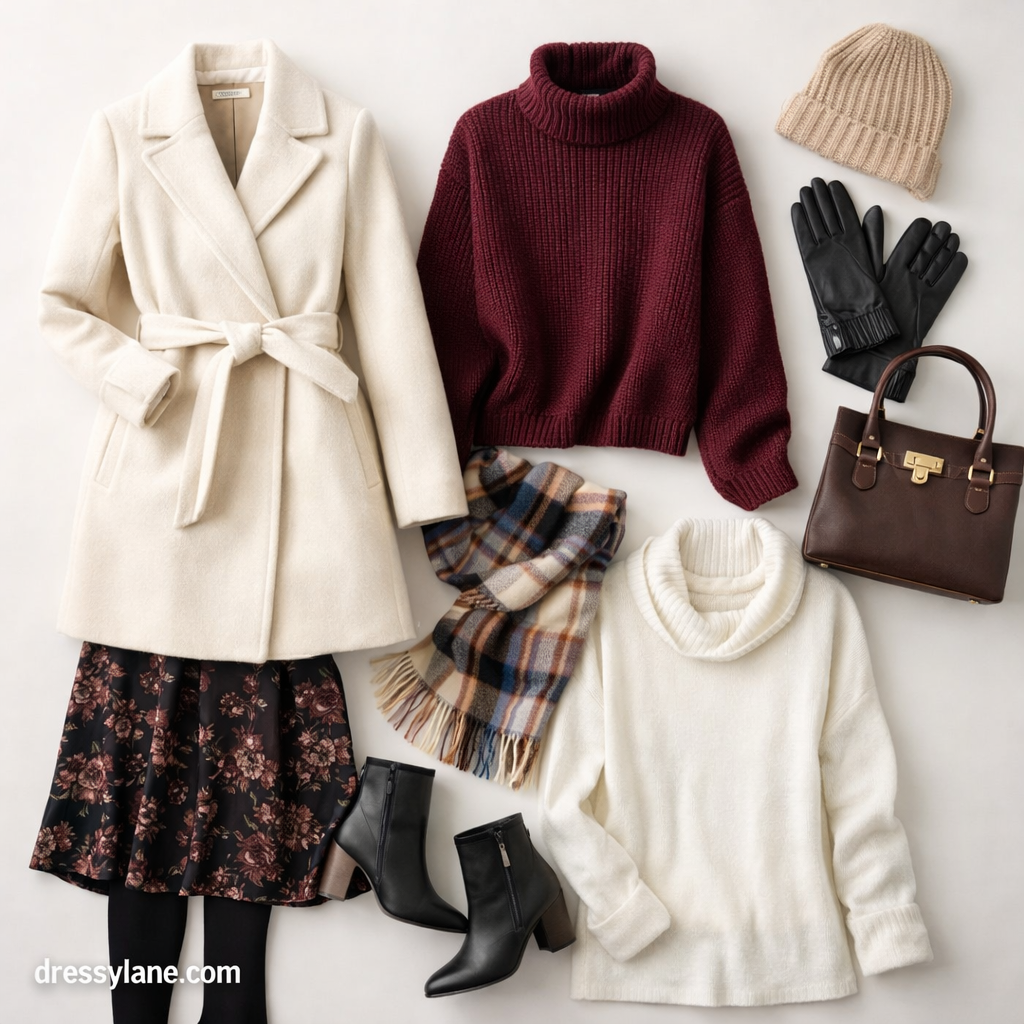
Women’s winter outfits should balance warmth with flexibility.
Go-To Winter Outfit Ideas
Reliable options include:
- Knit dress + tights + boots
- Sweater + tailored pants + ankle boots
- Midi skirt + thermal top + warm layer
- Comfortable jeans + knit top + structured coat
Choosing outfits that don’t require constant adjustment helps preserve energy.
Shoes, Accessories, and Outerwear
Shoes:
- Insulated ankle boots
- Knee-high boots
- Weather-resistant flats
Accessories:
- Warm scarf
- Gloves that allow easy movement
- Crossbody bag for hands-free comfort
Outerwear:
- Structured wool coat
- Insulated puffer for colder climates
- Easy-on layers that don’t feel bulky indoors
Dressing for Short Winter Days: Men
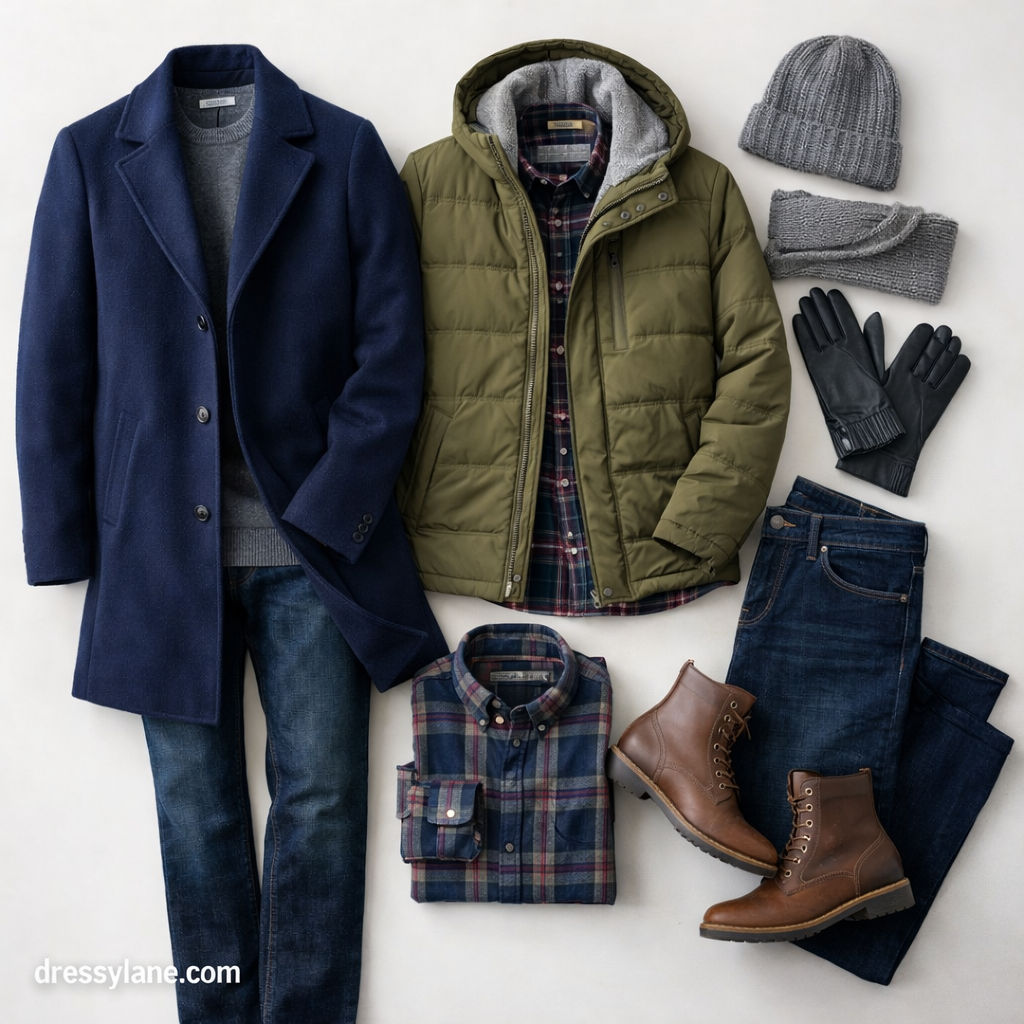
Men’s winter dressing should prioritize warmth, structure, and practicality.
Reliable Winter Outfit Formulas
Effective combinations:
- Sweater + trousers + warm coat
- Button-down + knit layer + jacket
- Thermal top + overshirt + insulated outer layer
These formulas keep you warm without adding unnecessary bulk.
Shoes, Accessories, and Outerwear
Shoes:
- Weather-resistant boots
- Insulated leather shoes
- Warm socks that don’t add bulk
Accessories:
- Gloves
- Scarf
- Watch that fits under layers comfortably
Outerwear:
- Wool coat for polished looks
- Insulated jacket for colder weather
- Lightweight layers for easy removal indoors
Plan for Indoor–Outdoor Transitions
Short winter days often mean frequent temperature changes.
Helpful tips:
- Choose layers that breathe indoors
- Avoid overly thick sweaters without ventilation
- Opt for coats you can easily carry or hang
Comfort indoors is just as important as warmth outdoors.
Common Winter Dressing Mistakes
- Over-layering without flexibility
- Wearing heavy coats indoors too long
- Ignoring comfort for warmth
- Choosing shoes not suited for winter conditions
- Dressing for cold weather only, not indoor heat
Efficiency is the key to winter comfort.
How to Simplify Winter Mornings
During short days, mornings matter.
Make dressing easier by:
- Pre-planning winter outfits
- Keeping winter staples easily accessible
- Rotating a few trusted outfits
- Investing in versatile layers
Less decision-making means more energy for the day.
Final Thoughts
Dressing for short winter days is about working smarter, not harder. With efficient layering, warm yet lightweight fabrics, and versatile outfit formulas, you can stay comfortable and confident from dark mornings through early evenings.
When your winter wardrobe supports your day instead of slowing you down, even the shortest days feel more manageable—and a lot more comfortable.