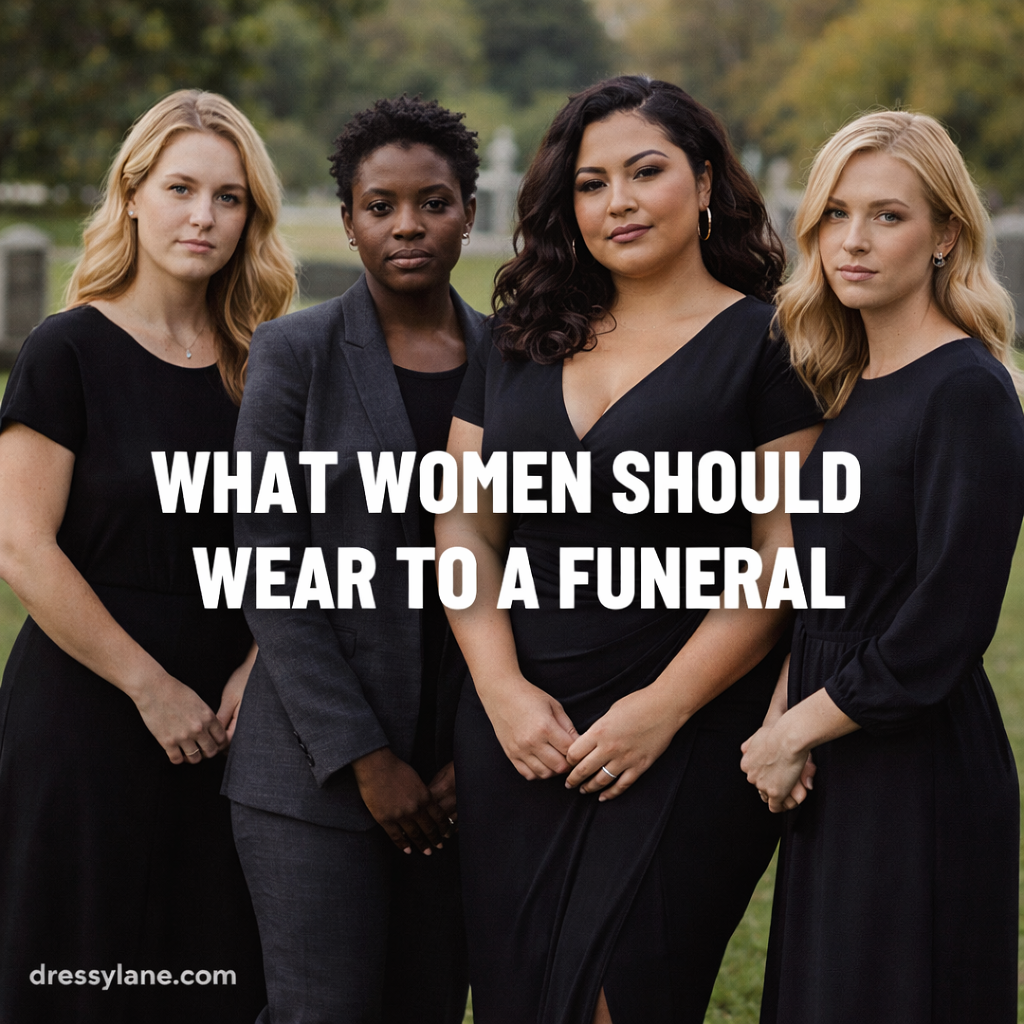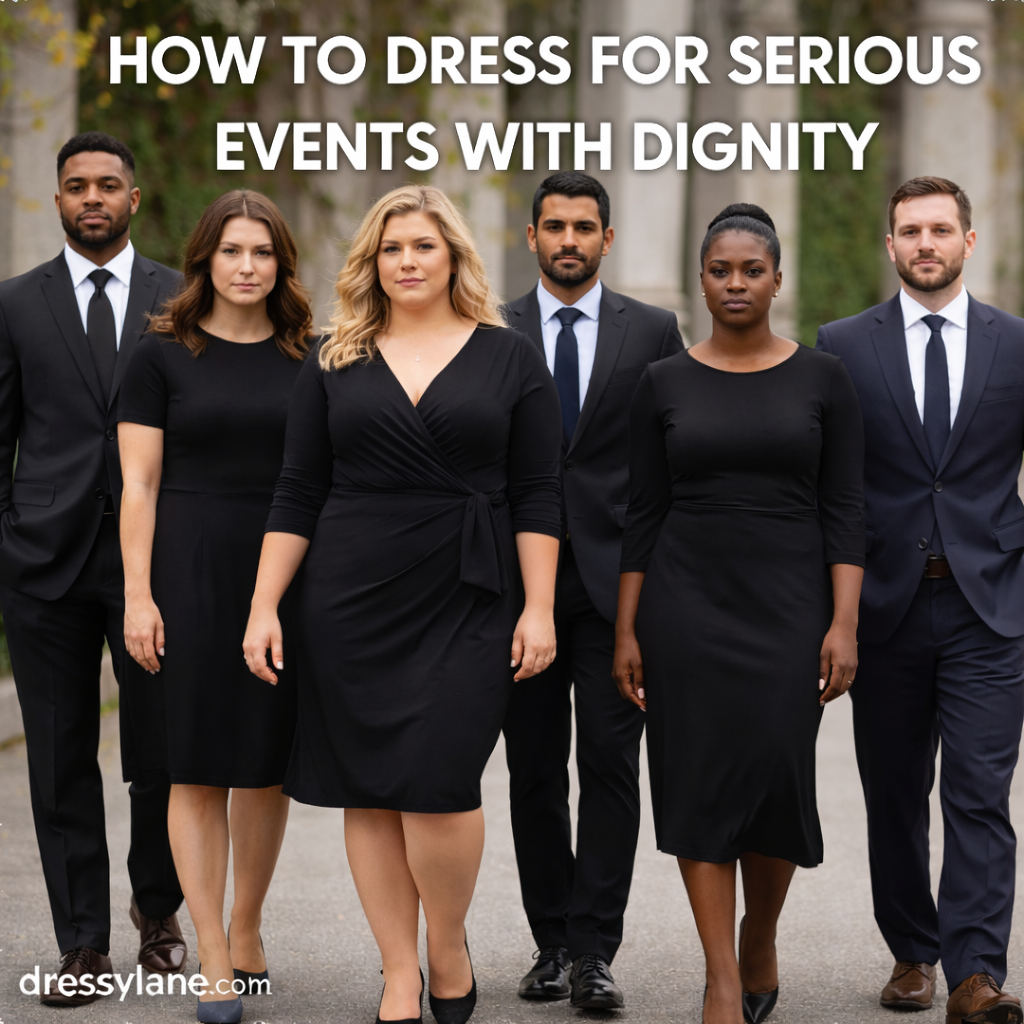
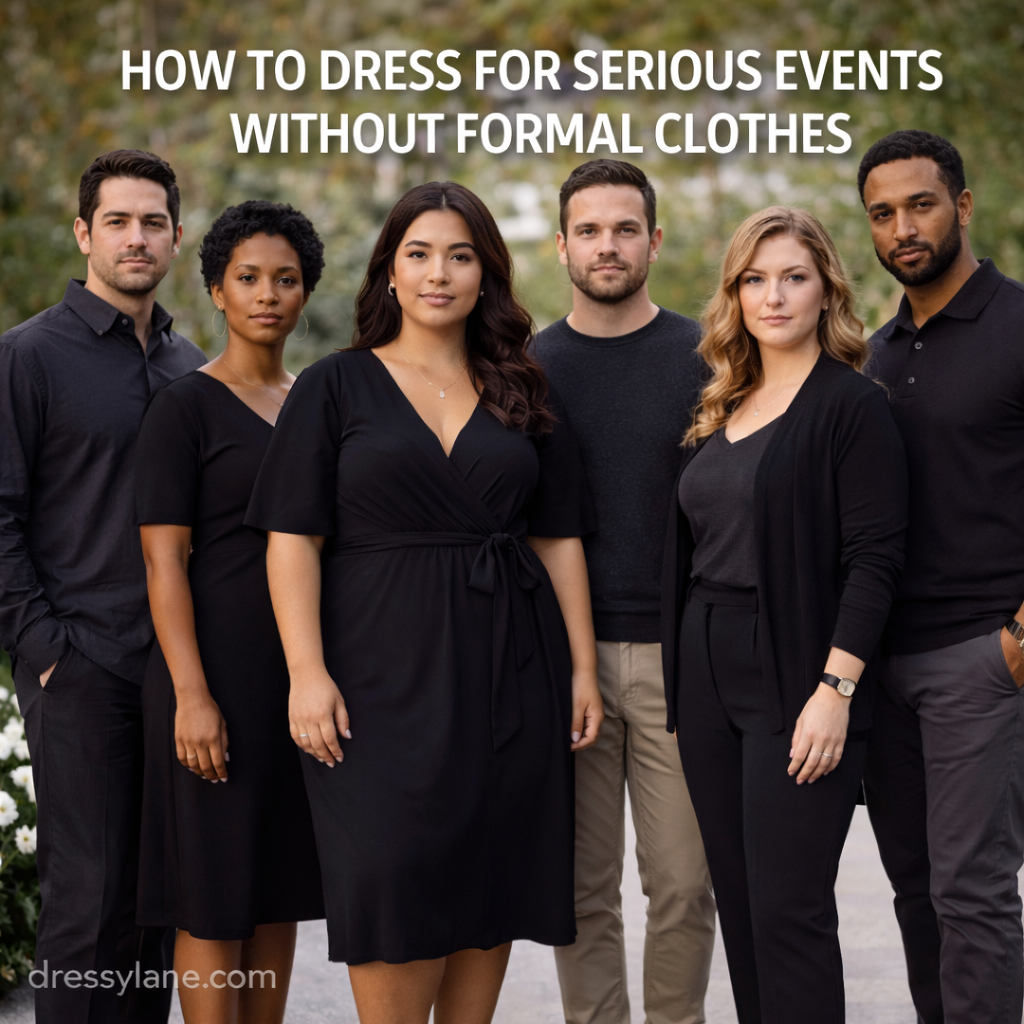
Not everyone owns formal attire like suits, tailored dresses, or dress shoes—and that’s okay. When attending serious events such as funerals, memorials, or somber family gatherings, what matters most is showing respect through thoughtful, appropriate choices, not expensive or traditional formalwear.
This guide explains how to dress for serious events without formal clothes, using simple, accessible pieces many people already own, with practical tips for both men and women.
What Matters Most at Serious Events
Serious occasions prioritize tone over trends.
Key principles to keep in mind:
- Modesty and simplicity
- Neutral, understated colors
- Clean and well-kept clothing
- Respectful silhouettes
You don’t need formal clothing—you need intention.
Choosing the Right Colors Without Formalwear
Color plays a major role in conveying respect.
Best color choices:
- Black, charcoal, gray, navy
- Dark brown or muted earth tones
- Soft neutrals like beige or taupe (when darker options aren’t available)
Avoid:
- Bright or neon colors
- Loud patterns or graphics
- Distracting logos
When unsure, darker and simpler is always safer.
How to Dress for Serious Events Without Formal Clothes (Women)
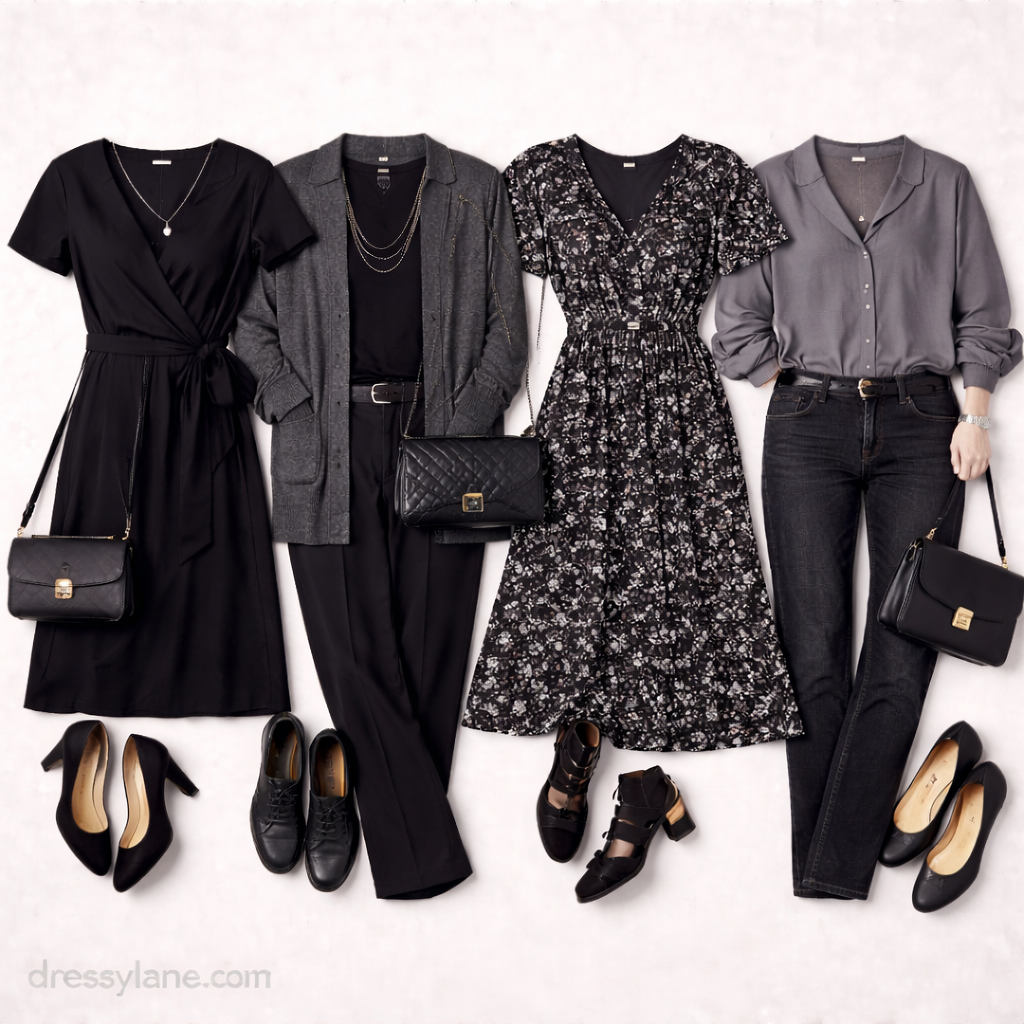
Women can create respectful outfits using everyday pieces.
Appropriate outfit options:
- Dark, modest dresses (knee-length or longer)
- Simple skirts paired with plain tops
- Dark pants with blouses or sweaters
- Cardigans or lightweight jackets for layering
Fabric and fit tips:
- Choose fabrics that drape well
- Avoid sheer or clingy materials
- Opt for relaxed but neat silhouettes
Footwear options:
- Flats, loafers, or low heels
- Closed-toe shoes in neutral colors
Accessories should be minimal and understated.
How to Dress for Serious Events Without Formal Clothes (Men)
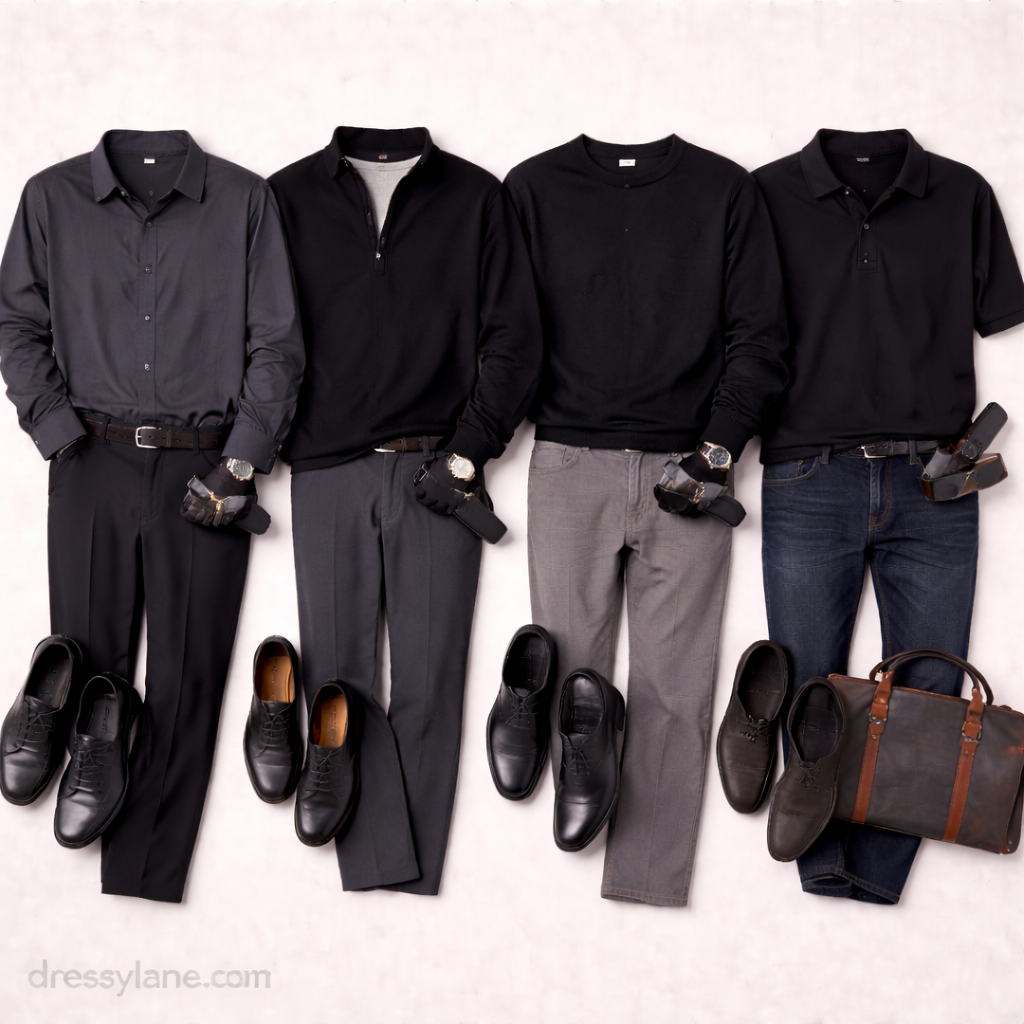
Men can dress respectfully without suits or dress shoes.
Appropriate outfit options:
- Dark slacks or clean chinos
- Plain button-down shirts or polos
- Sweaters or simple jackets
- Dark jeans if nothing else is available
Footwear options:
- Clean loafers or simple dress-style shoes
- Plain sneakers in dark, neutral colors (if appropriate)
Fit and cleanliness matter more than formality.
Using Casual Pieces in a Respectful Way
Casual clothing can still work when styled intentionally.
Helpful tips:
- Choose solid colors over patterns
- Keep layers simple and structured
- Avoid athletic wear or hoodies
- Make sure clothing is wrinkle-free and clean
Even casual pieces can look appropriate when styled thoughtfully.
What to Avoid When You Don’t Have Formal Clothes
Some items send the wrong message, regardless of circumstance.
Avoid:
- Ripped or distressed clothing
- Shorts or mini skirts
- Flip-flops or athletic sandals
- Graphic tees or slogan clothing
- Excessive jewelry or accessories
If it feels too casual for a quiet, serious setting, it probably is.
Dressing for Religious or Cultural Services
Certain services may have additional expectations.
General guidelines:
- Cover shoulders, chest, and knees
- Bring a scarf or shawl if unsure
- Avoid tight or revealing clothing
- Observe what others are wearing if possible
Respecting cultural norms matters more than personal style.
Grooming and Presentation Matter
When clothing options are limited, presentation becomes even more important.
Focus on:
- Clean hair and minimal grooming
- Neutral makeup or none at all
- Polished shoes
- Simple accessories
A neat appearance communicates care and respect.
If You’re Traveling or Short on Options
Sometimes you’re limited by what’s available.
Do your best by:
- Choosing the darkest, simplest pieces you own
- Layering to create structure
- Avoiding casual add-ons like hats or backpacks
Effort matters more than perfection.
Final Thoughts
Knowing how to dress for serious events without formal clothes removes unnecessary stress during emotionally difficult times. Respect, simplicity, and intention matter far more than owning traditional formalwear.
When in doubt, dress modestly, keep it neutral, and focus on honoring the moment—not your outfit.