Seasonal transitions can be one of the most frustrating times to get dressed. One day feels warm and sunny, the next is cool and unpredictable. Dressing for in-between weather requires balance—staying comfortable without over- or underdressing, and building outfits that adapt as conditions change.
This guide explains how to dress for seasonal transitions in a practical, low-stress way, with clear tips for both men and women. The goal isn’t to chase trends, but to build flexible outfits that work across fluctuating temperatures.
Why Seasonal Dressing Feels So Tricky
Transitional seasons like spring and fall don’t follow consistent rules. Mornings can be chilly, afternoons warm, and evenings cold again.
Common challenges include:
- Wide temperature swings throughout the day
- Changing weather patterns
- Closets split between warm- and cold-weather clothing
- Uncertainty about what layers to wear
The key is learning how to layer smartly and choosing fabrics that work across multiple conditions.
Core Principles for Dressing Between Seasons
Before focusing on specific outfits, it helps to understand the fundamentals.
Layering Is Essential
Layering allows you to adjust throughout the day without changing your entire outfit.
Effective layers include:
- Lightweight base layers
- Mid-layers that add warmth without bulk
- Outer layers that can be removed easily
Avoid heavy, rigid layers that trap heat or feel cumbersome.
Choose Transitional Fabrics
Fabric choice matters just as much as layering.
Look for:
- Cotton blends
- Lightweight wool
- Linen-cotton mixes
- Breathable knits
These materials regulate temperature better than thick synthetics or heavy winter fabrics.
Stick to Versatile Colors
Neutral, muted tones transition more smoothly between seasons.
Easy transitional colors include:
- Beige
- Olive
- Navy
- Gray
- Soft browns
These shades pair well with both lighter and darker seasonal pieces.
How to Dress for Seasonal Transitions as a Woman
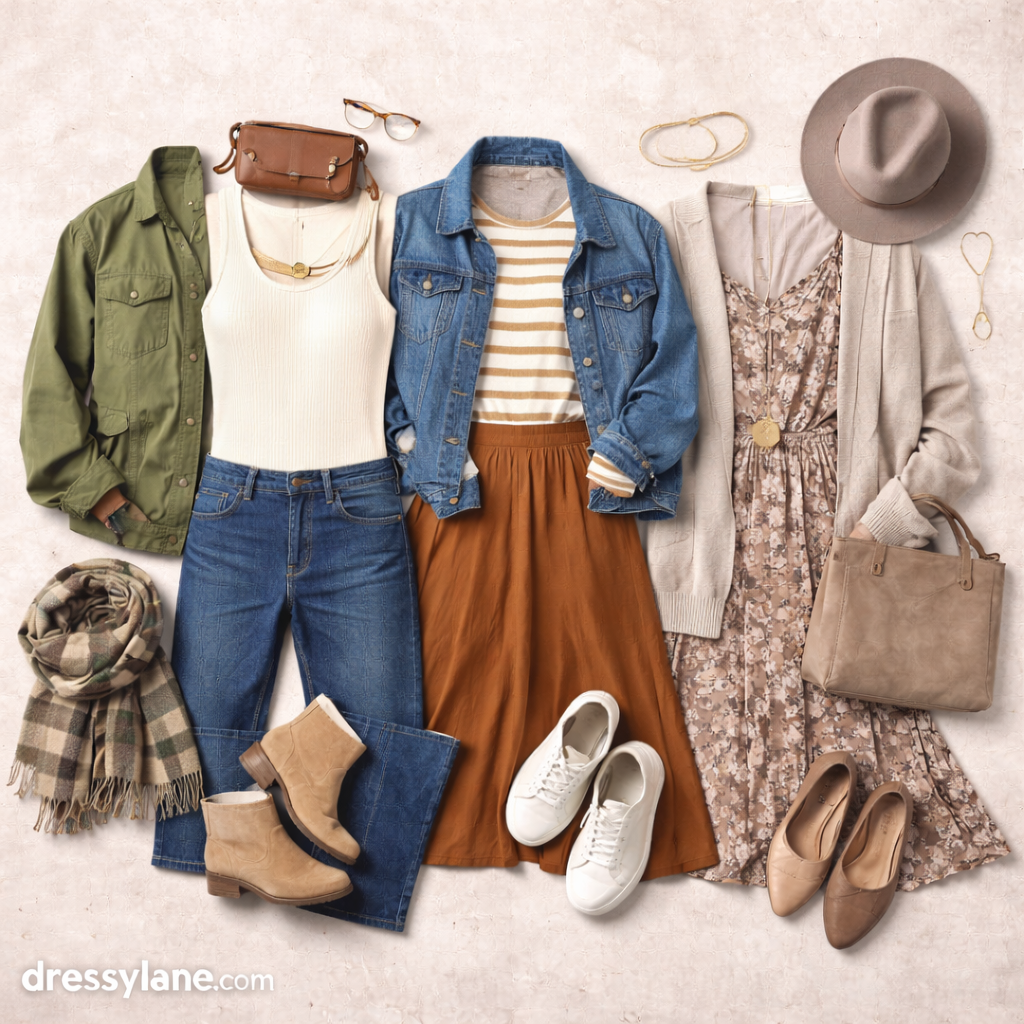
Women’s transitional outfits should focus on flexibility, layering, and comfort without sacrificing shape or style.
Tops That Work Across Seasons
- Lightweight sweaters
- Long-sleeve tees
- Breathable blouses
- Button-down shirts
These pieces can be worn alone or layered under jackets as temperatures change.
Bottoms That Adapt Easily
- Straight-leg jeans
- Relaxed trousers
- Midi skirts
- Lightweight pants
Avoid extremely heavy fabrics or very thin summer-only materials.
Dresses for Transitional Weather
Dresses can still work during seasonal changes with smart layering.
- Choose mid-weight fabrics
- Add cardigans, denim jackets, or light coats
- Pair with boots or closed-toe shoes instead of sandals
Layering Pieces to Keep Handy
- Light cardigans
- Denim jackets
- Utility jackets
- Soft scarves
These layers add warmth without overwhelming the outfit.
Footwear for In-Between Seasons
- Ankle boots
- Loafers
- Closed-toe flats
- Clean sneakers
These options handle both cooler mornings and warmer afternoons.
How to Dress for Seasonal Transitions as a Man
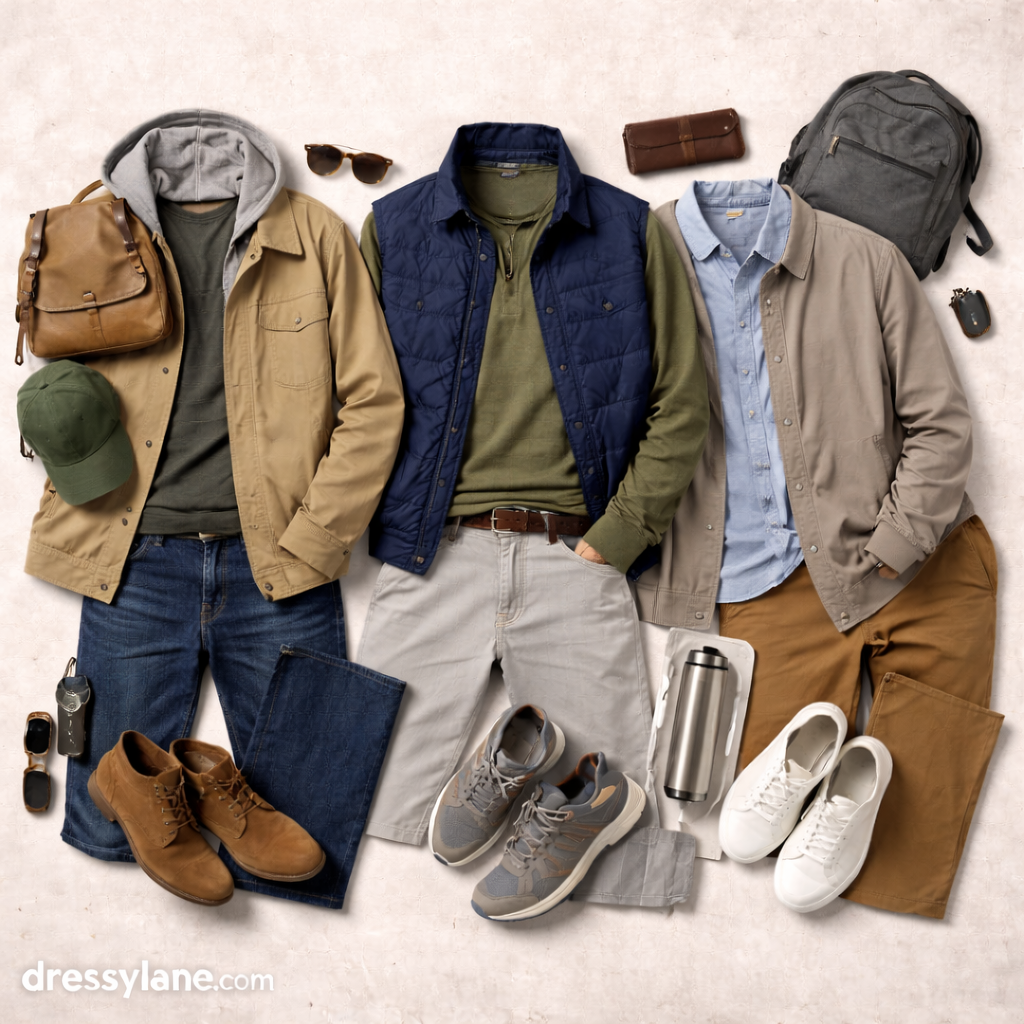
Men’s transitional style works best when it’s simple, functional, and easy to adjust.
Shirts That Transition Well
- Long-sleeve t-shirts
- Henleys
- Lightweight button-downs
- Thin knit sweaters
Avoid overly heavy flannels or thick winter knits early in the season.
Pants That Cover Multiple Conditions
- Chinos
- Medium-weight denim
- Stretch trousers
These offer warmth without feeling too heavy when temperatures rise.
Smart Layering Options
- Lightweight jackets
- Overshirts
- Zip-up sweaters
- Casual blazers
These pieces are easy to remove and re-layer throughout the day.
Transitional Footwear
- Casual leather sneakers
- Desert boots
- Loafers
- Lightweight boots
Stick to shoes that work with both casual and slightly polished outfits.
How to Layer Without Looking Bulky
Layering doesn’t mean piling on clothes.
Follow these rules:
- Start with a fitted base layer
- Add one structured mid-layer
- Finish with a lightweight outer layer
- Keep silhouettes clean and intentional
Thinner layers stacked properly look sharper than one bulky item.
Accessories That Help With Seasonal Changes
Small accessories can make a big difference.
Useful transitional accessories include:
- Lightweight scarves
- Sunglasses
- Compact umbrellas
- Simple hats
These items add function without complicating your outfit.
Common Mistakes to Avoid During Seasonal Transitions
Many outfit issues come from overcorrecting for the weather.
Avoid:
- Dressing for the coldest or warmest part of the day only
- Wearing heavy winter coats too early
- Ignoring breathable fabrics
- Choosing shoes that limit flexibility
Planning for the full day, not just one moment, leads to better outfits.
Building a Transitional Capsule Wardrobe
A transitional capsule wardrobe focuses on pieces that overlap seasons.
Key items include:
- Neutral jackets
- Versatile pants
- Lightweight knits
- Closed-toe shoes
- Layer-friendly tops
When most items work across temperatures, outfit planning becomes much easier.
Final Thoughts
Dressing for seasonal transitions doesn’t require a brand-new wardrobe. By focusing on layering, fabric choice, and versatile pieces, you can stay comfortable and confident through unpredictable weather.
The best transitional outfits adapt as the day unfolds—keeping you warm when needed, cool when temperatures rise, and always feeling put together.