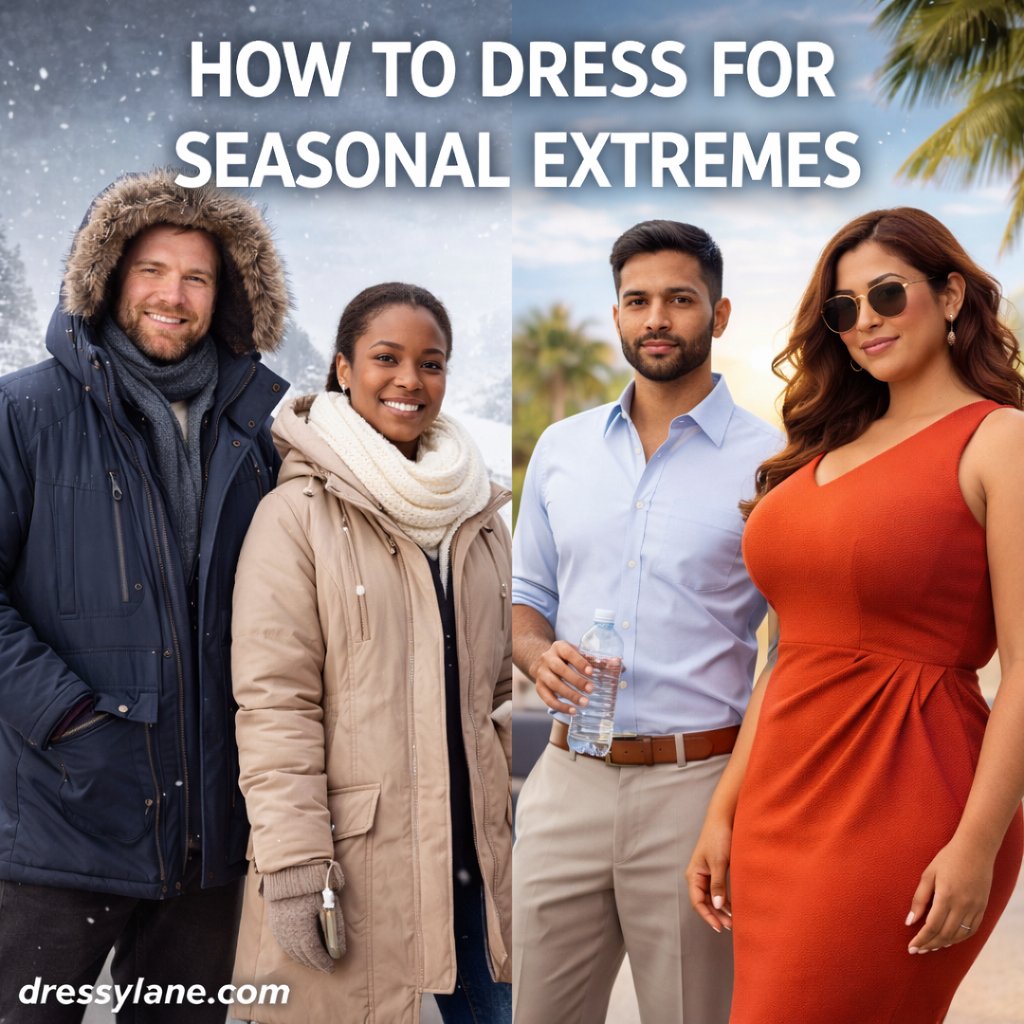
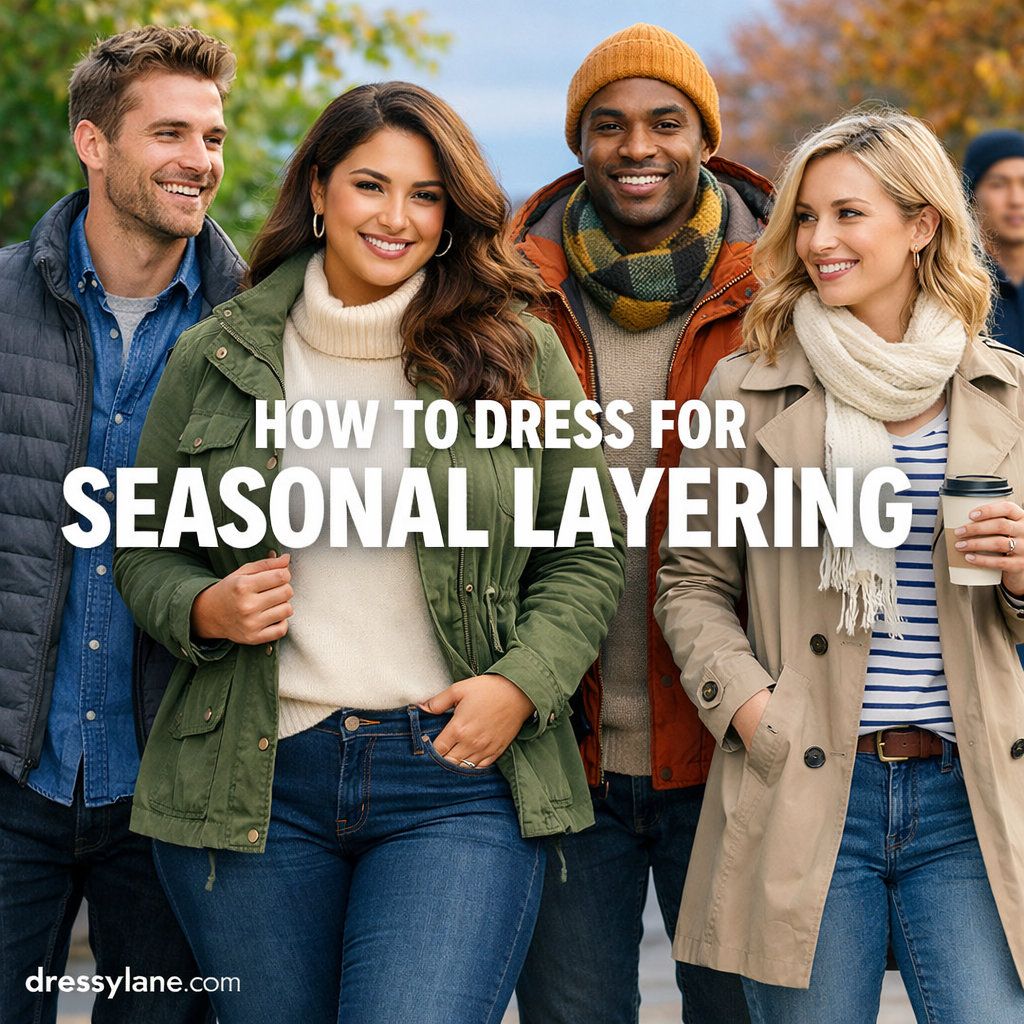
Layering isn’t just about staying warm—it’s about adapting to temperature changes, staying comfortable indoors and outdoors, and looking put together no matter the season. When done right, seasonal layering helps you regulate body temperature, extend the life of your wardrobe, and transition smoothly from morning chill to afternoon warmth.
This guide breaks down how to dress for seasonal layering in a practical, everyday way, with clear tips for both men and women.
What Is Seasonal Layering?
Seasonal layering is the practice of wearing multiple clothing layers that can be added or removed as temperatures change throughout the day or across seasons.
Instead of relying on one heavy item, layering lets you fine-tune warmth, comfort, and breathability.
A strong layering outfit is built on three core layers:
- Base layer for comfort and moisture control
- Mid layer for insulation
- Outer layer for weather protection
The Three Essential Layers Explained
Base Layer (Closest to Skin)
The base layer helps regulate body temperature and manage moisture.
Best base layer options:
- Lightweight cotton for mild weather
- Merino wool for cold or fluctuating temperatures
- Moisture-wicking synthetics for active days
Avoid heavy fabrics here—this layer should feel soft and breathable.
Mid Layer (Insulation)
The mid layer traps warmth and adds structure to your outfit.
Popular mid-layer choices:
- Sweaters
- Cardigans
- Hoodies
- Light fleece or knit pullovers
This layer is usually the first one you remove indoors.
Outer Layer (Protection)
The outer layer shields you from wind, rain, and cold.
Common outer layer styles:
- Jackets
- Coats
- Blazers
- Vests
- Lightweight shells
Choose the weight of this layer based on season and weather conditions.
How to Layer by Season
Spring Layering Tips
Spring weather changes quickly, so flexibility matters.
Smart spring layering ideas:
- T-shirt or long-sleeve base
- Lightweight sweater or overshirt
- Light jacket or trench coat
Stick to breathable fabrics and lighter colors to match rising temperatures.
Summer Layering Tips
Layering in summer is about airflow, not warmth.
Effective summer layers include:
- Thin cotton tanks or tees
- Linen button-downs
- Lightweight cardigans for indoor air conditioning
Avoid heavy knits and thick jackets.
Fall Layering Tips
Fall is ideal for layering, with cooler mornings and mild afternoons.
Fall layering staples:
- Long-sleeve base layer
- Sweater or flannel shirt
- Jacket, blazer, or light coat
This is the best season to experiment with textures and colors.
Winter Layering Tips
Winter layering focuses on warmth without bulk.
Cold-weather layering essentials:
- Thermal or wool base layer
- Insulating mid layer (fleece or heavy knit)
- Weather-resistant outer coat
Choose fitted layers to avoid feeling bulky while staying warm.
Seasonal Layering Tips for Men
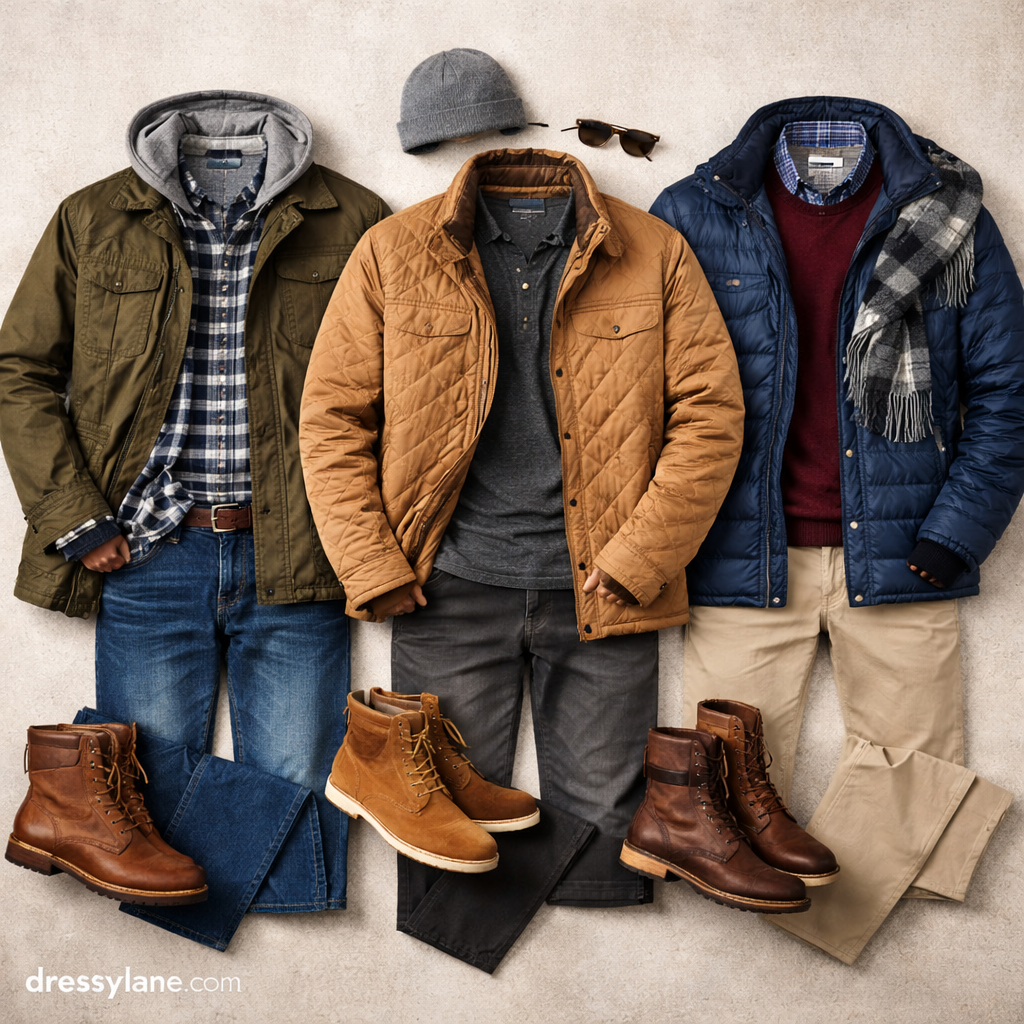
Men’s layering often balances structure with comfort.
Key tips for men:
- Start with fitted base layers to avoid bulk
- Use button-down shirts as both base or mid layers
- Add structure with jackets, overshirts, or blazers
- Stick to neutral colors for easy mixing
Layering works especially well with classic pieces like sweaters, flannels, and casual jackets.
Seasonal Layering Tips for Women
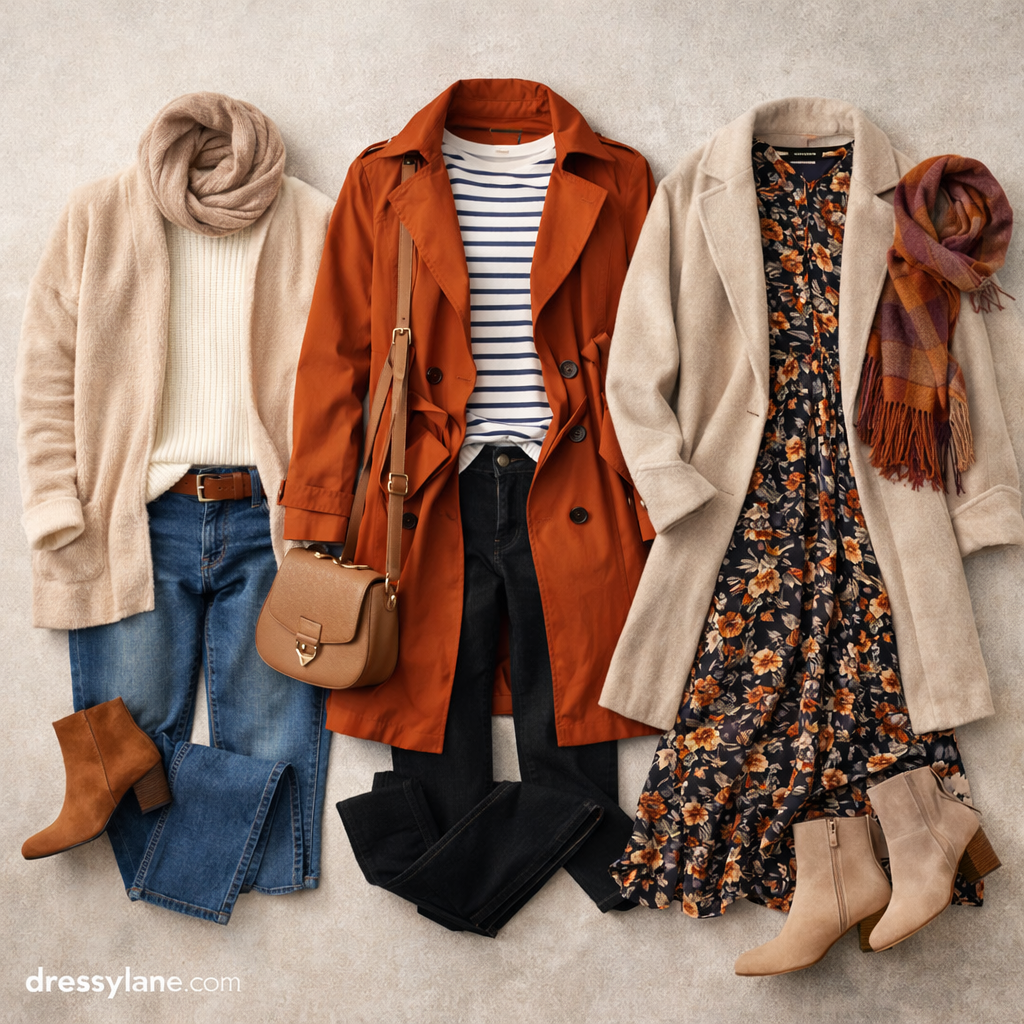
Women’s layering allows more variation in silhouettes and textures.
Helpful layering tips for women:
- Use tanks or fitted tees as flexible base layers
- Layer cardigans, wraps, or light sweaters for warmth
- Add belts or cropped jackets to define shape
- Mix soft and structured fabrics for balance
Scarves and lightweight accessories also add warmth without heaviness.
Common Layering Mistakes to Avoid
Even simple layering can go wrong if a few basics are ignored.
Avoid these mistakes:
- Wearing bulky base layers
- Ignoring fabric breathability
- Choosing layers that all hit at the same length
- Over-layering indoors
The goal is comfort and flexibility, not restriction.
Final Thoughts
Seasonal layering is one of the most practical dressing skills you can master. By understanding how base, mid, and outer layers work together—and adjusting them for each season—you can stay comfortable, stylish, and prepared year-round.
With a thoughtful approach, layering becomes less about weather survival and more about effortless everyday style.