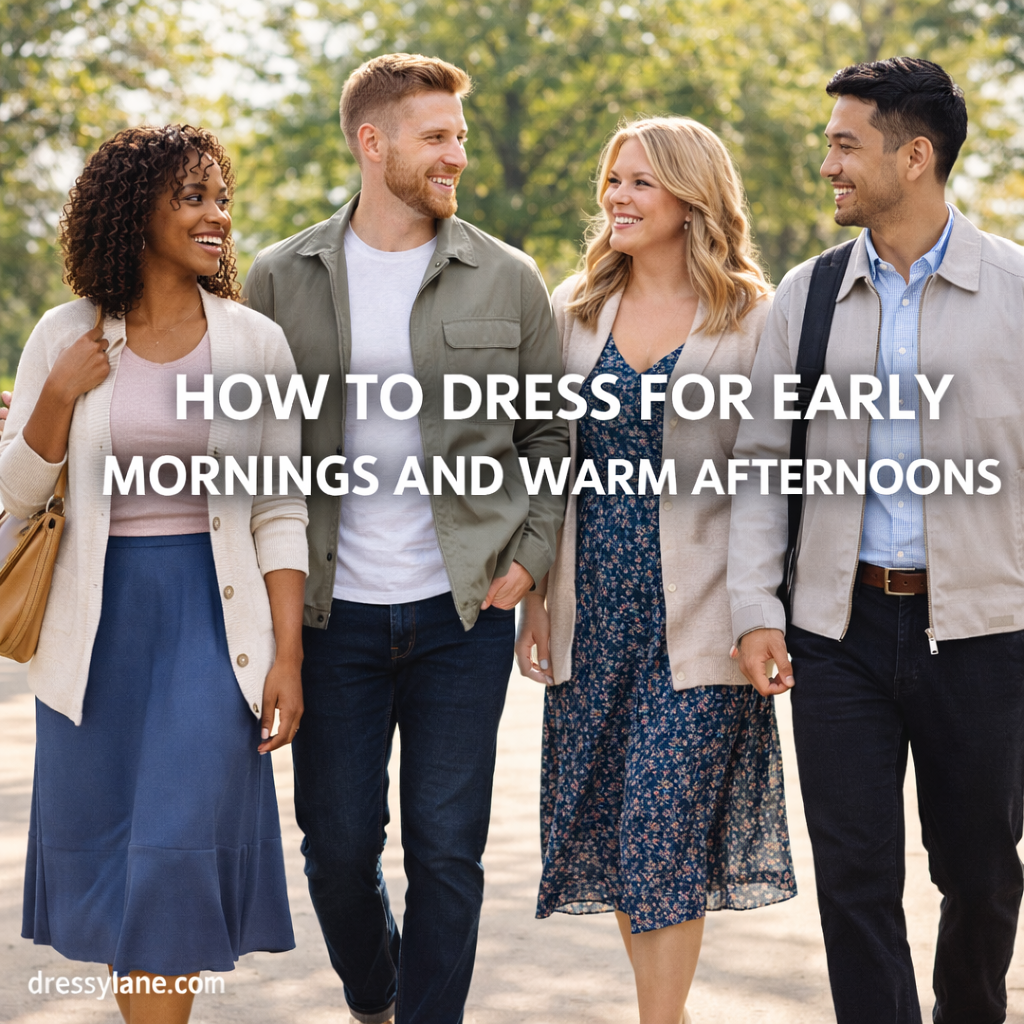
Dressing for days that start chilly and warm up quickly can feel tricky. Early mornings may call for layers and warmth, while afternoons demand lighter, breathable clothing. Knowing how to dress for early mornings and warm afternoons helps you stay comfortable all day without overpacking or constant outfit changes.
This guide breaks down practical layering strategies, fabric choices, and outfit ideas so you can adapt smoothly as temperatures rise.
Why Temperature Swings Make Dressing Difficult
Large temperature shifts are common during spring, fall, and transitional weather periods. Mornings can feel cold due to low sun exposure, while afternoons warm up rapidly once temperatures peak.
Common challenges include:
- Feeling overdressed by midday
- Carrying bulky layers unnecessarily
- Choosing fabrics that trap heat later in the day
The solution is flexibility, not extra clothing.
The Power of Strategic Layering
Layering is the foundation of dressing for fluctuating temperatures.
Smart layering principles:
- Start with a breathable base layer
- Add a lightweight mid-layer for warmth
- Finish with an easy-to-remove outer layer
Each layer should work together without adding bulk or restricting movement.
Best Fabrics for Temperature Transitions
Fabric choice determines how comfortable you’ll feel as the day changes.
Ideal fabric options include:
- Cotton blends for breathability
- Merino wool for temperature regulation
- Linen blends for warm afternoons
- Lightweight knits that layer easily
Avoid heavy synthetics or thick fabrics that don’t release heat well.
Outer Layers That Work in the Morning and Afternoon
Your outer layer should provide warmth early but feel manageable later.
Good outerwear choices:
- Light jackets or utility coats
- Cardigans or thin sweaters
- Unlined blazers
- Packable windbreakers
These pieces are easy to remove and carry once temperatures rise.
What to Wear for Early Mornings and Warm Afternoons as a Woman
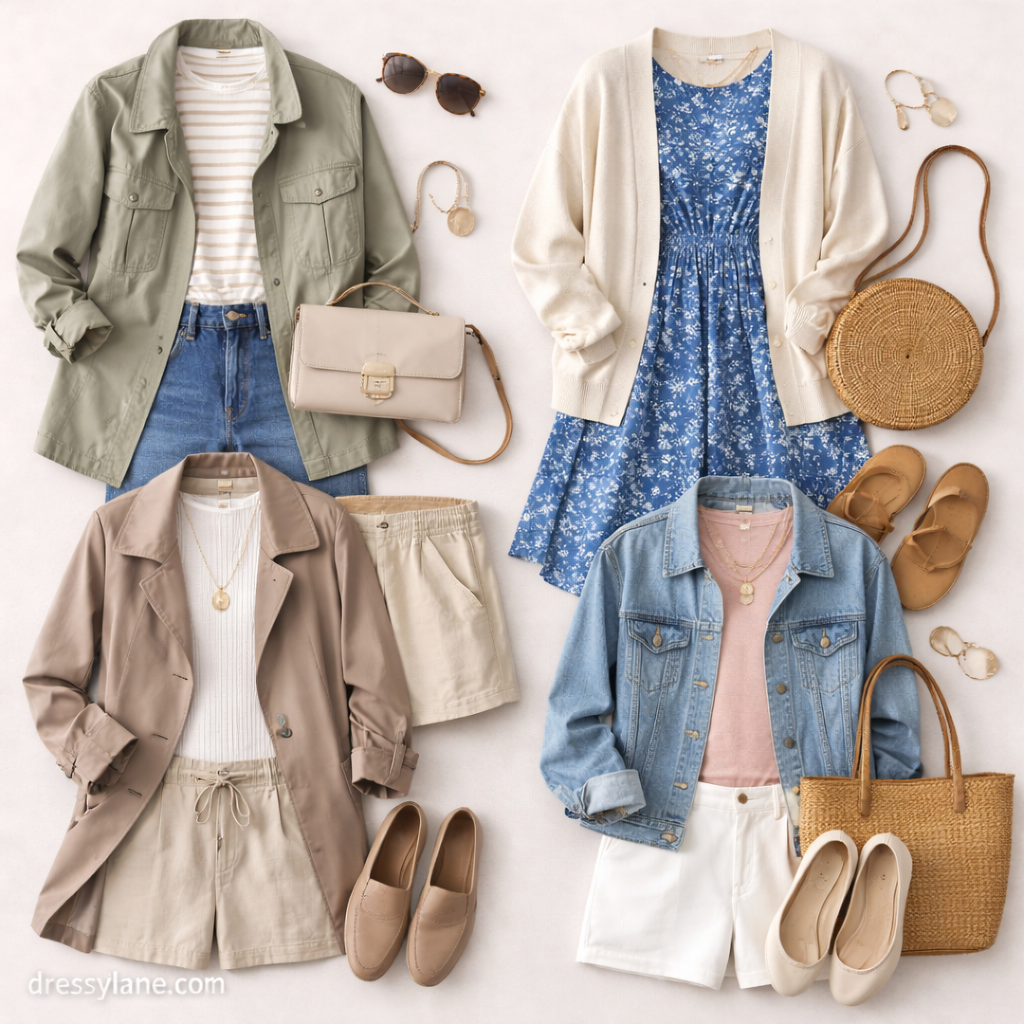
Women benefit from layering pieces that maintain shape and comfort throughout the day.
Helpful outfit ideas:
- Breathable tops with light sweaters
- Midi dresses paired with morning layers
- Lightweight jackets that tie or fold easily
- Comfortable flats or sneakers for all-day wear
Choosing versatile pieces allows one outfit to work across multiple temperature shifts.
What to Wear for Early Mornings and Warm Afternoons as a Man
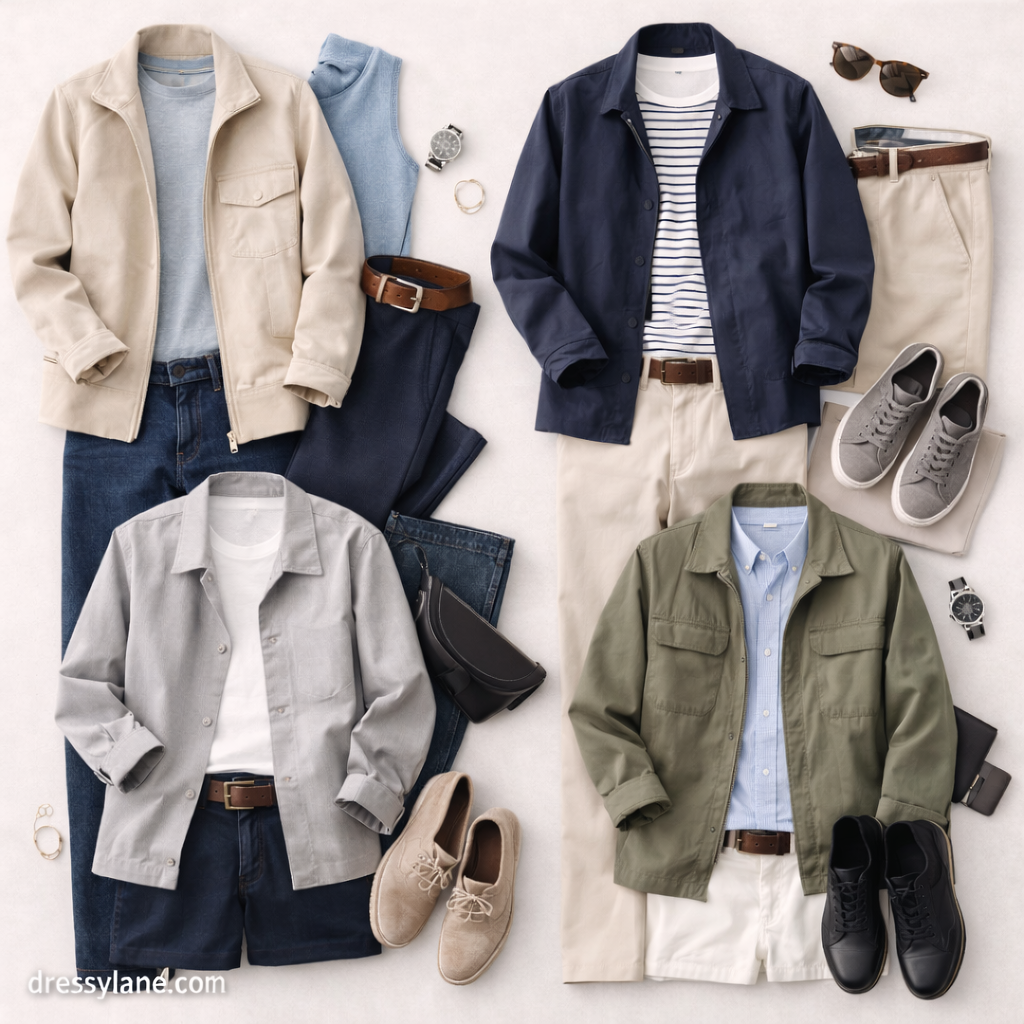
Men can stay comfortable by focusing on adaptable layers and breathable fabrics.
Helpful outfit ideas:
- Moisture-wicking base shirts
- Lightweight sweaters or overshirts
- Unlined jackets or blazers
- Breathable trousers or dark jeans
Layering without bulk keeps outfits polished while remaining practical.
Footwear That Works All Day
Shoes play a bigger role than many realize when temperatures change.
Smart footwear tips:
- Choose closed-toe shoes that stay breathable
- Avoid heavy boots unless necessary
- Opt for cushioned soles for long days
Comfortable shoes support both cool mornings and warmer afternoons.
Accessories That Make Temperature Changes Easier
Small accessories can help you adjust without changing outfits.
Useful accessories include:
- Lightweight scarves
- Sunglasses for afternoon sun
- Compact bags to store layers
- Breathable socks
These items take up little space but add flexibility.
Common Mistakes to Avoid
Many people struggle with temperature swings because of poor planning.
Mistakes to watch for:
- Wearing heavy outerwear all day
- Ignoring breathable fabrics
- Dressing for the afternoon only
- Choosing layers that don’t work together
Intentional layering prevents discomfort later.
Final Thoughts
Learning how to dress for early mornings and warm afternoons is all about adaptability. With breathable fabrics, strategic layers, and versatile accessories, you can stay comfortable and confident from the first chill of the day to the afternoon warmth.
Whether dressing as a woman or a man, planning for temperature shifts ensures your outfit works with the day—not against it.