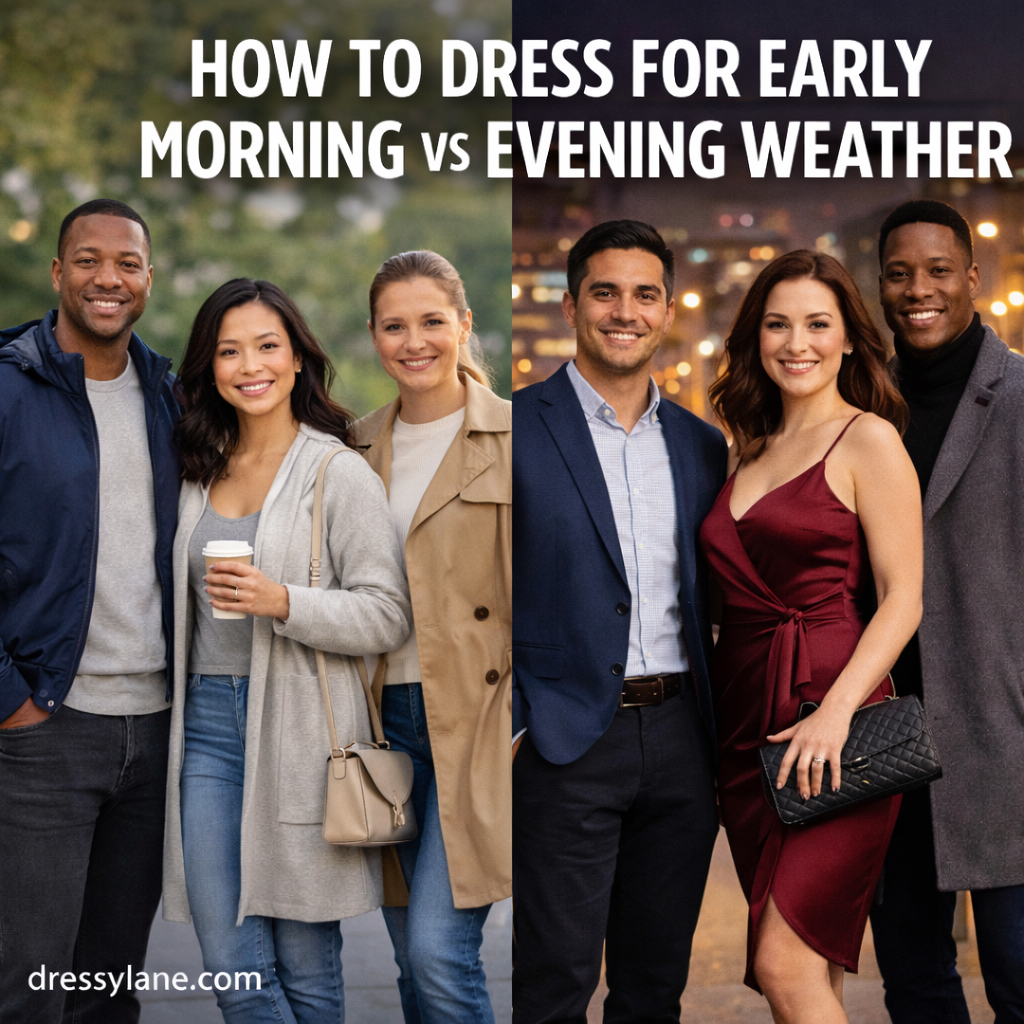
Dressing for the weather sounds simple—until your day starts in a chilly morning and ends in a warm afternoon or cool evening. Early mornings and evenings often bring temperature swings, changing humidity, wind, and even different social settings, all of which can affect how comfortable and confident you feel in what you’re wearing.
Learning how to dress strategically for early morning versus evening weather helps you stay comfortable, polished, and prepared without needing a full outfit change.
Why Early Morning and Evening Weather Feel So Different
Even on the same day, mornings and evenings can feel dramatically different.
Early mornings often bring:
- Cooler temperatures
- Higher humidity or dew
- Less direct sunlight
- Calm or still air
Evenings tend to bring:
- Gradual cooling after daytime heat
- Breezes or wind
- Lower humidity in some climates
- Social or after-work settings
Understanding these differences makes it easier to plan outfits that adapt smoothly.
The Importance of Layering
Layering is the foundation of dressing for temperature shifts.
Smart layering allows you to:
- Add warmth in the morning
- Remove layers as temperatures rise
- Re-layer comfortably in the evening
- Adjust without sacrificing style
Focus on lightweight, breathable layers rather than bulky pieces that feel restrictive later in the day.
Dressing for Early Morning Weather
Early mornings typically require warmth and comfort without overdoing it.
Key Early Morning Dressing Tips
- Choose breathable base layers
- Add light outerwear for warmth
- Avoid heavy fabrics that trap heat later
- Prioritize comfort if you’re commuting or moving around
Fabrics like cotton blends, merino wool, and lightweight knits work well during early hours.
Dressing for Evening Weather
Evenings often call for a balance between comfort and presentation, especially if plans include social or professional settings.
Key Evening Dressing Tips
- Prepare for cooler temperatures after sunset
- Consider wind-resistant layers
- Choose polished pieces suitable for dinners or events
- Opt for darker or richer tones if transitioning to night
Evening outfits often feel more intentional and styled compared to casual morning looks.
How to Dress for Early Morning vs Evening Weather: Women
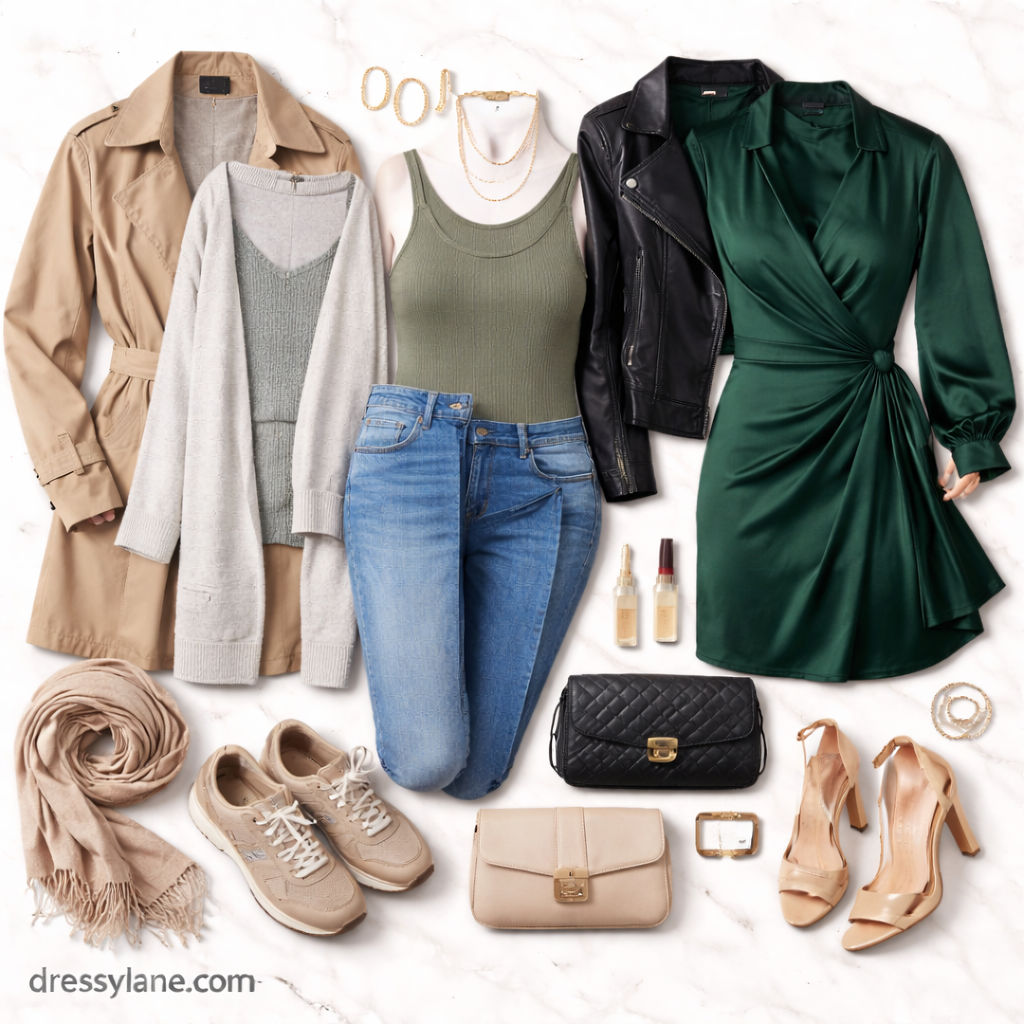
Women’s outfits benefit greatly from flexible layering and adaptable silhouettes.
Morning Outfit Strategies
- Lightweight sweaters or cardigans over tops
- Midi dresses paired with light jackets
- Comfortable flats or low heels for commuting
- Scarves that add warmth without bulk
Morning layers should be easy to remove and carry once temperatures rise.
Evening Outfit Strategies
- Structured blazers or tailored jackets
- Dresses that work day-to-night with accessories
- Closed-toe shoes or boots as temperatures drop
- Layers that feel polished rather than purely functional
Swapping a casual layer for a more structured one can instantly elevate an outfit.
How to Dress for Early Morning vs Evening Weather: Men
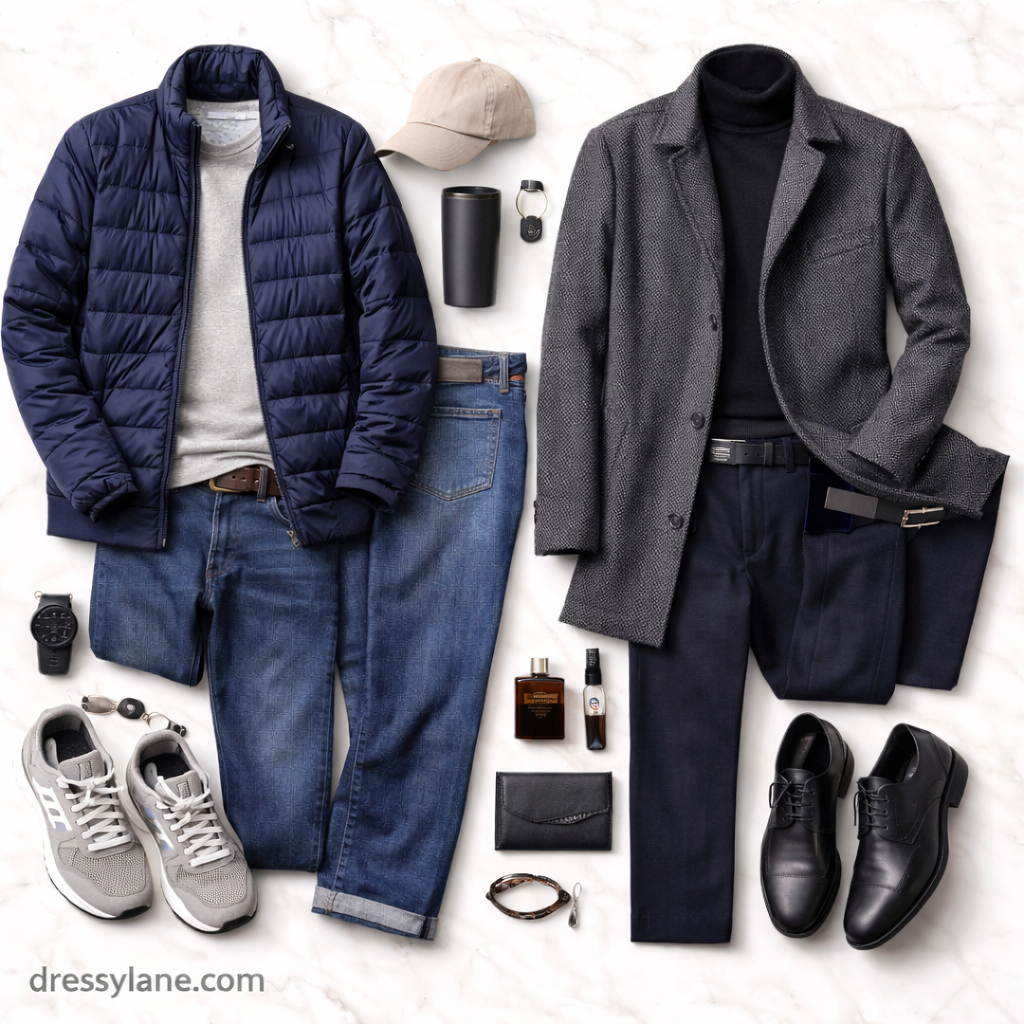
Men’s outfits often rely on versatile basics that adapt throughout the day.
Morning Outfit Strategies
- Lightweight jackets or overshirts
- Long-sleeve shirts with breathable fabric
- Comfortable shoes suitable for commuting
- Neutral layers that pair with multiple outfits
Morning layers should provide warmth without looking overly heavy by midday.
Evening Outfit Strategies
- Blazers, lightweight coats, or structured outerwear
- Darker colors or refined textures
- Shoes appropriate for social or professional settings
- Layers that hold shape as temperatures cool
A simple jacket upgrade can shift a look from daytime casual to evening-ready.
Choosing the Right Fabrics for Temperature Shifts
Fabric choice plays a major role in comfort throughout the day.
Look for:
- Breathable materials that regulate temperature
- Fabrics that resist wrinkling when layers are removed
- Lightweight knits instead of thick wool
- Natural fibers blended with performance materials
Avoid fabrics that trap heat early or feel clammy as temperatures fluctuate.
Planning Outfits That Transition All Day
When mornings and evenings differ, planning ahead makes all the difference.
Helpful planning habits:
- Check hourly forecasts, not just daily highs
- Choose one core outfit and adjust with layers
- Bring a foldable jacket or scarf
- Store removable layers in a bag or car
Thinking in terms of transitions helps you avoid outfit regret later.
Common Mistakes to Avoid
Small missteps can lead to discomfort as the day progresses.
Avoid:
- Dressing only for midday temperatures
- Wearing bulky layers you can’t remove
- Ignoring wind or humidity changes
- Choosing shoes that don’t work all day
Comfort and flexibility should guide your choices more than aesthetics alone.
Dressing for Different Seasons
Seasonal shifts affect morning and evening contrasts differently.
- Spring and fall require the most layering
- Summer mornings may still feel cool before heating up
- Winter evenings often demand warmer outerwear than mornings
Adjusting your layering approach season by season keeps outfits functional and stylish.
Final Thoughts
Dressing for early morning versus evening weather is about preparation and flexibility. By choosing breathable fabrics, smart layers, and versatile pieces, you can stay comfortable from the first hour of the day to the last.
Instead of dressing for a single moment, dress for the full timeline of your day. When your outfit adapts as easily as you do, confidence and comfort naturally follow.