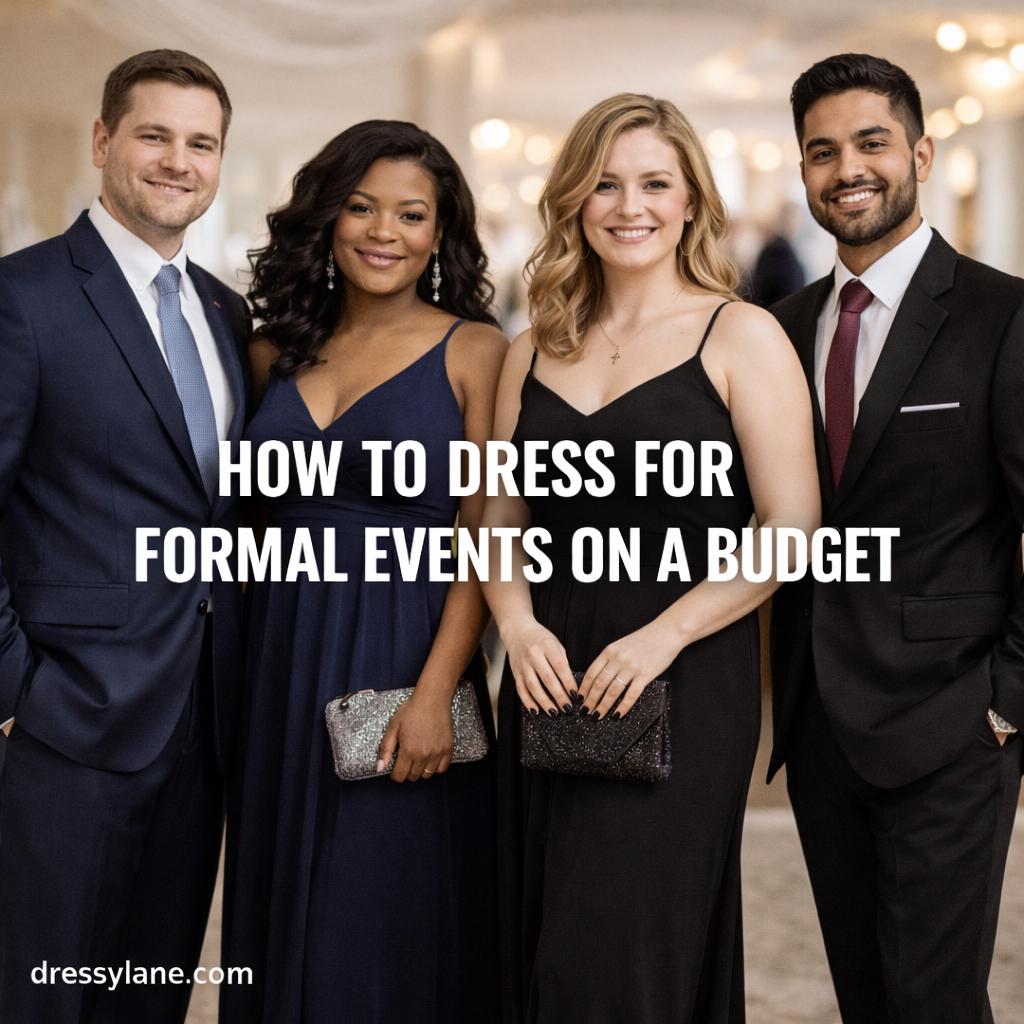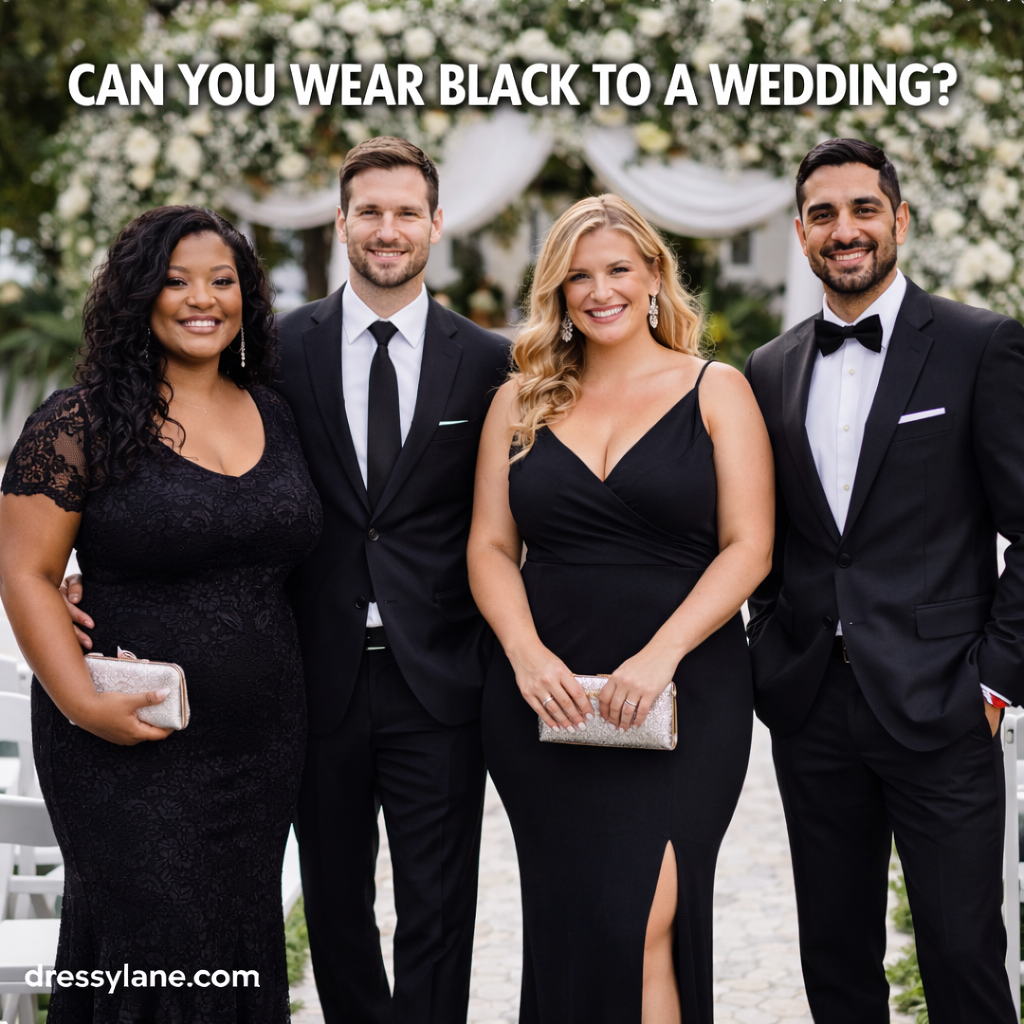
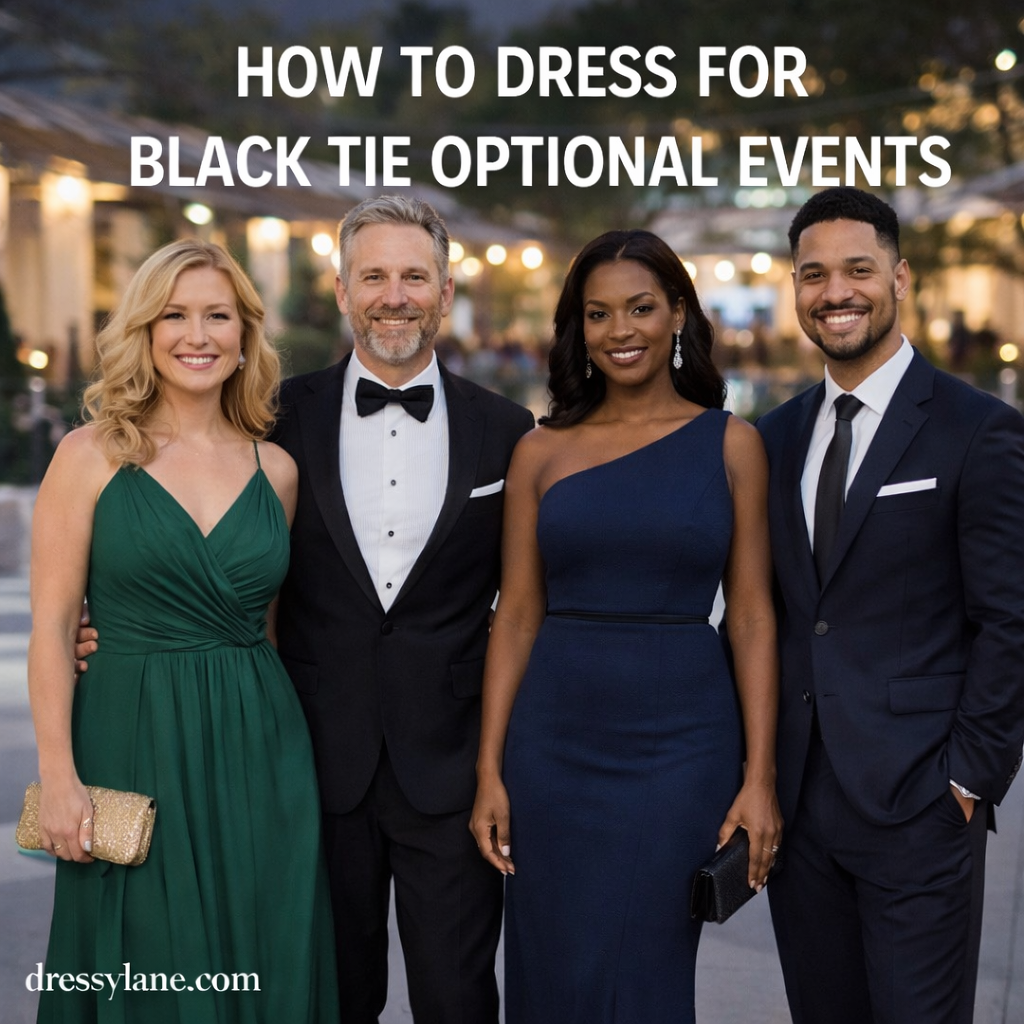
Black tie optional events can be confusing—even for seasoned dressers. The invitation signals a formal occasion, but it allows flexibility in how strictly you interpret traditional black tie rules. The goal is to look elevated, polished, and event-appropriate without feeling overdressed or uncomfortable.
This guide explains exactly how to dress for black tie optional events, with clear outfit guidance for both women and men.
What “Black Tie Optional” Actually Means
Black tie optional sits between formal and black tie. Guests are encouraged to dress formally, but a full tuxedo or floor-length gown is not mandatory.
What it communicates:
- The event is upscale and elegant
- Traditional black tie attire is welcome but not required
- Well-executed formal wear is fully acceptable
When in doubt, it’s better to lean slightly more formal than too casual.
General Black Tie Optional Style Guidelines
Before choosing specific outfits, keep these core principles in mind.
Overall tone:
- Elegant, refined, and intentional
- Evening-appropriate fabrics and colors
- Clean silhouettes and quality materials
Color considerations:
- Dark neutrals like black, navy, charcoal
- Jewel tones and rich seasonal colors
- Avoid casual prints or overly bright shades
Fabric choices:
- Satin, silk, velvet, crepe, chiffon
- Structured wool blends for men
- Avoid casual cottons or linens
Black Tie Optional Attire for Women
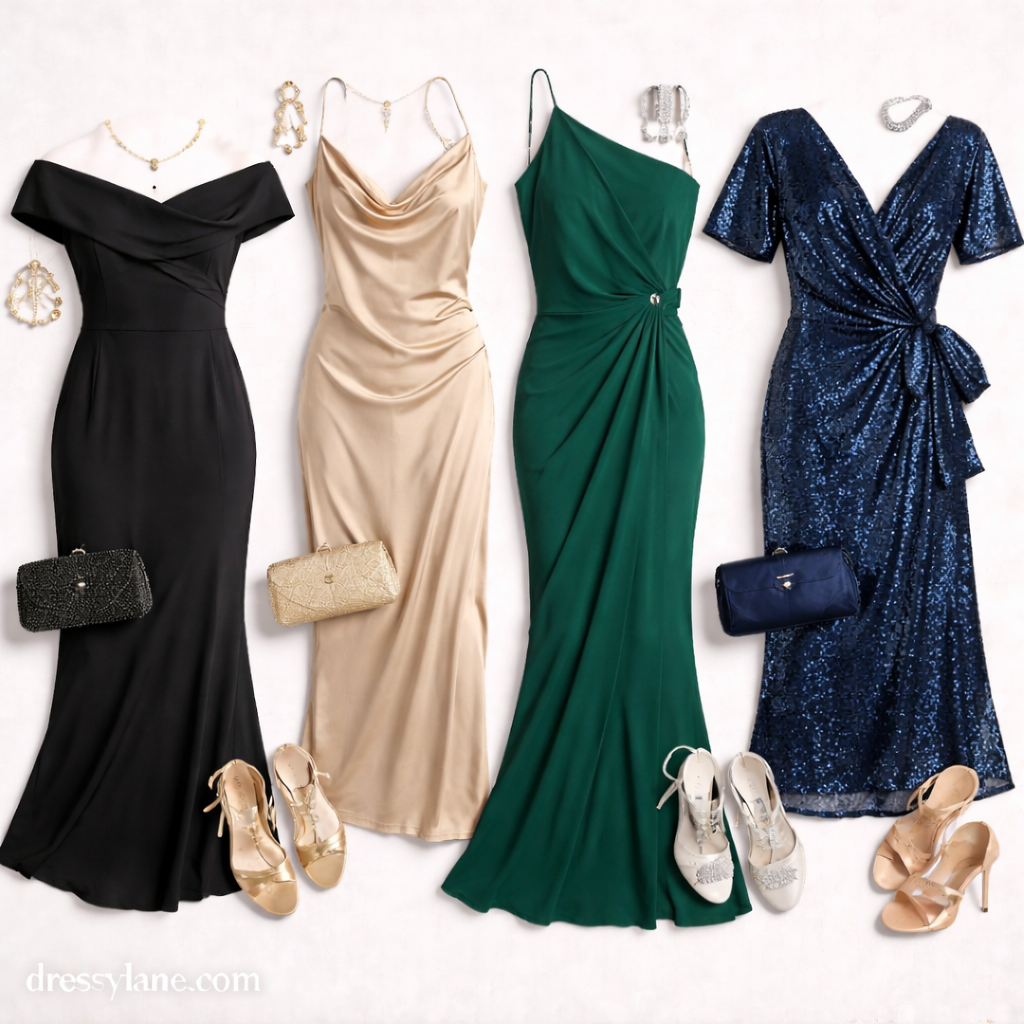
Women have flexibility, but the look should still feel formal and evening-ready.
Dress Options That Work
Appropriate choices include:
- Floor-length gowns
- Elegant midi dresses with refined silhouettes
- Dressy cocktail dresses in elevated fabrics
- One-shoulder, halter, or sleeveless formal styles
Well-chosen midi dresses can work beautifully when paired with formal accessories and evening-appropriate shoes.
Avoid:
- Casual sundresses
- Extremely short hemlines
- Daytime fabrics or informal prints
Color, Detail, and Fit
Best color choices:
- Black, emerald, navy, burgundy
- Champagne, deep plum, midnight blue
- Metallics used subtly
Details to embrace:
- Draping or clean tailoring
- Minimal embellishment or tasteful sparkle
- Structured bodices or flowing skirts
Fit matters more than trend—tailoring elevates even simple designs.
Shoes, Accessories, and Outerwear
Shoes:
- Heels or elegant dress sandals
- Closed-toe or refined open-toe styles
- Neutral or metallic finishes
Accessories:
- Clutch or small structured bag
- Refined jewelry (one statement piece max)
- Avoid oversized or casual accessories
Outerwear:
- Dressy wrap, shawl, or tailored coat
- Avoid casual jackets or cardigans
Black Tie Optional Attire for Men
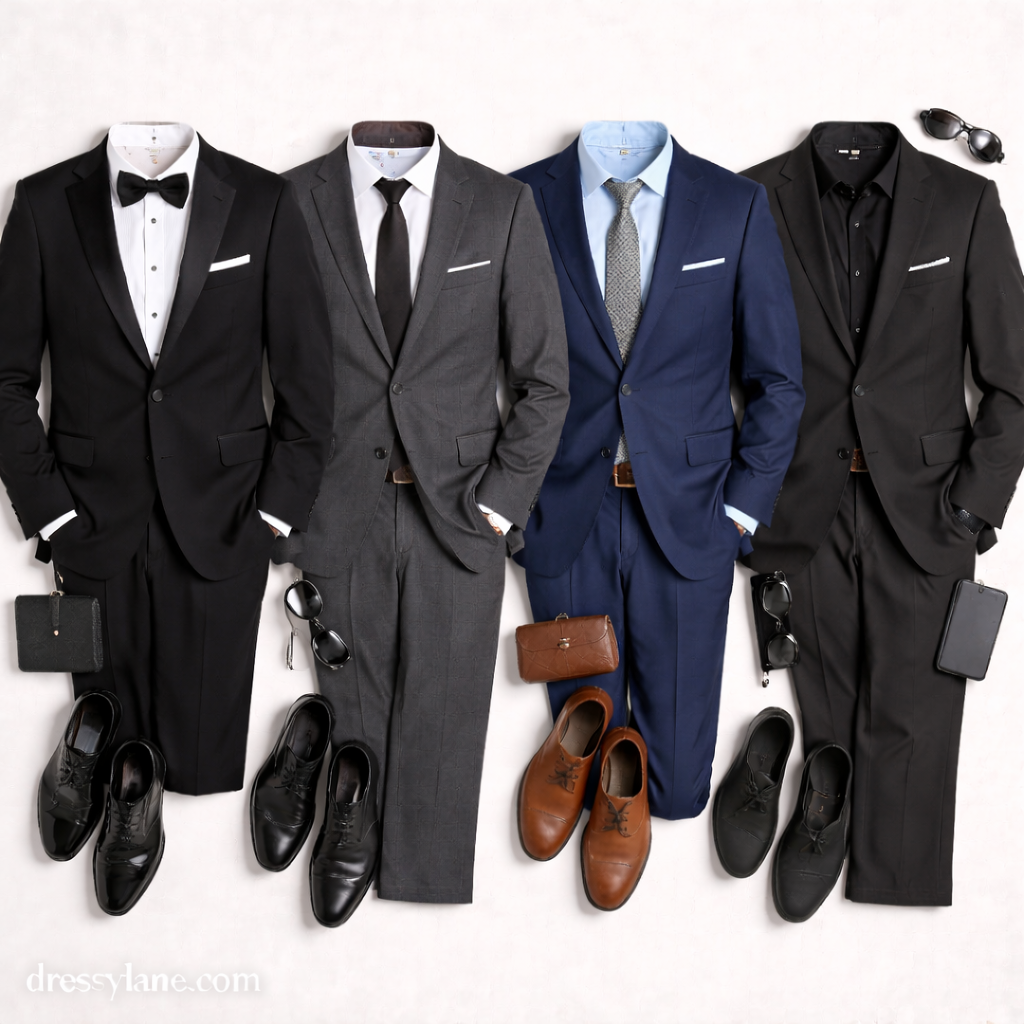
Men can choose between traditional black tie or elevated formalwear.
Tuxedo vs Suit
Tuxedo:
- Always acceptable
- Classic black or midnight blue
- Bow tie or formal neckwear
Suit option:
- Dark suit (black, charcoal, navy)
- Crisp dress shirt
- Tie or bow tie in silk or satin texture
A well-tailored dark suit with polished accessories fully meets black tie optional expectations.
Shirts, Shoes, and Accessories
Shirts:
- White dress shirt preferred
- French cuffs optional but elegant
- Avoid casual collars or patterns
Shoes:
- Black dress shoes or polished loafers
- Patent leather or high-shine finishes work well
- Shoes should be clean and formal
Accessories:
- Simple watch or cufflinks
- Pocket square for added polish
- Keep details understated and refined
How to Decide Between Formal and Full Black Tie
Use these factors to guide your choice:
- Time of day (evening leans more formal)
- Venue (ballrooms and upscale venues favor black tie)
- Event type (weddings often skew dressier)
- Personal comfort and confidence
If you enjoy dressing up, black tie optional is an opportunity—not a restriction.
Common Black Tie Optional Mistakes to Avoid
- Treating it like cocktail attire
- Wearing light or casual fabrics
- Choosing daytime colors
- Over-accessorizing
- Underestimating the formality of the event
Black tie optional still demands respect for the occasion.
Wedding-Specific Black Tie Optional Tips
For weddings:
- Avoid white, ivory, or bridal-adjacent shades
- Keep looks celebratory but not attention-grabbing
- Coordinate with the venue and season
Evening weddings especially benefit from leaning toward traditional black tie styling.
Final Thoughts
Black tie optional events offer flexibility—but that flexibility still comes with expectations. By choosing elegant fabrics, formal silhouettes, and refined accessories, you can confidently strike the perfect balance between classic black tie and formal eveningwear.
When done right, black tie optional dressing feels polished, comfortable, and effortlessly appropriate—allowing you to enjoy the event without second-guessing your outfit.