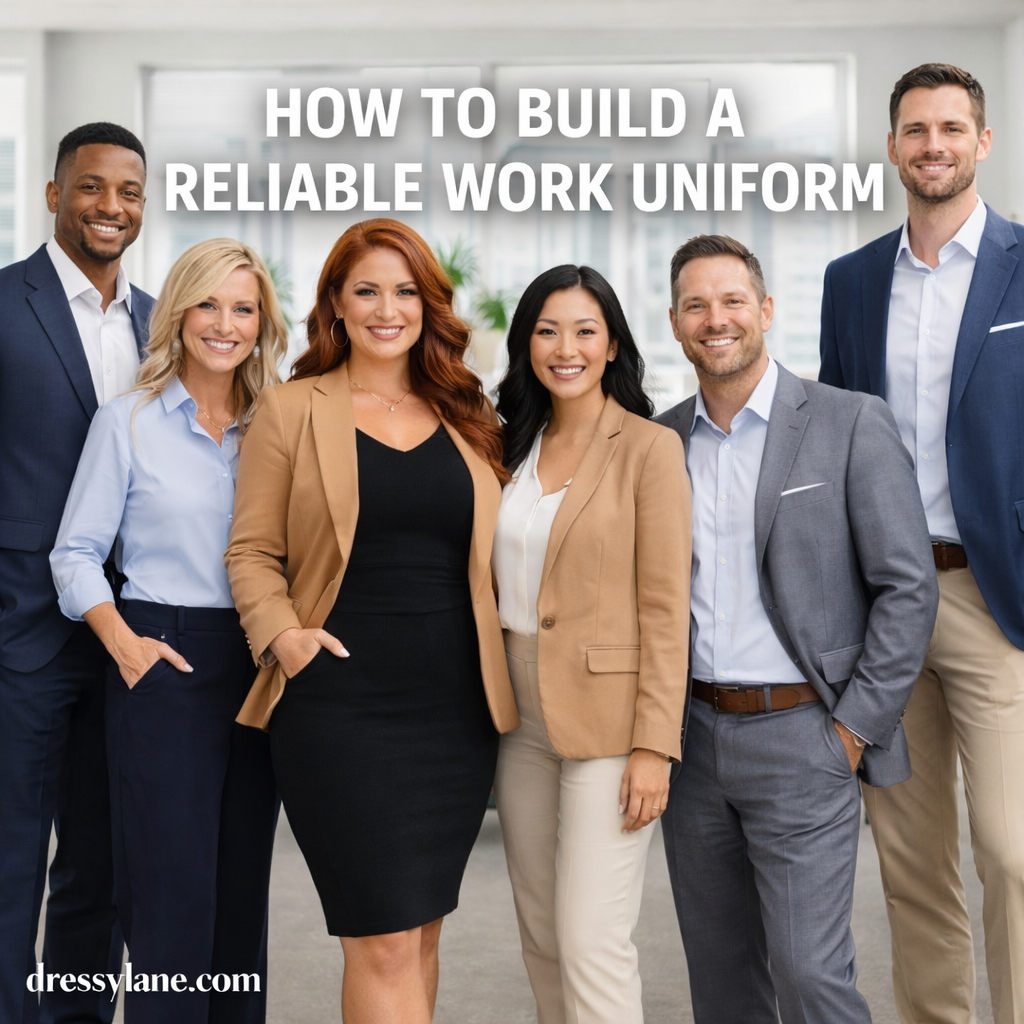
A reliable work uniform isn’t about wearing the same outfit every day—it’s about creating a small, intentional wardrobe that makes getting dressed effortless, polished, and appropriate for your professional environment. When done right, a work uniform saves time, reduces decision fatigue, and helps you look consistently put-together without constant shopping.
This guide walks you through how to build a dependable work uniform that works across industries, with practical advice for both women and men.
What Is a Work Uniform (and Why It Works)
A work uniform is a repeatable outfit formula built from interchangeable pieces that reflect your role, workplace culture, and personal style.
Benefits of a reliable work uniform:
- Faster mornings with fewer decisions
- A consistent professional appearance
- Easier wardrobe planning and budgeting
- Less stress about what’s appropriate
- Stronger personal brand at work
A work uniform doesn’t mean boring—it means intentional.
Step 1: Understand Your Work Environment
Before choosing clothes, clarify what your workplace expects.
Consider:
- Industry norms (corporate, creative, remote, client-facing)
- Formality level (business formal, business casual, smart casual)
- Climate and seasonality
- How often you meet clients or leadership
Your uniform should sit comfortably within expectations while still feeling like you.
Step 2: Choose a Core Color Palette
A limited, cohesive color palette makes mixing and matching effortless.
Start with:
- 2–3 neutral base colors (black, navy, gray, beige, brown)
- 1–2 softer neutrals (ivory, taupe, camel)
- 1–2 accent colors you enjoy wearing
Sticking to a palette ensures nearly everything in your wardrobe works together.
Step 3: Build Your Core Outfit Formula
Your outfit formula is the backbone of your work uniform.
Examples:
- Top + tailored bottom + structured layer
- Dress + blazer or cardigan
- Shirt + trousers + polished shoes
Once you find a formula that works, repeat it using different pieces within the same structure.
Work Uniform Essentials for Women
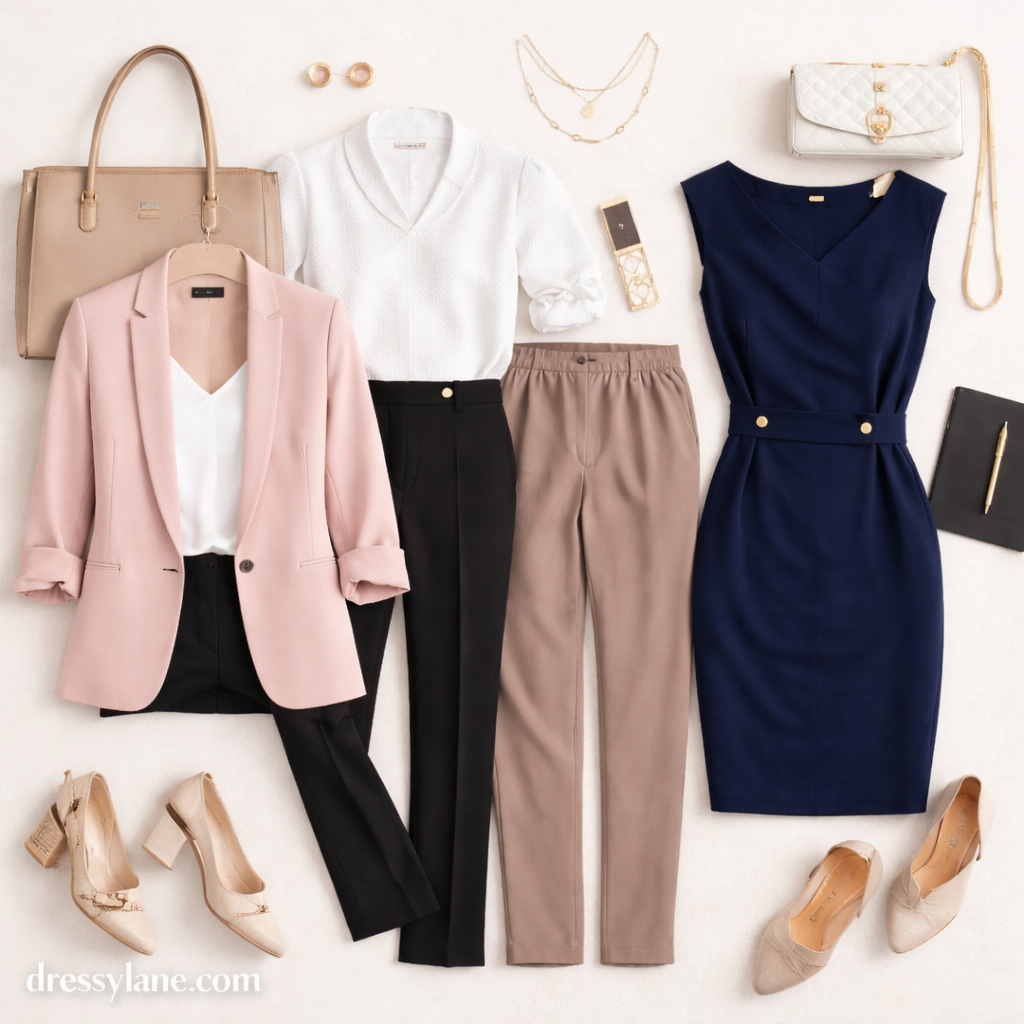
Women’s work uniforms should balance comfort, structure, and versatility.
Key pieces to include:
- Tailored trousers or ankle-length pants
- Midi dresses in solid colors or subtle patterns
- Blouses or knit tops with clean lines
- Blazers, structured cardigans, or lightweight jackets
Recommended fabrics:
- Crepe, ponte, wool blends, breathable knits
- Wrinkle-resistant materials for long days
Shoes that work:
- Loafers, block heels, ballet flats, low pumps
- Neutral colors that pair with most outfits
Accessories:
- Minimal jewelry
- Structured tote or work bag
- Belt or scarf for variation
Work Uniform Essentials for Men
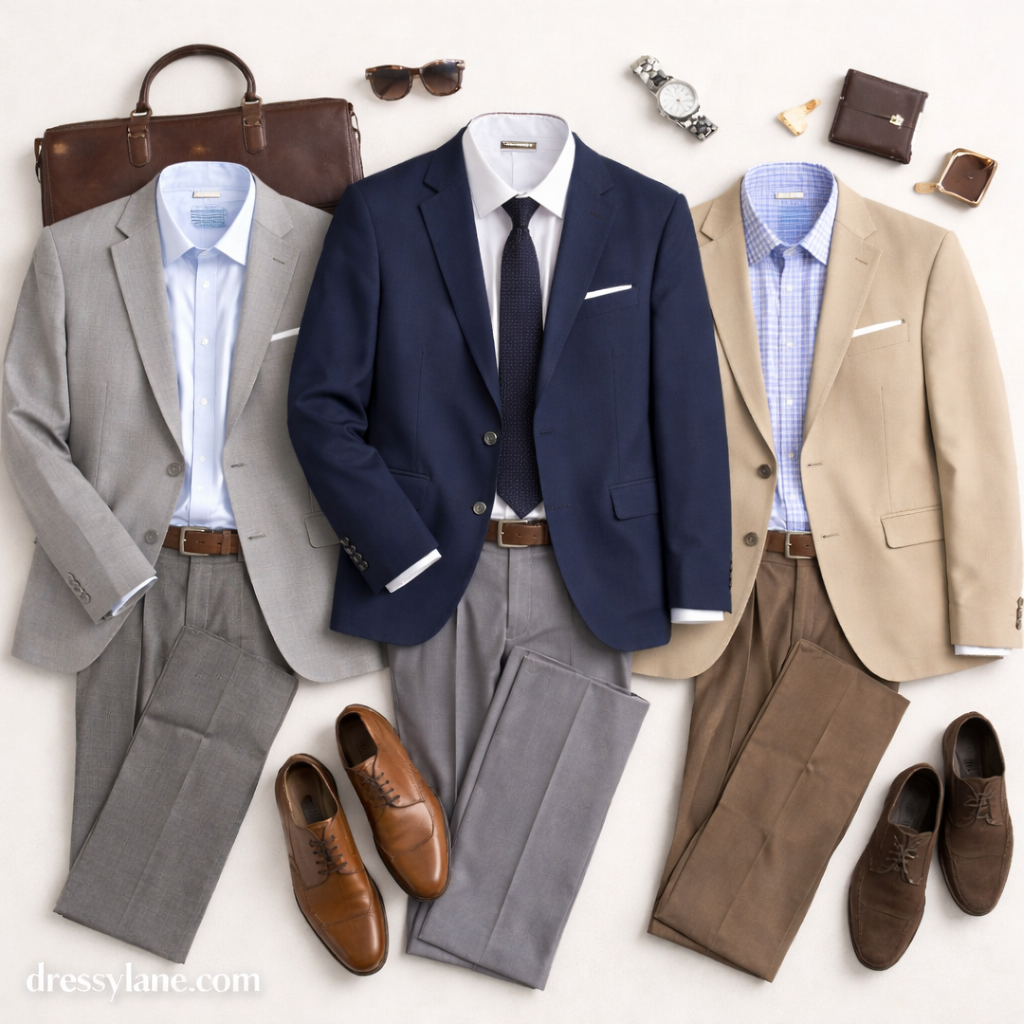
Men’s work uniforms thrive on fit, consistency, and simplicity.
Core wardrobe pieces:
- Tailored trousers in 2–3 neutral colors
- Button-down shirts in white, light blue, or subtle patterns
- Blazers or structured jackets
- Knit polos or fine-gauge sweaters for business casual roles
Fabric tips:
- Wool or wool-blend trousers
- Breathable cotton shirts
- Stretch fabrics for all-day comfort
Shoes:
- Oxfords, derbies, loafers, or clean leather sneakers (depending on dress code)
- Keep at least one darker and one lighter option
Accessories:
- Leather belt matching shoes
- Classic watch
- Minimal, functional extras
Step 4: Prioritize Fit Over Quantity
A smaller wardrobe with better fit always looks more professional than a large wardrobe of ill-fitting clothes.
Focus on:
- Proper sleeve and pant lengths
- Comfortable waist and shoulder fit
- Tailoring key items like trousers and blazers
Well-fitted basics elevate even simple outfits.
Step 5: Create Easy Outfit Rotation
Aim for outfits that can rotate seamlessly throughout the week.
A simple goal:
- 5 tops
- 3 bottoms
- 2 structured layers
- 2–3 pairs of shoes
This setup can create 10+ polished work outfits with minimal effort.
Step 6: Adapt for Remote, Hybrid, or In-Person Work
Your uniform should flex with how you work.
Remote work:
- Elevated knits
- Polished tops for video calls
- Comfortable but presentable bottoms
Hybrid work:
- Mix structured and relaxed pieces
- Shoes and layers that transition easily
In-person roles:
- More structure
- Durable fabrics
- Consistent grooming and accessories
Common Work Uniform Mistakes to Avoid
- Buying trendy items that don’t mix well
- Ignoring comfort for appearance
- Choosing fabrics that wrinkle easily
- Wearing shoes that limit mobility
- Over-accessorizing daily outfits
A reliable uniform should feel effortless, not restrictive.
How Often to Update Your Work Uniform
You don’t need constant updates. Instead:
- Replace worn essentials as needed
- Add seasonal layers once or twice a year
- Refresh shoes and bags when they show wear
Consistency matters more than constant change.
Final Thoughts
Building a reliable work uniform is one of the smartest professional style decisions you can make. By focusing on fit, cohesive colors, repeatable outfit formulas, and quality essentials, you create a wardrobe that supports your workday instead of complicating it.
Whether your role is corporate, creative, remote, or client-facing, a well-planned work uniform helps you show up confident, polished, and ready—every single day.