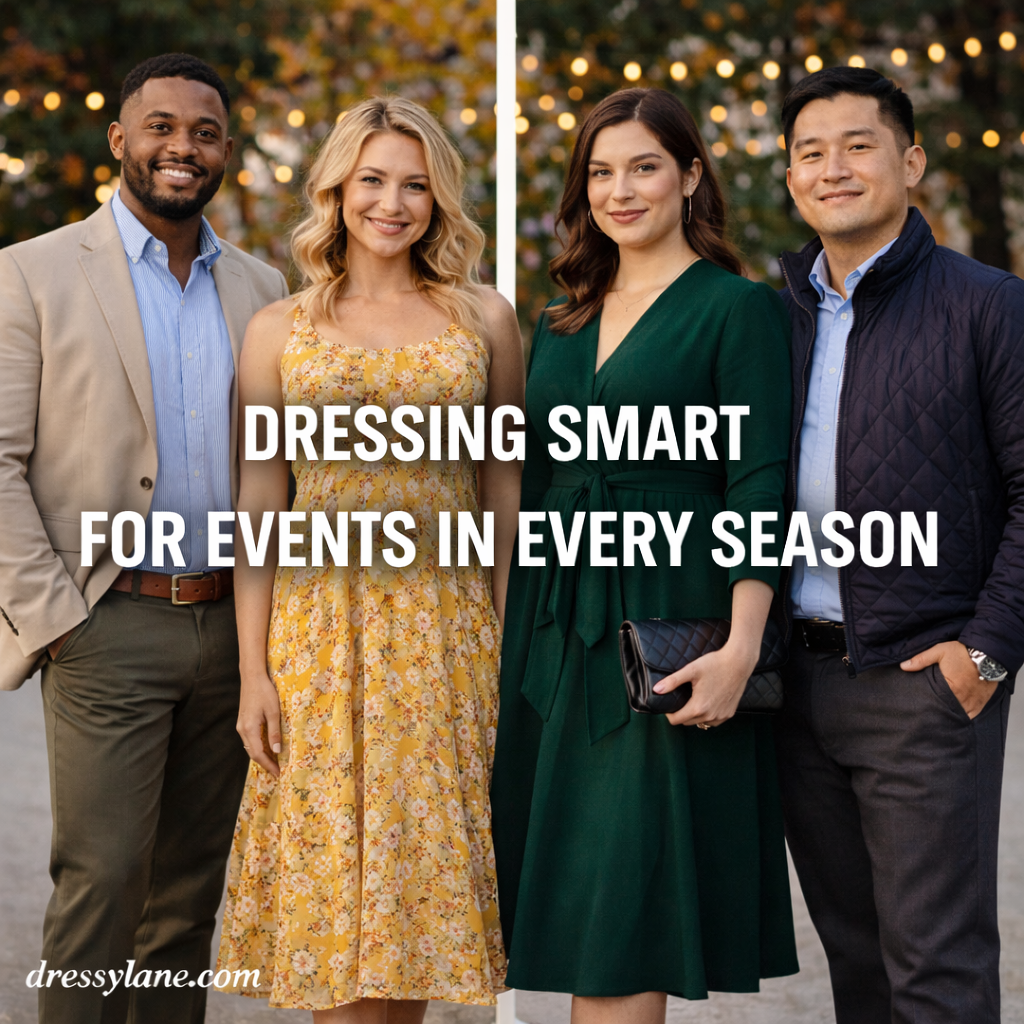
Dressing for events year-round doesn’t mean constantly buying new outfits or guessing what will work. Smart seasonal dressing is about understanding fabrics, layering, and subtle styling adjustments that keep you comfortable and polished—no matter the weather.
This guide explains how to dress intelligently for events in every season, with practical outfit strategies and clear guidance for both men and women.
What “Dressing Smart” Really Means
Dressing smart for seasonal events isn’t about trends—it’s about adaptability.
Smart event dressing focuses on:
- Choosing season-appropriate fabrics
- Layering without bulk
- Matching footwear to weather conditions
- Planning outfits that transition easily from day to night
- Balancing comfort with polish
When outfits work with the season instead of against it, they look more natural and intentional.
Spring Event Dressing Strategies
Spring events often bring unpredictable temperatures and mixed indoor-outdoor settings.
Smart spring outfit principles:
- Build outfits around removable layers
- Use breathable but structured fabrics
- Choose lighter colors without going too casual
Spring-friendly fabrics:
- Cotton
- Crepe
- Linen blends
- Lightweight knits
Footwear should be versatile enough for changing conditions, especially for garden or outdoor venues.
Summer Event Dressing Strategies
Summer events demand breathability and ease, but still require polish.
Smart summer styling tips:
- Keep silhouettes relaxed but refined
- Avoid heavy linings and thick layers
- Choose fabrics that allow airflow
- Use color and texture instead of layers for interest
Best summer fabrics:
- Linen
- Rayon
- Lightweight cotton
- Silk blends
Footwear should prioritize comfort and stability, particularly for outdoor or standing-heavy events.
Fall Event Dressing Strategies
Fall is ideal for layering and richer textures.
Smart fall outfit approaches:
- Use light layers instead of one heavy piece
- Incorporate deeper, seasonal tones
- Choose fabrics with some structure
Fall-appropriate materials:
- Wool blends
- Twill
- Medium-weight knits
- Soft suiting fabrics
Fall events often transition from daytime to evening, so flexibility matters.
Winter Event Dressing Strategies
Winter events require warmth without sacrificing style.
Smart winter dressing focuses on:
- Layering for insulation
- Polished outerwear that complements the outfit
- Footwear suited for cold or wet conditions
Winter-friendly fabrics:
- Wool
- Cashmere
- Velvet
- Heavier knits
Outerwear becomes part of the outfit in winter, not an afterthought.
Seasonal Event Outfit Ideas for Women
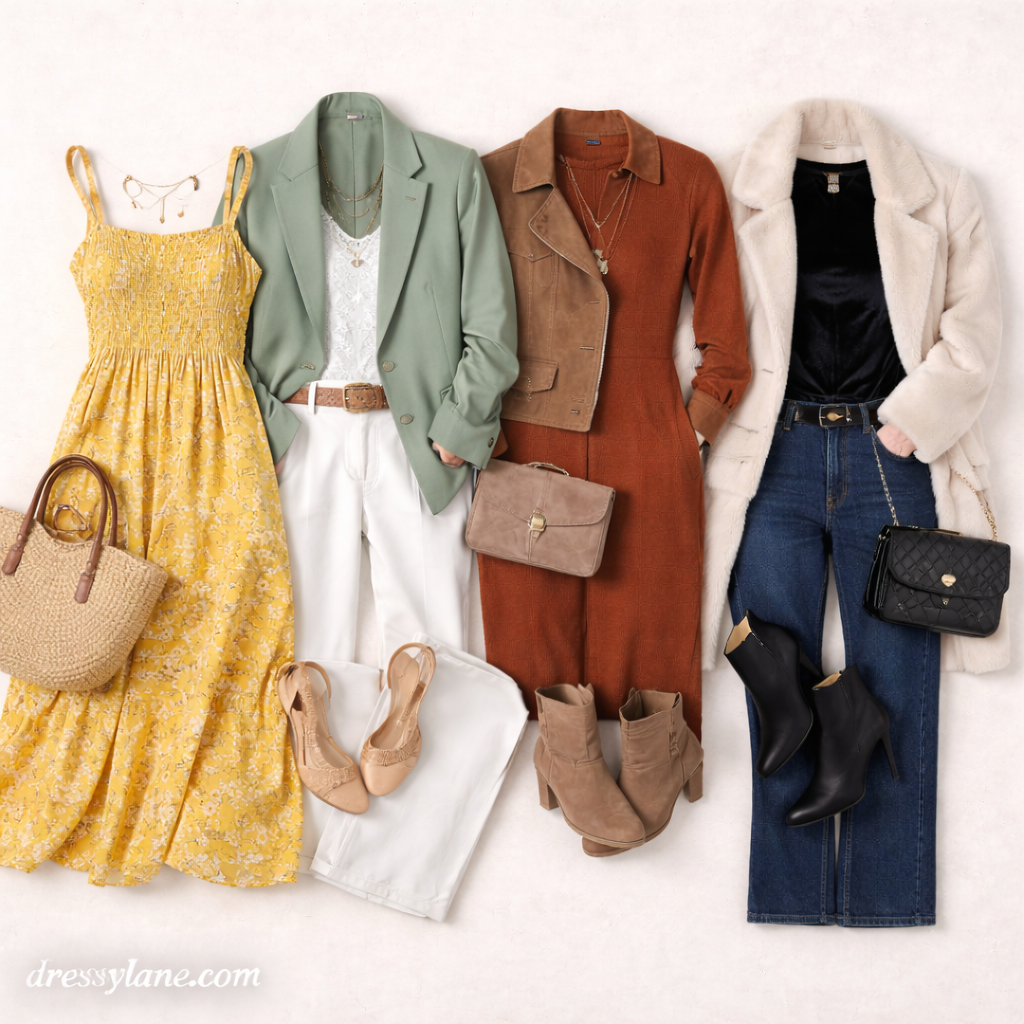
Women can dress smart year-round by adjusting fabrics, layers, and footwear rather than changing their entire wardrobe.
Spring and summer outfit ideas:
- Midi dresses with flats or low-profile sandals
- Lightweight jumpsuits
- Skirts paired with breathable blouses
Fall and winter outfit ideas:
- Dresses layered with tights and ankle boots
- Tailored trousers with sweaters or blouses
- Skirts paired with structured jackets
Smart styling tips for women:
- Adjust sleeve length and hem weight by season
- Use layers to manage temperature changes
- Choose footwear that matches both the season and venue
Seasonal Event Outfit Ideas for Men
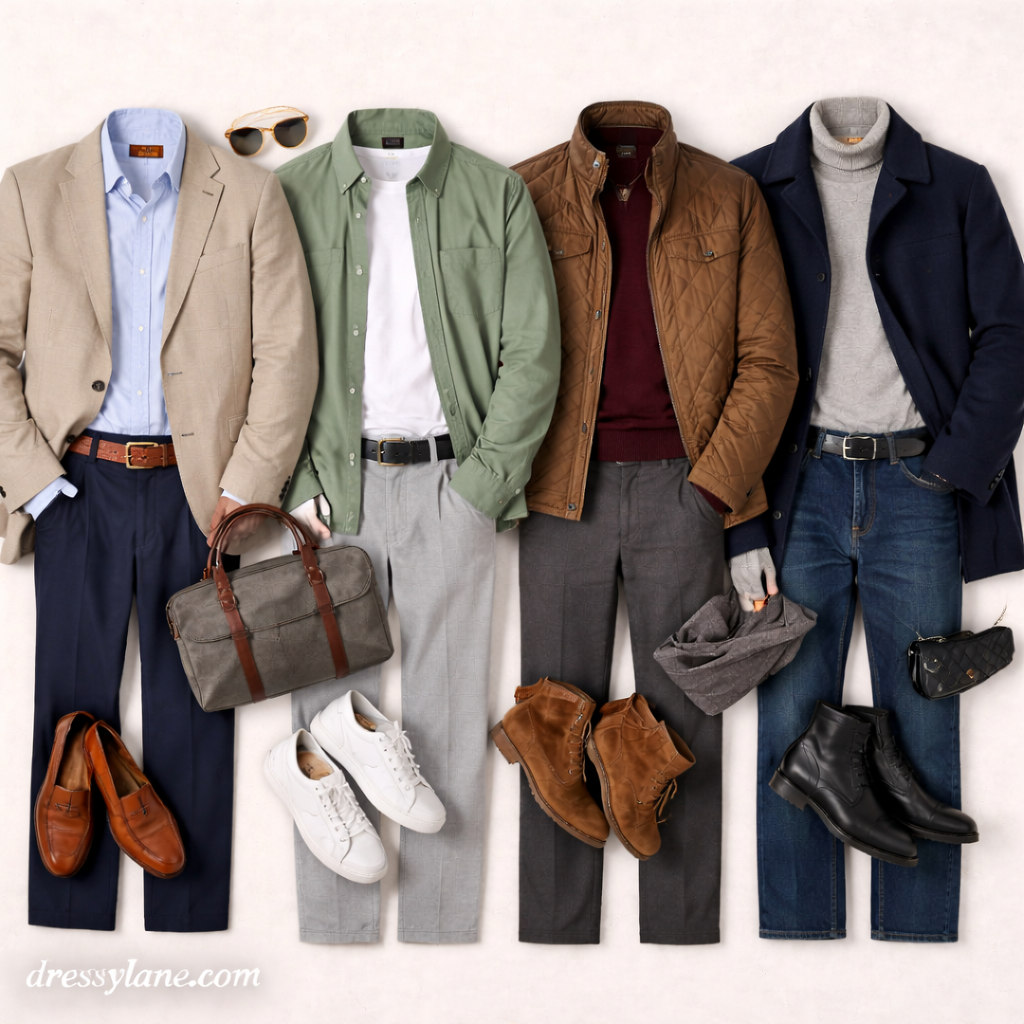
Men’s seasonal event style depends heavily on fabric weight and layering choices.
Spring and summer outfit ideas:
- Lightweight blazers or unstructured jackets
- Breathable button-downs or polos
- Loafers or clean dress sneakers
Fall and winter outfit ideas:
- Layered shirts with knitwear
- Wool trousers or darker denim
- Boots or weather-appropriate dress shoes
Smart styling tips for men:
- Prioritize season-appropriate fabrics
- Layer for warmth without bulk
- Keep footwear practical for the conditions
How to Transition One Outfit Across Seasons
One of the smartest dressing skills is learning how to adapt outfits across multiple seasons.
Simple transition techniques:
- Swap fabrics instead of silhouettes
- Add or remove layers as needed
- Change footwear to suit weather conditions
- Adjust accessories rather than the entire outfit
This approach saves time, money, and decision fatigue.
Common Seasonal Dressing Mistakes to Avoid
Even stylish outfits can fall short if seasonal factors are ignored.
Avoid these mistakes:
- Wearing heavy fabrics in warm weather
- Ignoring temperature changes throughout the day
- Choosing shoes unsuitable for the season
- Over-layering or under-layering
- Dressing for style only and not comfort
The smartest outfits always account for real-world conditions.
Final Thoughts
Dressing smart for events in every season is about preparation, not perfection. By understanding fabrics, layering strategically, and adjusting footwear and accessories, you can create outfits that feel comfortable, appropriate, and polished all year long. When your clothing works with the season, you’ll enjoy the event more—and look effortlessly put together while doing it.