
Introduction
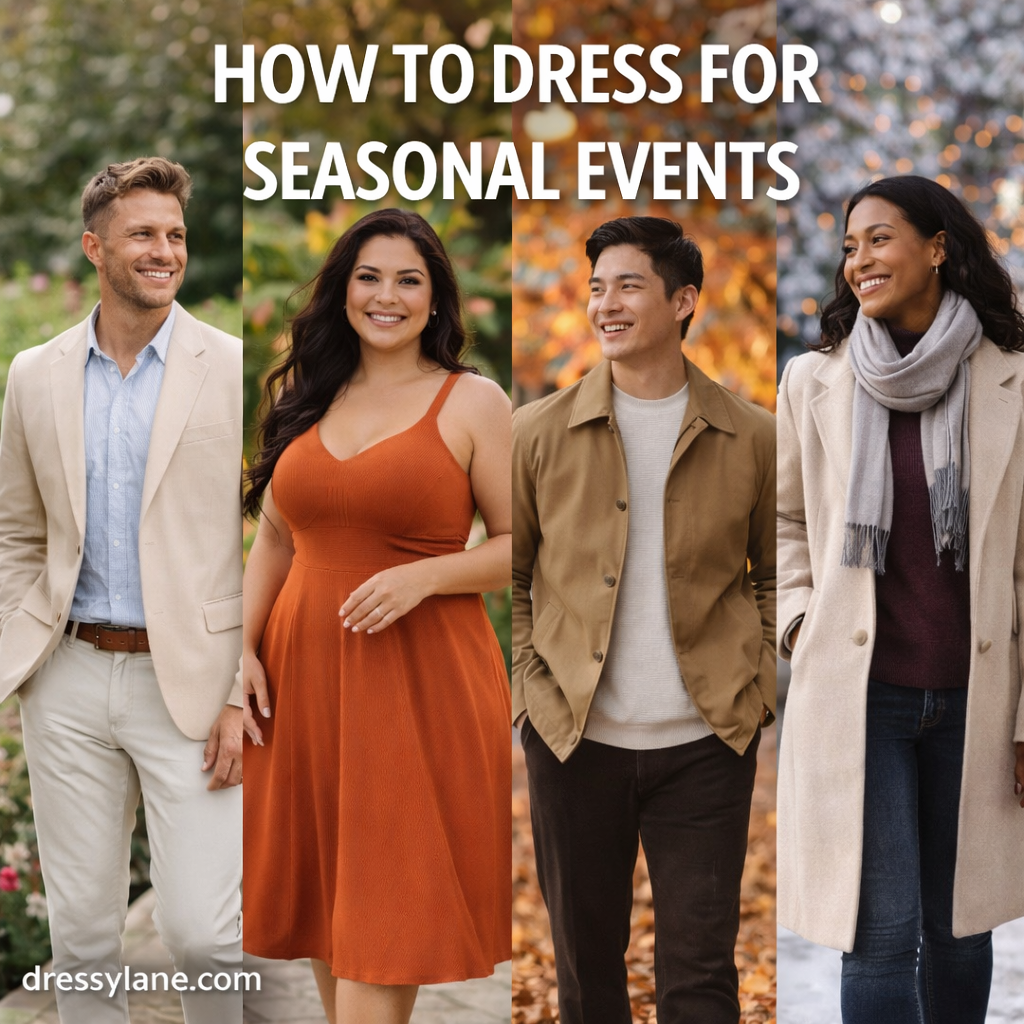
Dressing well year-round doesn’t have to be complicated, expensive, or time-consuming. Many people overthink seasonal style, constantly buying new clothes or chasing trends that only work for a few months. In reality, great style comes from simplicity, versatility, and understanding how to adapt what you already own.
This guide shows you how to dress well in every season without overthinking it. You’ll learn how to build a flexible wardrobe, use layering effectively, and adjust outfits for changing weather — with practical guidance for both men and women.
What “Effortless” Year-Round Style Really Looks Like
Effortless style isn’t about perfection. It’s about consistency and adaptability.
Dressing well without overthinking means:
- Relying on versatile core pieces
- Making small seasonal adjustments instead of full wardrobe changes
- Prioritizing fit and comfort
- Letting layers do most of the work
When your wardrobe works as a system, getting dressed becomes automatic.
Build a Core Wardrobe That Works All Year
A strong base wardrobe reduces decision fatigue and makes seasonal dressing easier.
Key traits of a year-round core wardrobe:
- Neutral colors that mix easily
- Timeless silhouettes
- Pieces that layer comfortably
- Fabrics suitable for multiple temperatures
Instead of buying “summer clothes” or “winter clothes,” focus on clothes that adapt.
How to Adjust Your Style by Season
You don’t need separate wardrobes for each season — just smarter styling.
Spring: Stay Flexible
Spring weather changes quickly, so adaptability is key.
Focus on:
- Lightweight jackets
- Breathable layers
- Shoes that handle mixed conditions
Easy spring adjustments include adding a light coat, swapping heavy knits for thinner ones, and choosing versatile footwear.
Summer: Simplify Everything
Summer style works best when it’s minimal.
Prioritize:
- Breathable fabrics
- Relaxed silhouettes
- Fewer layers
Remove unnecessary pieces rather than replacing your entire look. Lighter fabrics and colors can transform an outfit instantly.
Fall: Layer Intentionally
Fall is the easiest season to dress well.
Lean into:
- Structured outer layers
- Mid-weight knits
- Richer, neutral tones
Fall style thrives on layering pieces you already own.
Winter: Plan for Warmth First
Winter style is most successful when warmth is built in.
Key strategies:
- Add insulating base layers
- Choose outerwear that fits over your usual outfits
- Use accessories for warmth and polish
When warmth is handled properly, style follows naturally.
Dressing Well Year-Round: Men
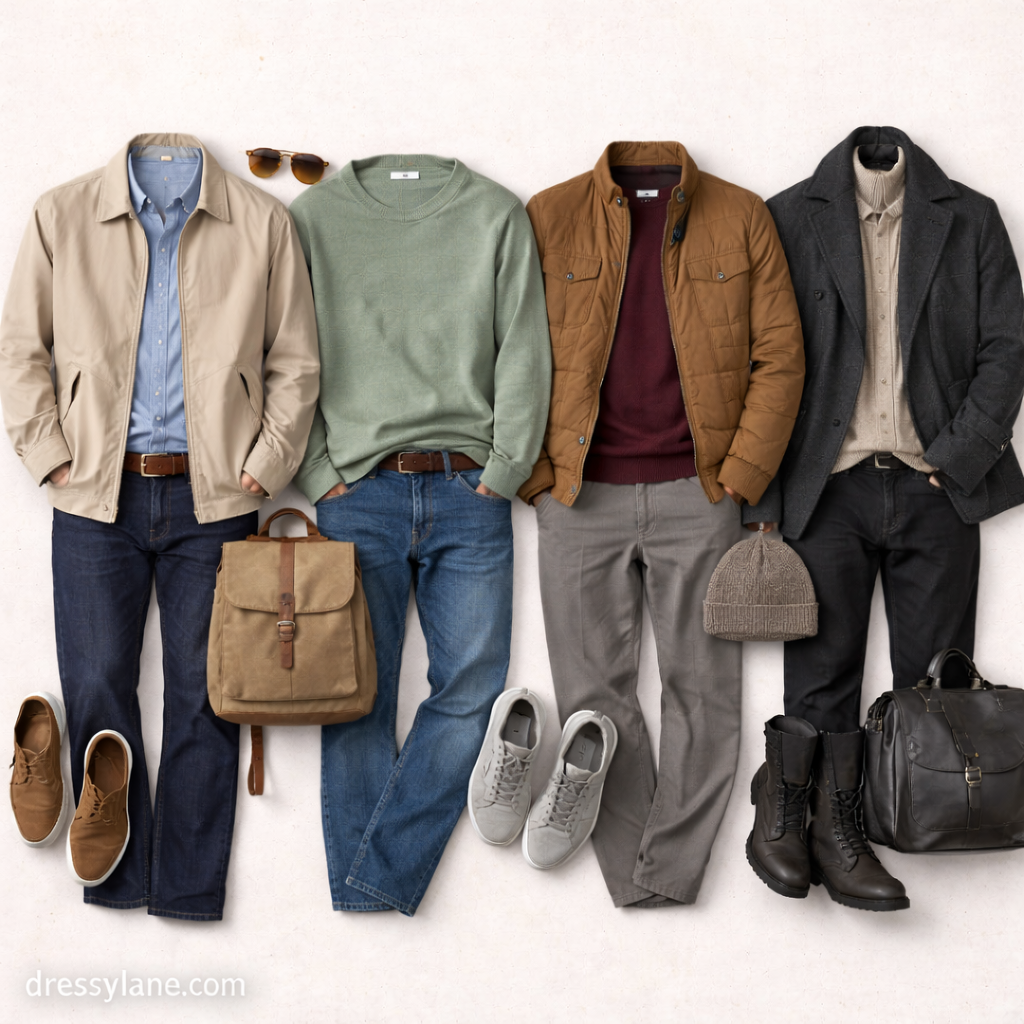
Men’s year-round style benefits from consistency and clean silhouettes.
Core Pieces for Men
- Well-fitted jeans and trousers
- Neutral t-shirts and button-down shirts
- Lightweight sweaters
- Structured jackets or coats
- Shoes that work across multiple seasons
Seasonal Adjustments for Men
Warm months:
- Choose breathable fabrics
- Reduce layering
- Keep fits relaxed but polished
Cool months:
- Add sweaters and jackets
- Layer coats over everyday outfits
- Use scarves or boots for warmth
Men’s style stays sharp when proportions stay consistent year-round.
Simple Style Tips for Men
- Avoid overly seasonal trends
- Prioritize fit over fashion
- Choose footwear that balances comfort and appearance
Dressing Well Year-Round: Women
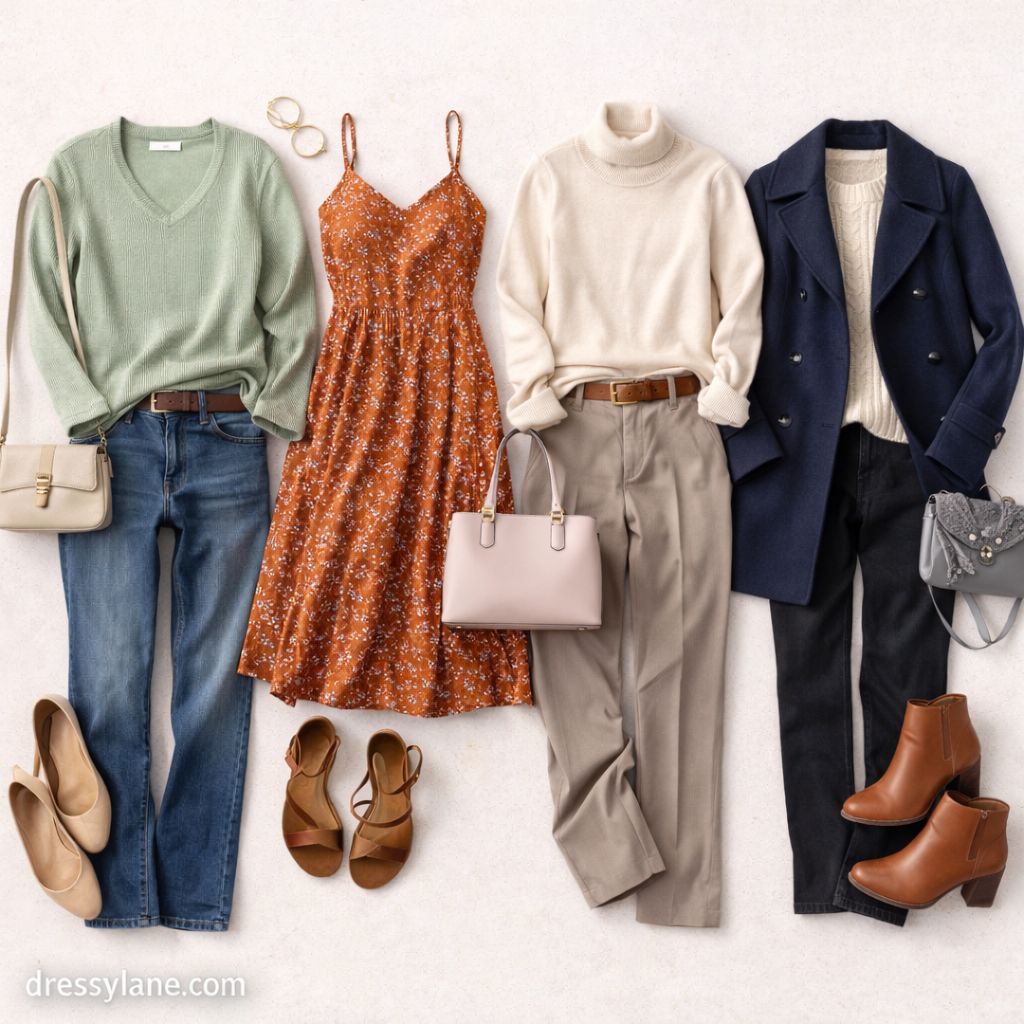
Women’s wardrobes adapt easily when built with flexibility in mind.
Core Pieces for Women
- Dresses that layer well
- Tailored pants
- Neutral tops
- Cardigans, blazers, and jackets
- Versatile footwear
Seasonal Adjustments for Women
Warm months:
- Opt for breathable fabrics
- Choose flowy or relaxed silhouettes
- Keep accessories light
Cool months:
- Layer dresses with tights or boots
- Add structured coats
- Use scarves and wraps for warmth
Small layering changes can carry outfits through multiple seasons.
Simple Style Tips for Women
- Use layers to regulate comfort
- Choose shoes that work across weather conditions
- Rotate accessories seasonally instead of replacing outfits
Fabric Choices That Make Dressing Easier
Fabric choice plays a huge role in year-round wearability.
Look for:
- Cotton for breathability
- Wool for warmth and temperature regulation
- Blends that adapt to different climates
- Stretch fabrics for comfort and movement
Avoid fabrics that only work in extreme temperatures.
Layering Without Making Things Complicated
Layering doesn’t need to be bulky or fussy.
Keep it simple:
- Start with lightweight base layers
- Add one mid-layer if needed
- Finish with weather-appropriate outerwear
The fewer layers you need to think about, the better.
Common Mistakes That Cause Overthinking
- Buying clothes for only one season
- Over-layering unnecessarily
- Ignoring fit when adding layers
- Dressing for weather instead of occasion
- Constantly chasing trends
Simplicity leads to consistency.
Final Thoughts
Dressing well in every season doesn’t require a constantly changing wardrobe. When you focus on adaptable pieces, thoughtful layering, and timeless style, getting dressed becomes easier — no matter the weather.
By simplifying your approach and trusting your core wardrobe, you’ll look polished, feel comfortable, and stop overthinking what to wear all year long.