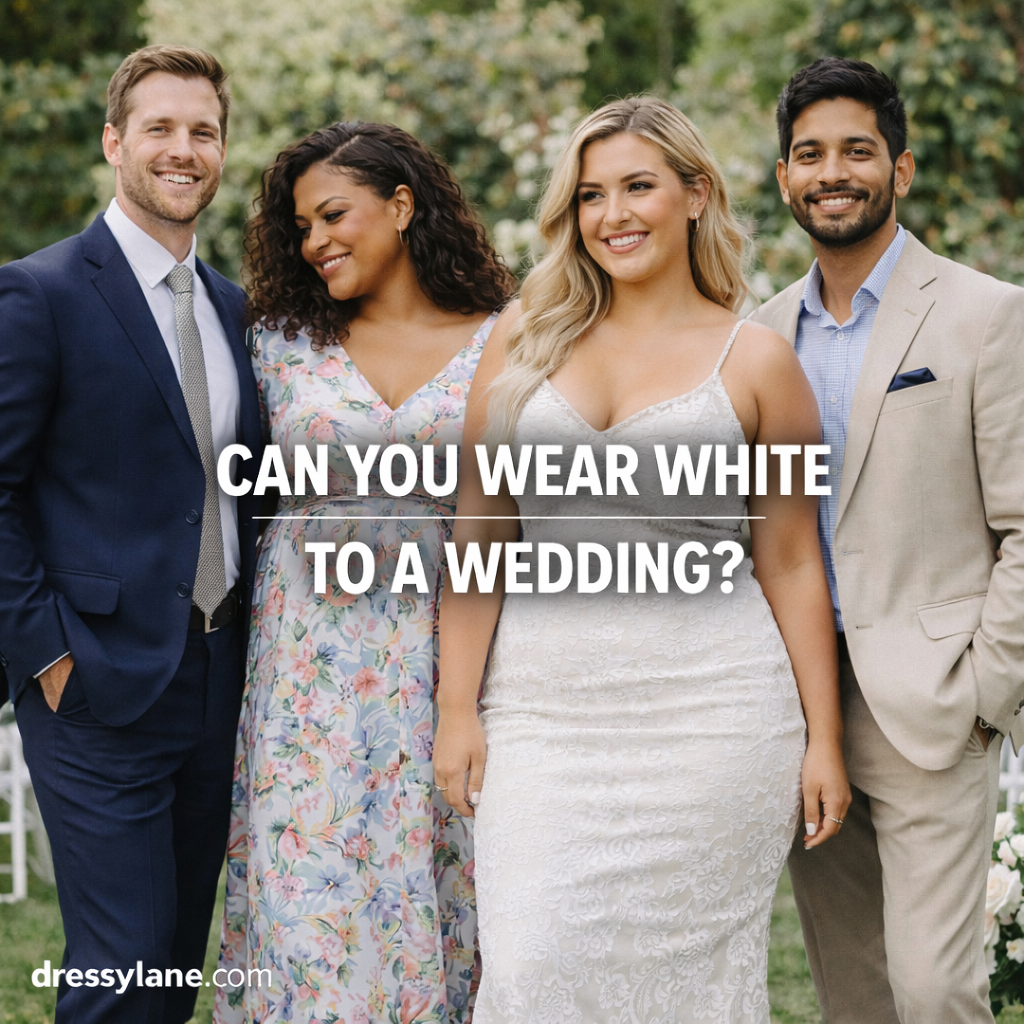
Few wedding guest questions cause more confusion than this one: can you wear white to a wedding? While fashion rules have evolved over the years, wearing white as a guest is still a sensitive topic. The answer isn’t always a simple yes or no—it depends on tradition, context, and the couple’s preferences. This guide breaks down when wearing white is considered inappropriate, when it may be acceptable, and what men and women should consider before choosing a white or white-adjacent outfit.
Why Wearing White to a Wedding Is Traditionally Avoided
Historically, white has been reserved for the bride as a symbol of celebration and distinction.
The main reasons guests avoid white include:
- White draws attention away from the bride
- It can appear disrespectful or unaware of tradition
- It may create confusion in photos
- It risks offending the couple or their families
Because weddings are about honoring the couple, guests are generally expected to avoid anything that competes with bridal attire.
Are There Situations Where Wearing White Is Acceptable?
In some modern or nontraditional weddings, wearing white may be allowed—but only under specific circumstances.
White may be acceptable if:
- The couple explicitly states it’s allowed
- The dress code encourages all-white attire
- The wedding is a themed or cultural event where white is normal
- The outfit is clearly not bridal in style
When in doubt, it’s always better to choose a different color.
Can Women Wear White to a Wedding?
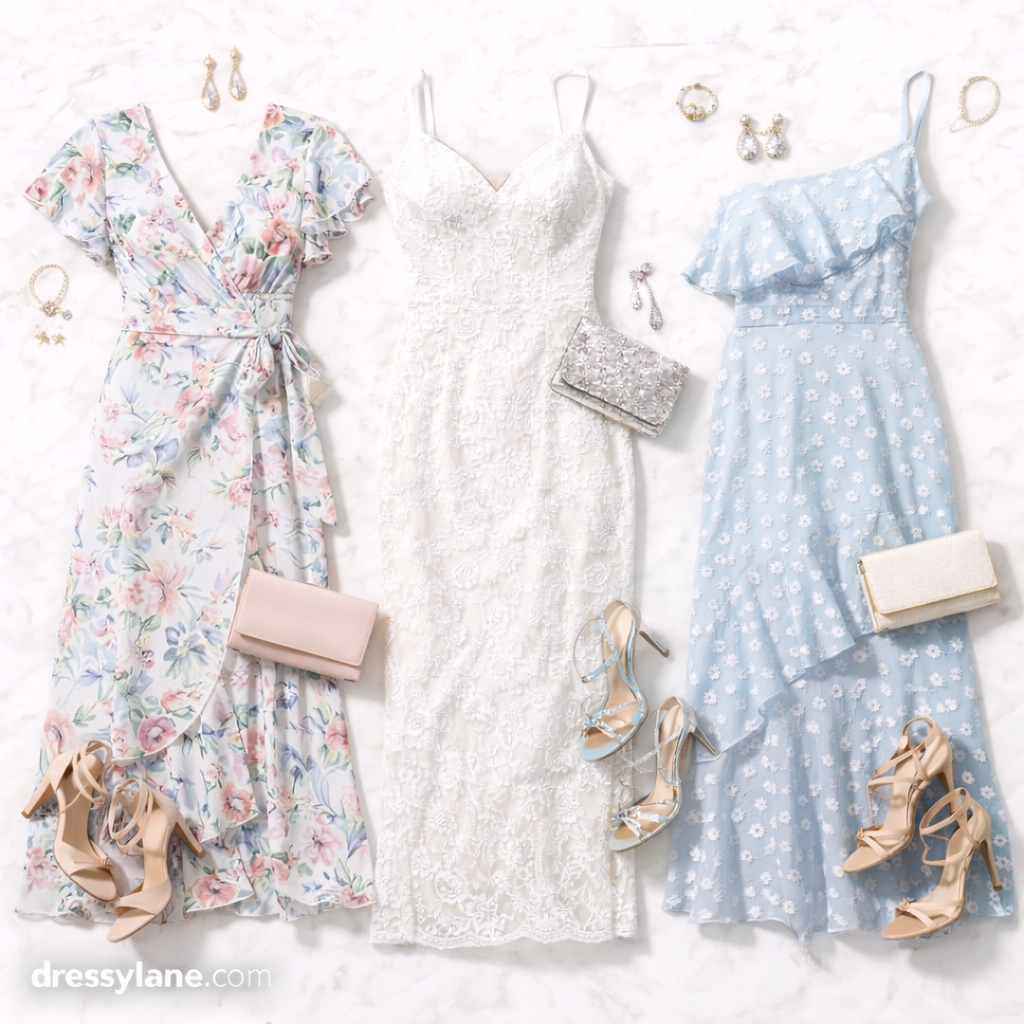
For women, wearing white is typically more noticeable and more likely to be mistaken for bridal wear.
When Women Should Avoid White
- Traditional or formal weddings
- Church ceremonies
- Large weddings with professional photography
- Weddings where the bride is wearing a classic white gown
What Women Can Wear Instead
- Soft pastels
- Jewel tones
- Floral patterns
- Neutral colors like beige, blush, or gray
If an outfit is predominantly white—even with patterns—it’s often best to skip it unless you’ve been told otherwise.
Can Men Wear White to a Wedding?
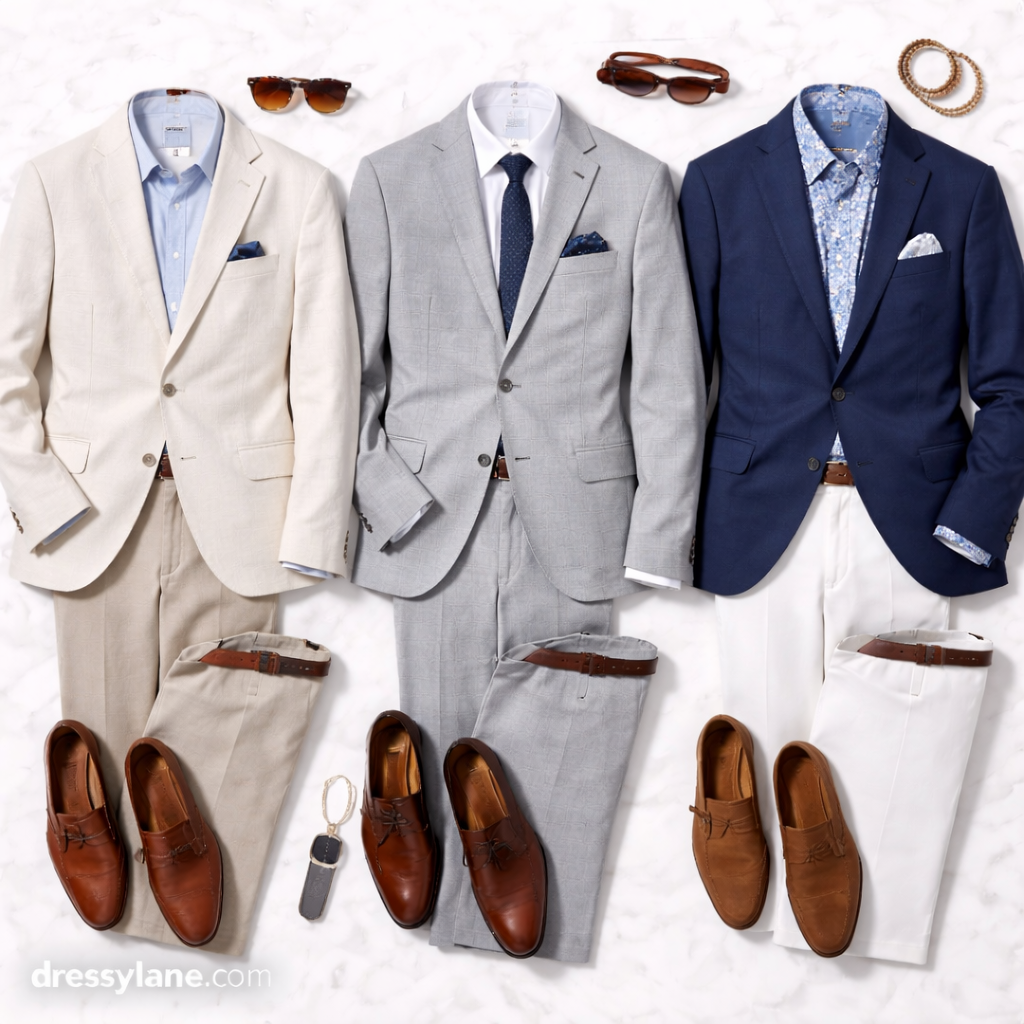
Men wearing white is generally less controversial, but context still matters.
When White Is Usually Acceptable for Men
- White dress shirts under darker suits
- Light-colored shirts paired with neutral jackets
- Casual beach or summer weddings
When Men Should Avoid All-White Looks
- White suits or jackets at traditional weddings
- Outfits that resemble the groom’s attire
- Formal evening weddings where darker tones are expected
A white shirt is usually fine, but a head-to-toe white outfit may still feel inappropriate.
What About Off-White, Cream, or Ivory?
Colors close to white can be just as risky.
These shades can still appear bridal in photos:
- Ivory
- Cream
- Champagne
- Very pale beige
If a color looks white from a distance or in bright lighting, it’s safer to avoid it.
Cultural and Themed Wedding Considerations
Wedding traditions vary across cultures.
In some cultures:
- White is worn by guests
- Red, gold, or other colors are reserved for the bride
- Dress codes may be very flexible
Always consider:
- Cultural customs
- Religious traditions
- Instructions on the invitation or wedding website
Respecting these details shows thoughtfulness and awareness.
How to Decide If Your Outfit Is Appropriate
If you’re unsure whether your outfit crosses the line, ask yourself:
- Could this be mistaken for bridal wear?
- Would I feel uncomfortable standing next to the bride?
- Does the dress code mention white or specific colors?
- Would a different color work just as well?
If the answer feels uncertain, choose a safer alternative.
Common Wedding Guest Mistakes to Avoid
- Wearing white without explicit permission
- Choosing overly formal or attention-grabbing outfits
- Ignoring dress codes
- Assuming modern weddings have no rules
Thoughtful outfit choices help maintain harmony on an important day.
Final Thoughts
So, can you wear white to a wedding? In most cases, it’s still best to avoid it—especially for women. While modern weddings are more flexible, white remains closely associated with the bride. When attending a wedding, choosing a different color shows respect, awareness, and consideration for the couple. When in doubt, play it safe—there are plenty of stylish options that won’t raise eyebrows.