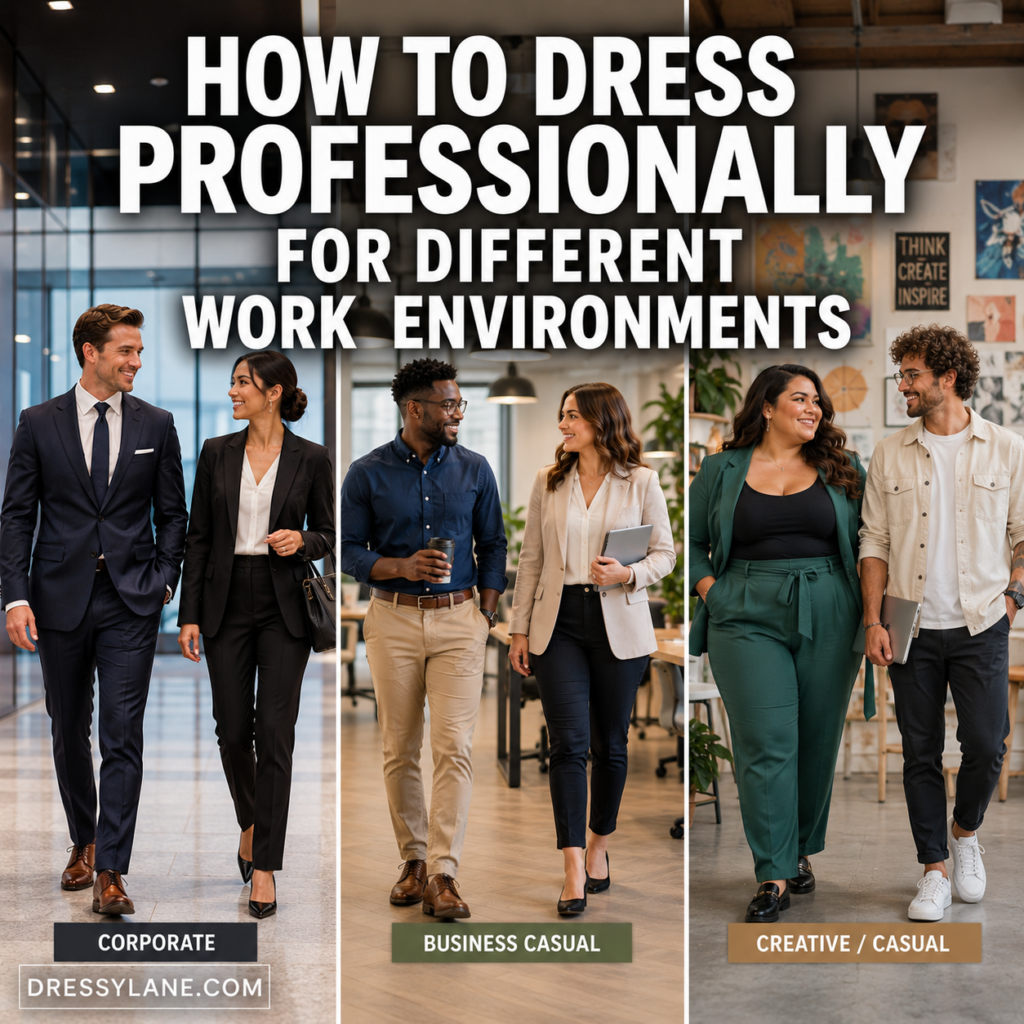

Dressing for a formal office doesn’t mean wearing the same black suit every day. It means choosing clothing with enough structure and polish to suit a workplace where business professional attire is the norm.
In law firms, financial institutions, and executive offices, that often means tailored suits, pressed shirts, coordinated separates, and dress shoes. The exact expectations vary, but a navy wool suit or a well-cut blazer with matching trousers is usually a dependable starting point.
The challenge is building a wardrobe that meets those expectations without feeling uncomfortable or repetitive, especially when you’re dressing formally five days a week.
What Counts as Formal Office Attire?
Formal office attire is generally more structured than business casual. A blazer worn with jeans might work in a marketing agency, but a traditional law firm may expect a matching suit.
Common formal office pieces include tailored jackets, matching trousers or skirts, dress shirts, blouses, and structured dresses.
Before investing in a new wardrobe, look at what colleagues wear on ordinary workdays. Some offices require suits throughout the week, while others reserve their most formal clothing for client meetings and presentations.
I’d recommend following the written dress code first, then paying attention to how it’s applied in practice. There’s little reason to buy five complete suits if your workplace only requires them twice a week.
What Women Should Wear to a Formal Office
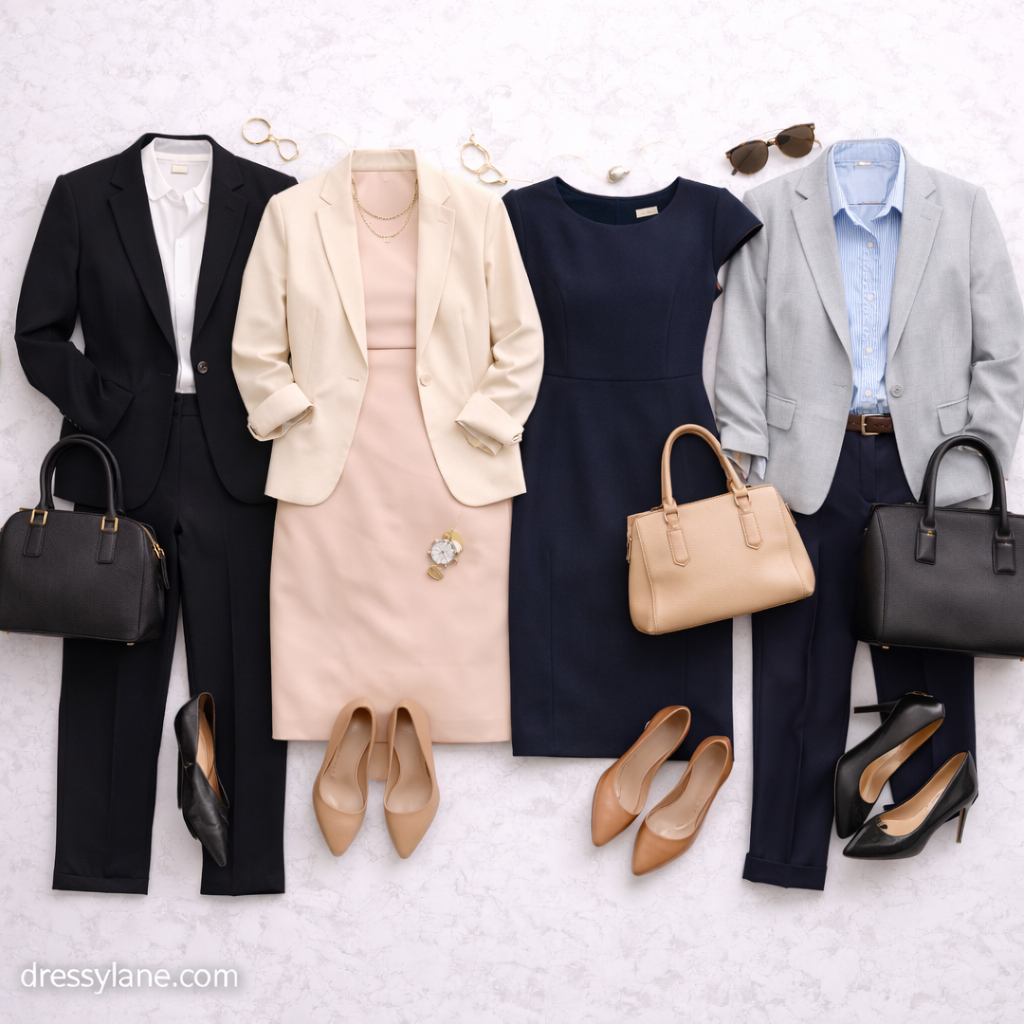
A coordinated pantsuit is one of the most versatile options for a formal office. A navy single-breasted blazer with matching straight-leg trousers and a cream blouse creates a professional outfit that can be worn in several combinations.
For variety, consider these alternatives:
- A charcoal skirt suit with a knee-length pencil skirt and white cotton blouse.
- A structured midi sheath dress with a matching blazer.
- Black tailored trousers with a coordinating jacket and fine-gauge knit shell.
- A navy suit with a pale blue blouse and leather loafers.
Look for jackets that sit smoothly across the shoulders and trousers that fall neatly over your shoes.
For skirts and dresses, check the length while seated, not just when standing in front of a mirror. A hemline that looks comfortable at home can feel considerably shorter when you’re sitting through a long meeting.
Shoes and accessories
Leather loafers, pointed-toe flats, and low block heels are all practical options, provided they fit your workplace’s dress code.
I’d actually skip very high heels for everyday office wear, particularly if your job involves walking between departments or standing during presentations. A polished pair of low heels or structured flats can look just as appropriate without becoming uncomfortable by lunchtime.
Finish with a structured tote, simple earrings, or a classic watch. Your bag should comfortably accommodate a laptop and documents without looking overstuffed.
What Men Should Wear to a Formal Office
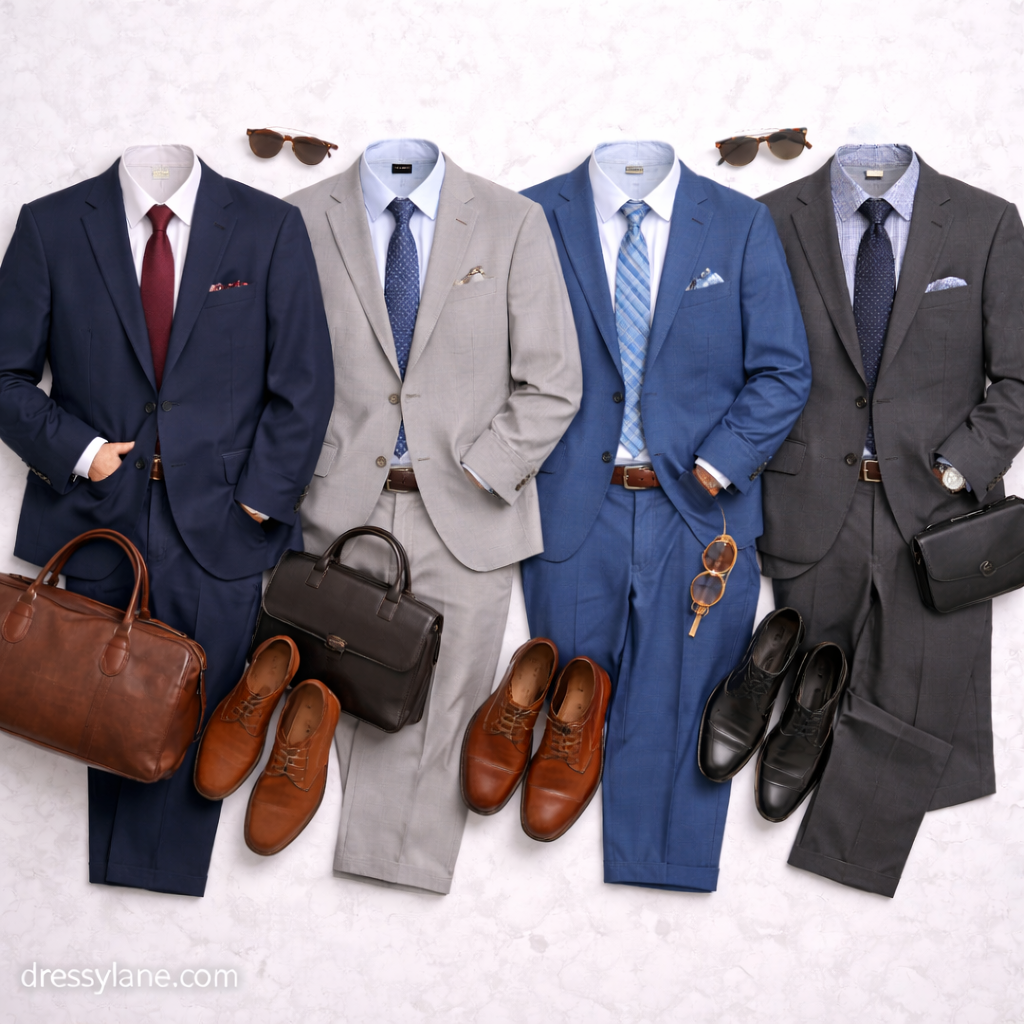
For men, a two-piece suit remains the foundation of a traditional formal office wardrobe.
Navy and charcoal are particularly useful because they coordinate easily with white and pale blue shirts, conservative ties, and black or brown leather shoes.
A reliable everyday combination is a charcoal wool-blend suit, white cotton dress shirt, burgundy tie, and black Oxford shoes.
A navy suit with a pale blue shirt and dark brown Derby shoes provides another option, depending on the office’s footwear expectations.
Pay attention to the tailoring
A suit doesn’t need to be expensive to look good, but the fit needs to be right.
The jacket should sit flat across the shoulders without pulling at the button. Shirt cuffs should extend slightly beyond the jacket sleeves, and trousers should have a clean break over the shoes.
Avoid trousers that bunch heavily at the ankles or jackets with sleeves covering most of your hands.
If your budget allows for only one alteration, I’d prioritize fixing an obvious trouser-length problem. Excess fabric pooling over dress shoes can make an otherwise well-fitting suit look unfinished.
Keep ties relatively simple. Solid navy, burgundy, and subtle geometric patterns are easy to coordinate without making the outfit feel repetitive.
Choose Fabrics That Survive a Full Workday
Fabric matters when you’re wearing formal clothing for eight or nine hours.
Wool and wool-blend suiting are dependable choices because they drape well, offer structure, and generally recover from light creasing better than linen.
For shirts, cotton poplin provides a crisp finish, while cotton twill tends to feel slightly more substantial.
Women may also find matte crepe useful for dresses and blouses because it offers a smooth appearance without excessive shine.
I’d avoid buying a suit based on how it looks on the hanger alone. Sit down in it, bend your arms, and check whether the fabric pulls across your back or thighs.
A little stretch in a wool-blend suit can improve comfort. Stretch fabric itself isn’t unprofessional; the important thing is that the garment retains its shape rather than looking like casual activewear.
Build Your Wardrobe Around a Few Reliable Colors
You don’t need a closet filled with different colors to avoid repeating outfits.
Start with navy, charcoal, black, or medium gray for suits and tailored separates. Add white, cream, pale blue, or muted blush shirts and blouses.
For example, a navy suit can look different with a white shirt and burgundy tie one day and a pale blue shirt and charcoal tie the next.
Similarly, a charcoal women’s pantsuit can be worn with a cream blouse, soft blue knit shell, or matching jacket and skirt combination.
Subtle pinstripes and small checks can also work in formal offices, but solid colors are easier to mix when you’re building a wardrobe on a budget.
Dressing Formally in Summer and Winter
Hot weather doesn’t automatically mean abandoning tailored clothing.
In summer, look for lightweight wool, breathable cotton shirts, and suits with lighter construction. Tropical wool is particularly useful because its open weave allows better airflow while maintaining a formal appearance.
Avoid heavy polyester linings when possible, especially if you commute on foot.
During winter, a tailored wool overcoat looks more coordinated over a suit than a bulky casual jacket.
Fine-gauge merino sweaters can also provide warmth under a blazer where the dress code permits them. Choose a thin knit that doesn’t create bulk around the shoulders or sleeves.
Keep a lint roller and compact umbrella at work. They’re inexpensive additions that can save an outfit before an unexpected client meeting.
What Not to Wear to a Formal Office
In a workplace with a strict business professional dress code, jeans, athletic sneakers, hoodies, and casual T-shirts generally aren’t appropriate unless the company specifically allows them.
Other common problems are less obvious.
A shirt that gaps between buttons, trousers that drag along the floor, or a jacket that pulls across the chest can undermine the appearance of an otherwise polished outfit.
Avoid wearing brand-new shoes for an entire workday without breaking them in first.
Strong fragrance is also worth reconsidering, particularly in shared offices and small conference rooms.
Build a Formal Office Wardrobe Without Overspending
You don’t need a different suit for every day of the week.
Start with two well-fitting suits in coordinating colors, several shirts or blouses, and two pairs of appropriate shoes. Add a third suit or additional separates as your budget allows.
Choose pieces that can be rotated without looking identical every day.
For example, navy and charcoal suits give men several shirt-and-tie combinations. Women can create additional outfits with coordinating trousers, skirts, blouses, and jackets.
Follow garment care labels, rotate your shoes, and allow suits to air between wears. Avoid unnecessary dry cleaning, which can be hard on certain fabrics over time.
Spending a little on alterations and regular maintenance is often more useful than constantly replacing inexpensive clothing.
Final Thoughts
Knowing what to wear to a formal office becomes easier once you understand the workplace’s expectations and have a few dependable outfits ready.
Focus on properly fitted tailoring, comfortable dress shoes, and fabrics that maintain their shape throughout the day.
A small wardrobe of well-chosen suits and separates can take you through ordinary office days, presentations, and client meetings without requiring a completely different outfit for every occasion.