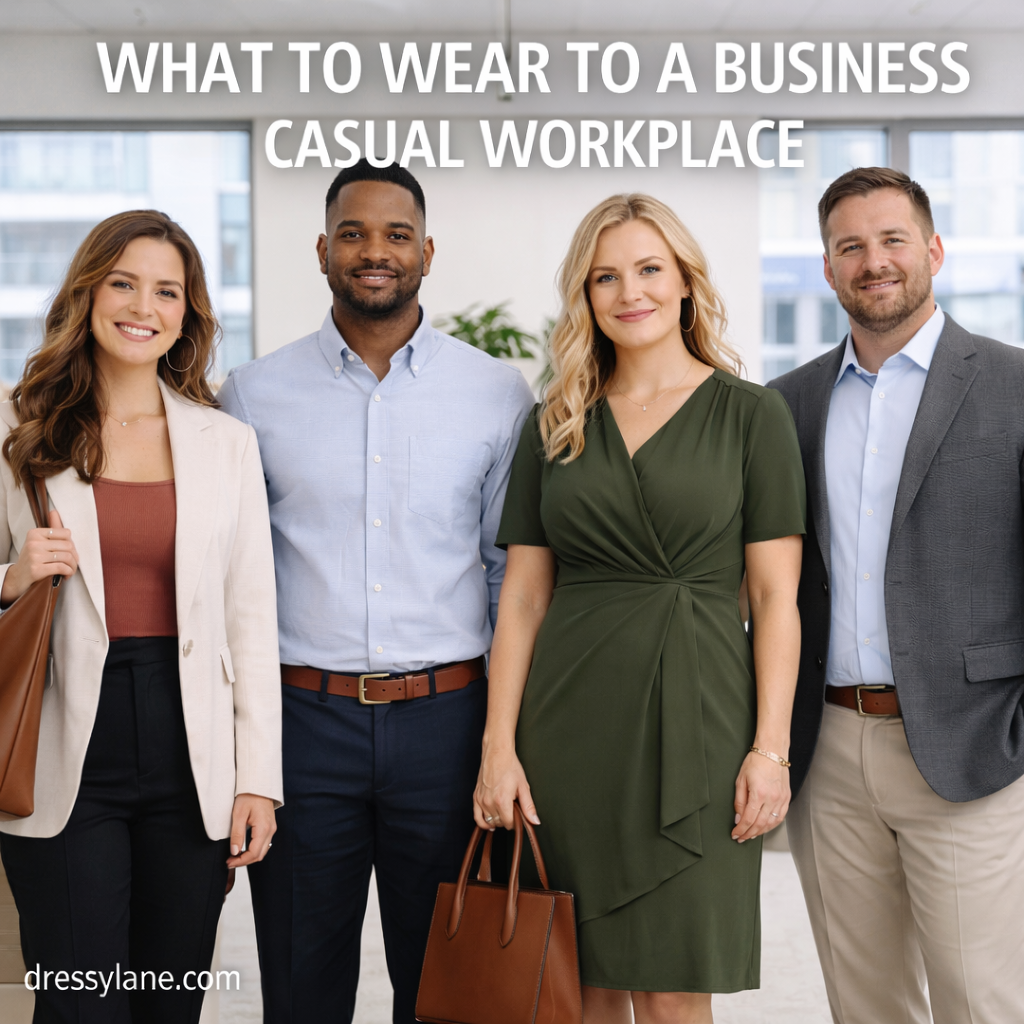
Business casual sounds straightforward until you’re standing in front of your closet wondering whether jeans are acceptable or if you need to wear a blazer every day.
The answer depends on where you work. A business casual dress code at a financial services company might mean tailored trousers and collared shirts, while a marketing agency could allow dark denim and clean sneakers.
The trick is understanding which pieces make an outfit look professional without making it feel overly formal. You don’t need a closet full of suits or expensive designer clothing. A few well-fitting separates can handle most business casual workplaces.
Here’s how to get the balance right.
What Does Business Casual Actually Mean?
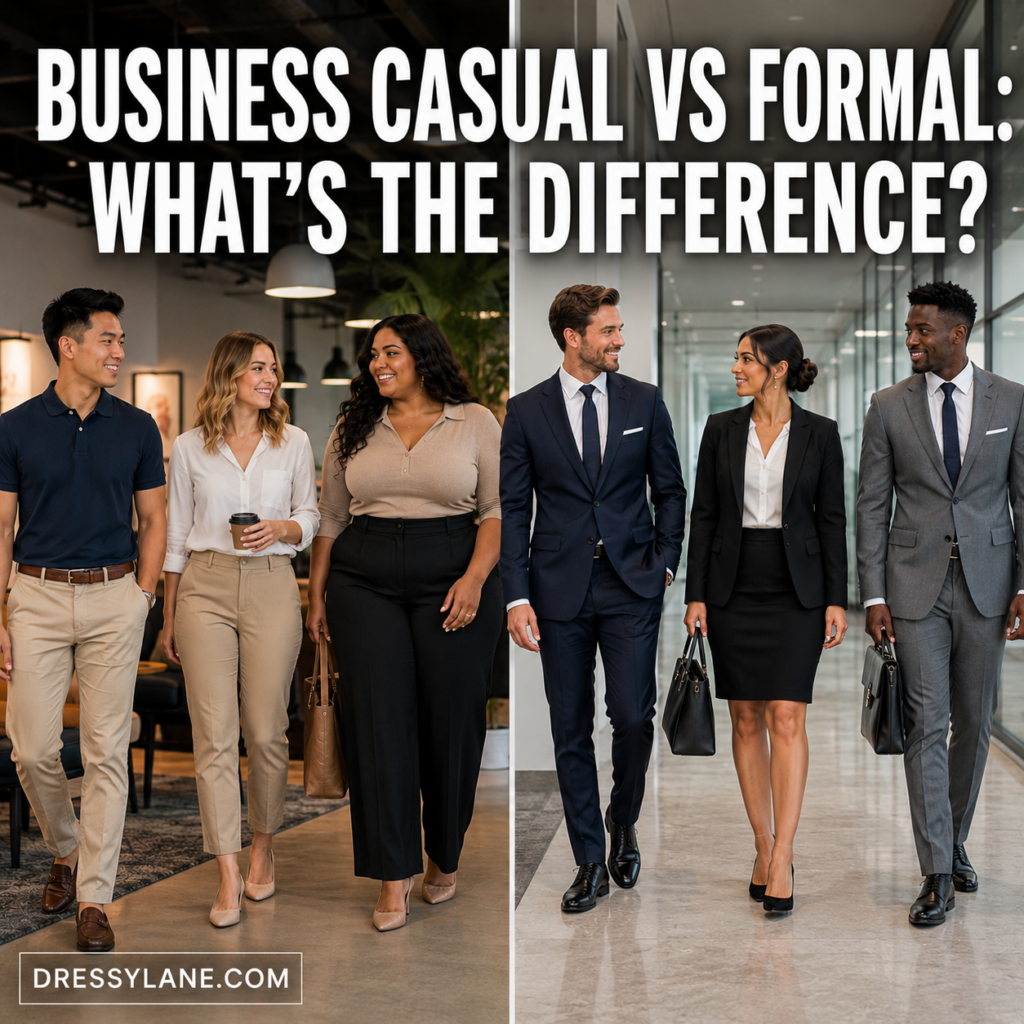
Business casual is a step below traditional business professional attire. It removes some of the formality of matching suits, ties, and dress shoes while keeping the overall appearance suitable for an office.
Think chinos instead of suit trousers, a blouse instead of a formal dress shirt, or a fine-knit sweater instead of a blazer.
Common business casual pieces include:
- Tailored trousers, chinos, and certain styles of dark denim.
- Button-down shirts, blouses, and substantial knit tops.
- Blazers, cardigans, and lightweight sweaters.
- Loafers, flats, ankle boots, and leather dress shoes.
Jeans and sneakers are the biggest gray areas. Some workplaces welcome them, while others reserve them for casual Fridays.
If you’re starting a new job, check the employee handbook or ask about the dress code before assuming either is acceptable.
What Women Should Wear to a Business Casual Workplace
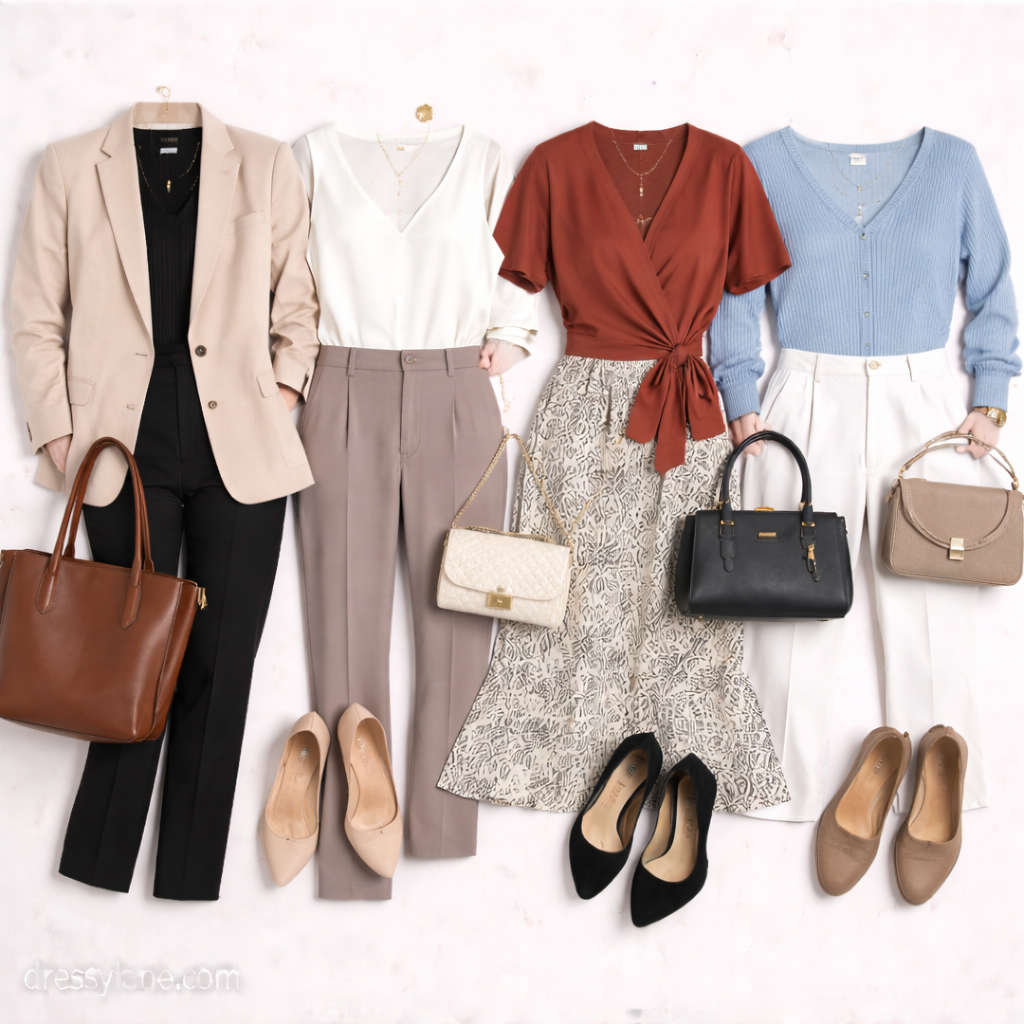
For women, business casual offers plenty of flexibility. The easiest outfits usually combine one tailored piece with something slightly softer.
For example, straight-leg trousers with a fine-gauge sweater look professional without needing a blazer.
Three Outfit Combinations That Work
1. Tailored trousers and a blouse
Choose navy or charcoal ankle-length trousers and pair them with a cream cotton-poplin blouse. Add leather loafers and a simple belt.
This combination works particularly well in offices that lean toward the formal side of business casual.
2. Midi skirt and lightweight knit
An A-line midi skirt with a tucked-in merino wool sweater creates a softer alternative to trousers.
Finish with ballet flats or low block heels.
3. Simple dress and blazer
A knee-length sheath dress or structured midi dress works well with a single-breasted blazer.
I’d choose a dress made from substantial ponte knit or a wool blend rather than thin jersey. These fabrics generally hold their shape better throughout a workday and are less likely to cling when sitting.
Shoes and Accessories
Leather loafers are one of the most useful shoes in a business casual wardrobe. They work with trousers, skirts, and many dresses without looking too formal.
Ballet flats, ankle boots, and low heels are also practical choices.
A structured tote is useful if you carry a laptop or notebook. Jewelry, makeup, and hairstyles can reflect your personal preferences while meeting any applicable workplace requirements.
What Men Should Wear to a Business Casual Workplace
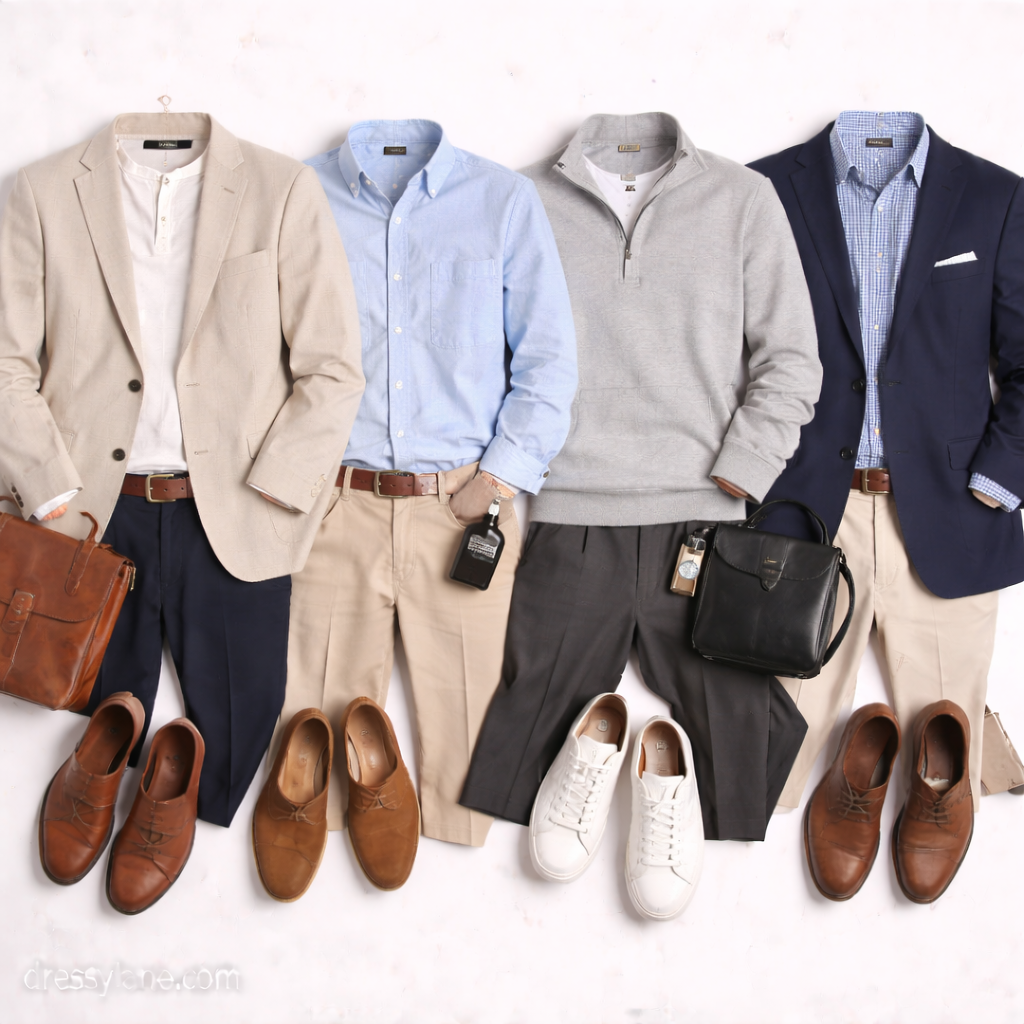
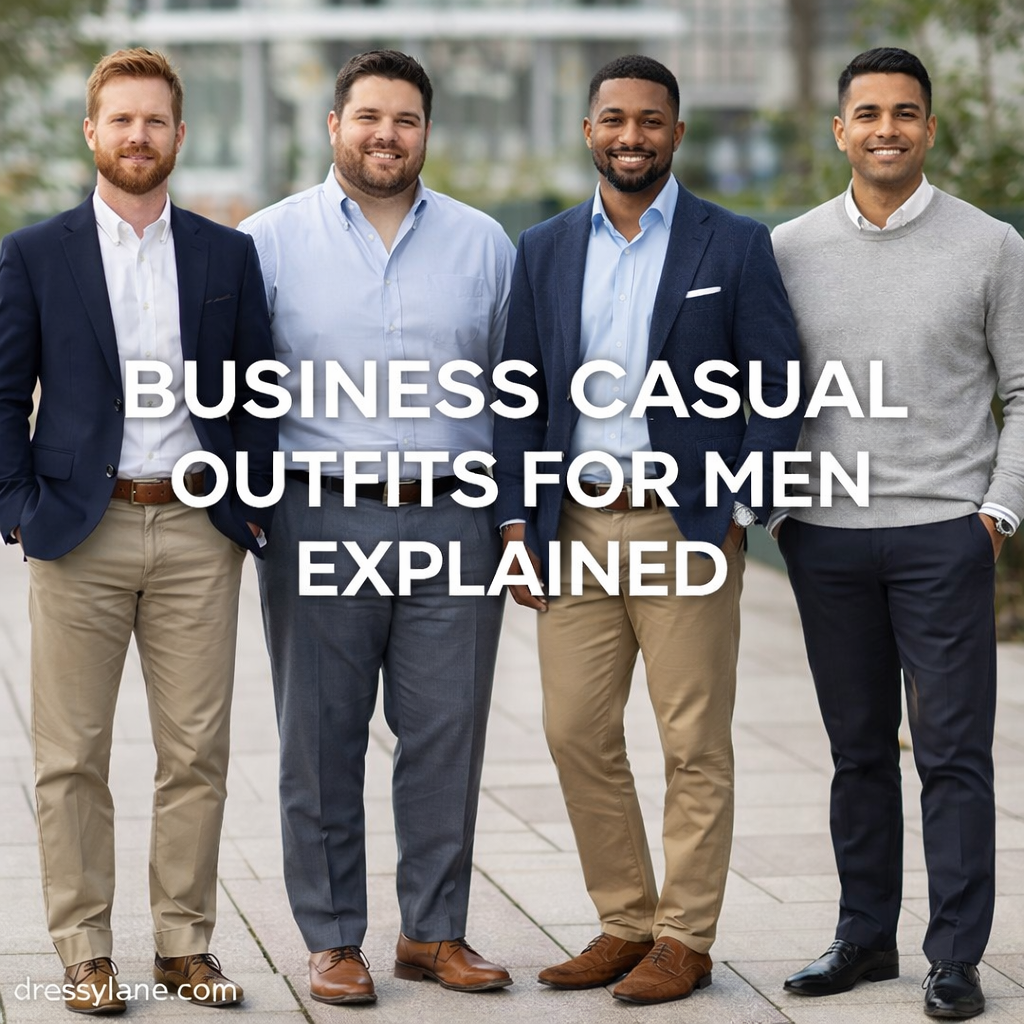
Men’s business casual clothing usually revolves around chinos, collared shirts, and versatile layers.
A matching suit isn’t necessary in most business casual offices, and a tie is generally optional unless your employer requires one.
Three Reliable Outfit Combinations
1. Chinos and an Oxford shirt
Pair navy chinos with a light blue cotton Oxford shirt and brown leather loafers.
This is a dependable everyday combination that works across many office environments.
2. Dress trousers and a sweater
Charcoal wool-blend trousers with a fine-knit crewneck sweater create a clean, understated look.
Layer a collared shirt underneath if the office leans more formal.
3. Chinos and a blazer
Stone-colored chinos, a white button-down shirt, and an unstructured navy blazer offer a polished option for presentations or client meetings.
An unstructured blazer is particularly useful because it provides the shape of a jacket without the stiffness of a traditional suit coat.
Getting the Fit Right
Chinos should sit comfortably at the waist without requiring an overly tight belt. A straight or gently tapered leg is a versatile choice.
For shirts, check that the buttons don’t pull across the chest and that the sleeves reach your wrists without bunching excessively.
Leather loafers, Derby shoes, and simple dress boots complete most outfits.
I’d hold off on athletic-style sneakers until you’ve seen what your coworkers wear.
Can You Wear Jeans to a Business Casual Office?
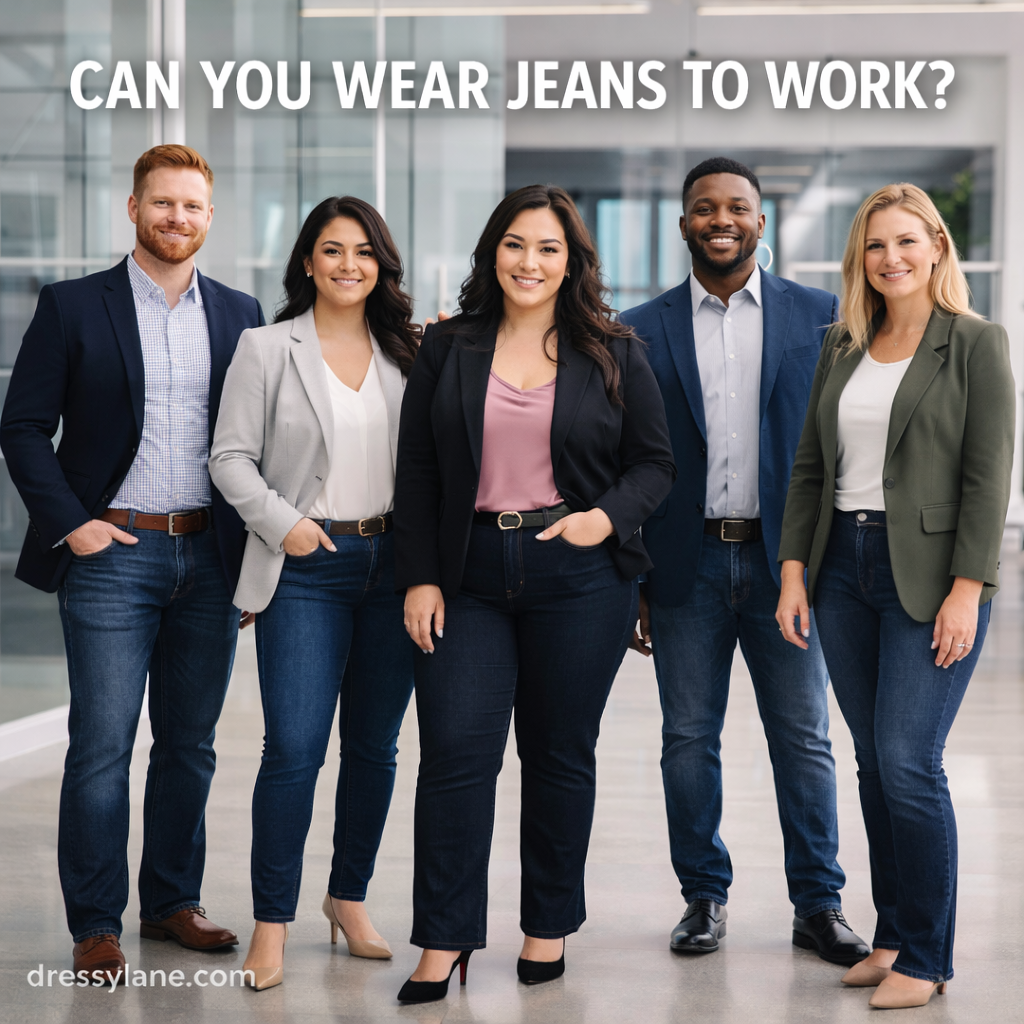
Sometimes, but the style of jeans makes a difference.
Dark indigo or black denim with a straight or slim-straight cut is easier to dress up than faded, distressed, or heavily embellished jeans.
For example, dark jeans paired with a tucked-in Oxford shirt, navy blazer, and leather loafers can look appropriate in a relaxed office.
The same jeans worn with a graphic T-shirt and running shoes create a completely different impression.
If your workplace doesn’t explicitly allow denim, ask before making it part of your regular rotation.
Adjusting Business Casual for Your Industry
Not every workplace interprets business casual the same way.
Corporate and finance offices: Tailored trousers, collared shirts, blouses, and blazers are common starting points. Leather shoes are generally a more dependable choice than sneakers.
Tech and creative workplaces: Dark denim, relaxed tailoring, knitwear, and minimalist sneakers may be acceptable. Pay attention to how employees dress for meetings versus ordinary office days.
Client-facing positions: Keep a blazer or structured jacket available for presentations and meetings, especially if clients follow a more formal dress code.
Rather than trying to dress exactly like everyone else, identify the workplace’s general level of formality and adapt your personal style within it.
Dressing Business Casual in Different Seasons
Summer business casual is largely about choosing the right fabric.
Lightweight cotton, linen blends, and tropical wool can feel more comfortable than thick polyester. Linen-blend trousers are especially useful because they offer breathability while generally wrinkling less than pure linen.
Short-sleeved collared shirts and breathable blouses may work depending on company policy.
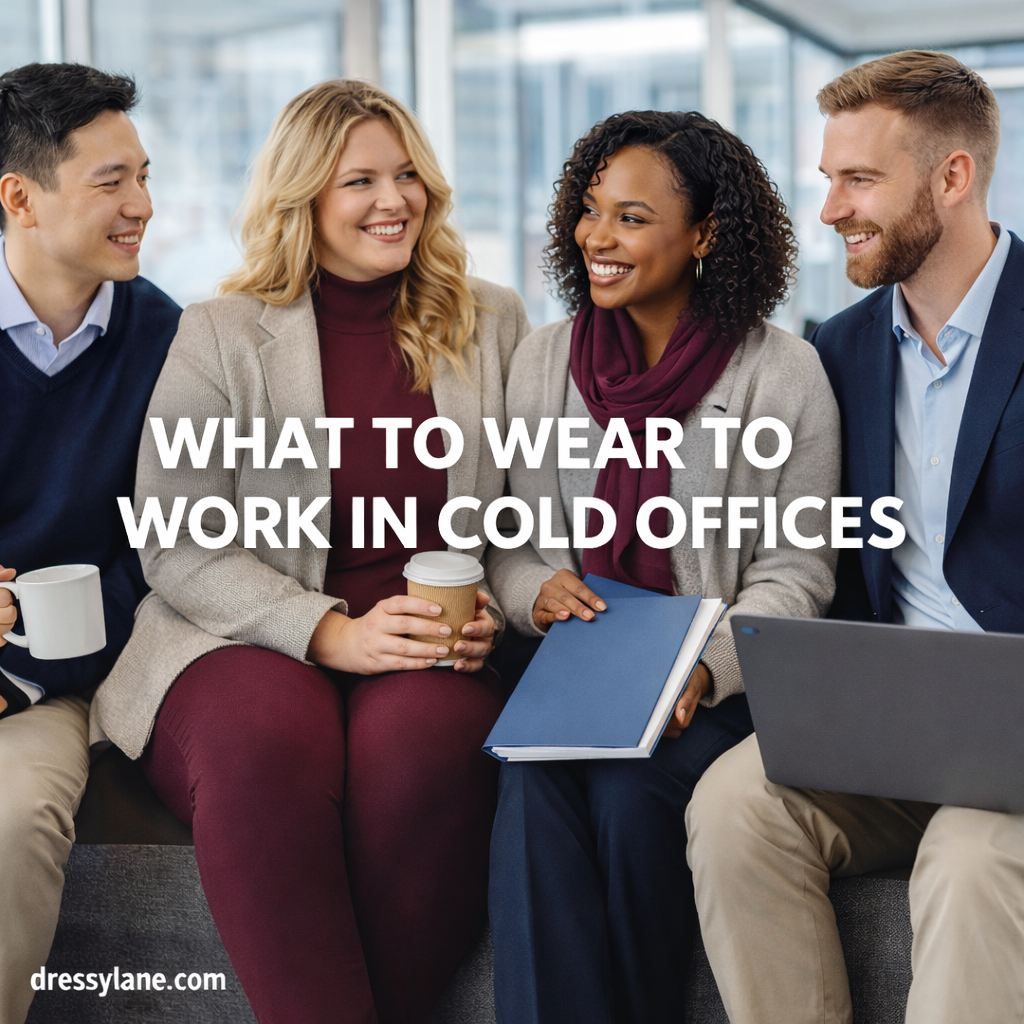
In winter, layer a merino wool sweater over a shirt or add a cardigan beneath your coat.
Leather ankle boots or dress boots can replace loafers during colder weather, provided they’re clean and appropriate for the office.
Business Casual Mistakes Worth Avoiding
The most common mistake isn’t wearing something too fashionable. It’s choosing pieces that don’t work well together.
A formal blazer over faded sweatpants won’t create a business casual outfit simply because one item is professional.
Other things to watch for include:
- Wrinkled shirts and trousers.
- Athletic leggings or gym clothing.
- Distressed denim when it isn’t permitted.
- Flip-flops and heavily worn sneakers.
- Clothing that pulls, sags, or needs constant adjustment.
One practical tip: try sitting at your desk in an outfit before committing to it. Trousers that feel comfortable while standing can become restrictive after several hours, and some shirts pull open when you reach forward.
Comfort is part of making an outfit work for an actual workday.
Building a Business Casual Wardrobe Without Overspending
You don’t need dozens of outfits to dress well throughout the week.
Start with two pairs of versatile trousers, three or four shirts or tops, a sweater, a blazer, and one pair of comfortable leather shoes.
Choose colors that work together. Navy, charcoal, cream, beige, and light blue make it easy to create different combinations without buying matching sets.
I’d prioritize trousers and shoes before spending money on extra jackets. Those are the pieces you’ll wear most frequently, and poor fit or uncomfortable footwear becomes noticeable during a full workday.
Add more clothing once you understand what you actually wear and what your workplace expects.
Final Thoughts
Knowing what to wear to a business casual workplace comes down to understanding the dress code and choosing pieces that work together.
Tailored trousers, chinos, blouses, Oxford shirts, knitwear, and polished shoes provide a dependable foundation for most offices.
Start with a slightly more formal outfit if you’re unfamiliar with the workplace, then adjust as you learn what’s acceptable.
A practical business casual wardrobe should make getting dressed easier, not leave you wondering every morning whether your outfit is appropriate.