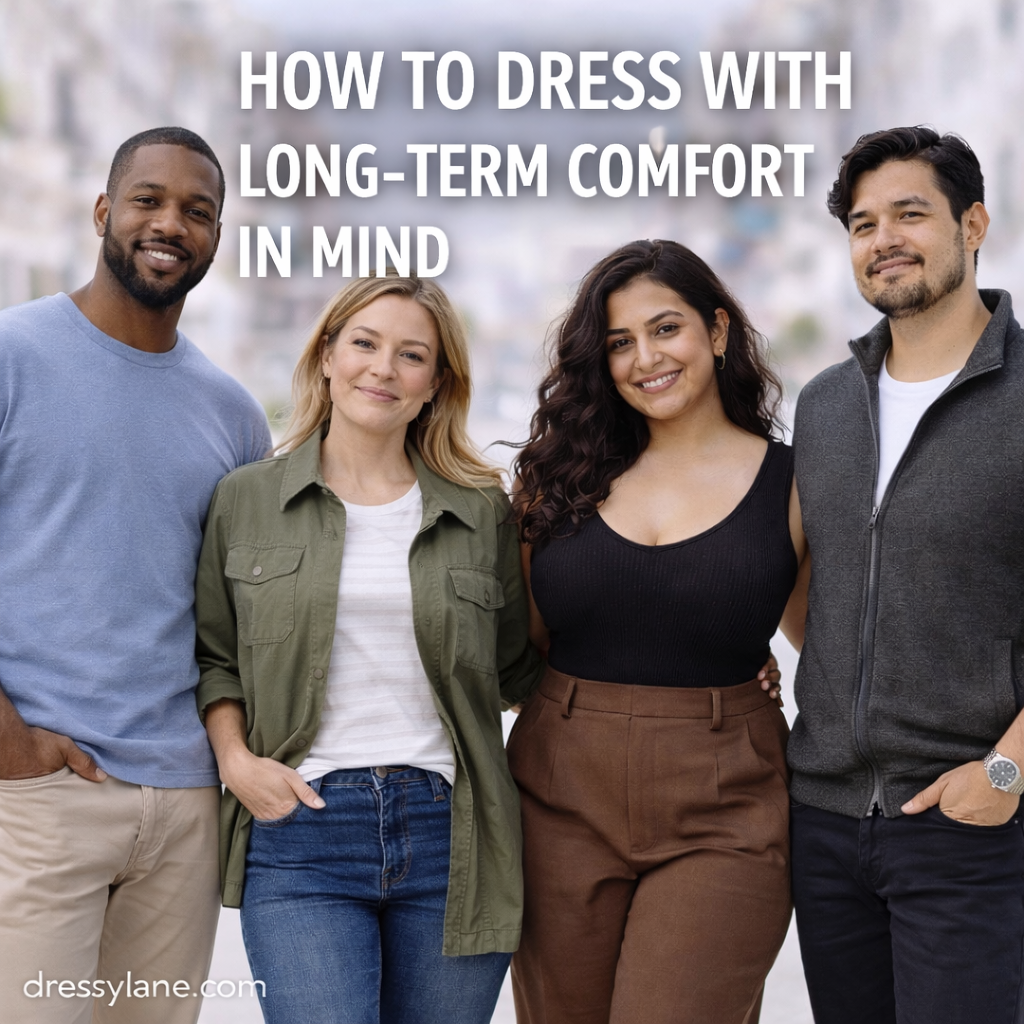
Comfort shouldn’t be something you tolerate—it should be something you plan for. When clothes feel good all day, you move more confidently, focus better, and stop counting down the hours until you can change. Dressing with long-term comfort in mind isn’t about giving up style; it’s about choosing pieces that support your body and your lifestyle from morning to night.
This guide shows you how to build outfits that stay comfortable over time, without looking sloppy or underdressed. The principles apply equally well to men and women.
What Long-Term Comfort Really Means
Comfort isn’t just about softness. It’s about how clothes behave over hours of wear.
Long-term comfort includes:
- Fabrics that breathe and move
- Fits that don’t pinch, pull, or restrict
- Shoes you can stand and walk in comfortably
- Layers that adapt to temperature changes
- Outfits that don’t require constant adjusting
If you’re thinking about your clothes all day, something isn’t working.
Start With Fabric Choices That Support You
Fabric is the foundation of comfort.
Comfort-forward fabric qualities to look for:
- Breathable materials
- Soft textures against the skin
- Stretch or flexibility where needed
- Durability that holds shape over time
Fabrics often associated with long-term comfort include:
- Cotton and cotton blends
- Linen and linen blends
- Soft knits
- Lightweight wool
- Performance or stretch fabrics
Comfort improves dramatically when fabric works with your body instead of against it.
Prioritize Fit Over Appearance Alone
Clothes that look good but don’t fit well rarely stay comfortable.
Signs of poor long-term fit:
- Waistbands that dig in when sitting
- Tight shoulders or arms
- Pants that pull or sag
- Shoes that rub or pinch
Comfortable fit means:
- Enough room to move naturally
- No constant adjusting
- Clean lines without tightness
A slightly relaxed fit often wears better over a full day than something overly tailored.
Build Outfits That Move With You
You shouldn’t feel limited by your clothes.
Movement-friendly outfit strategies:
- Stretch fabrics in pants and tops
- Layers that don’t restrict arms or shoulders
- Shoes with supportive soles
- Waistlines that remain comfortable while seated
If an outfit only feels good when standing still, it’s not designed for real life.
Choose Shoes With All-Day Wear in Mind
Shoes are often the biggest comfort breaker.
Long-term comfort shoe tips:
- Prioritize cushioning and support
- Choose flexible soles
- Avoid narrow toe boxes
- Break shoes in gradually
Shoes should match your daily activity level, not just the outfit’s appearance.
Dressing With Long-Term Comfort in Mind for Women
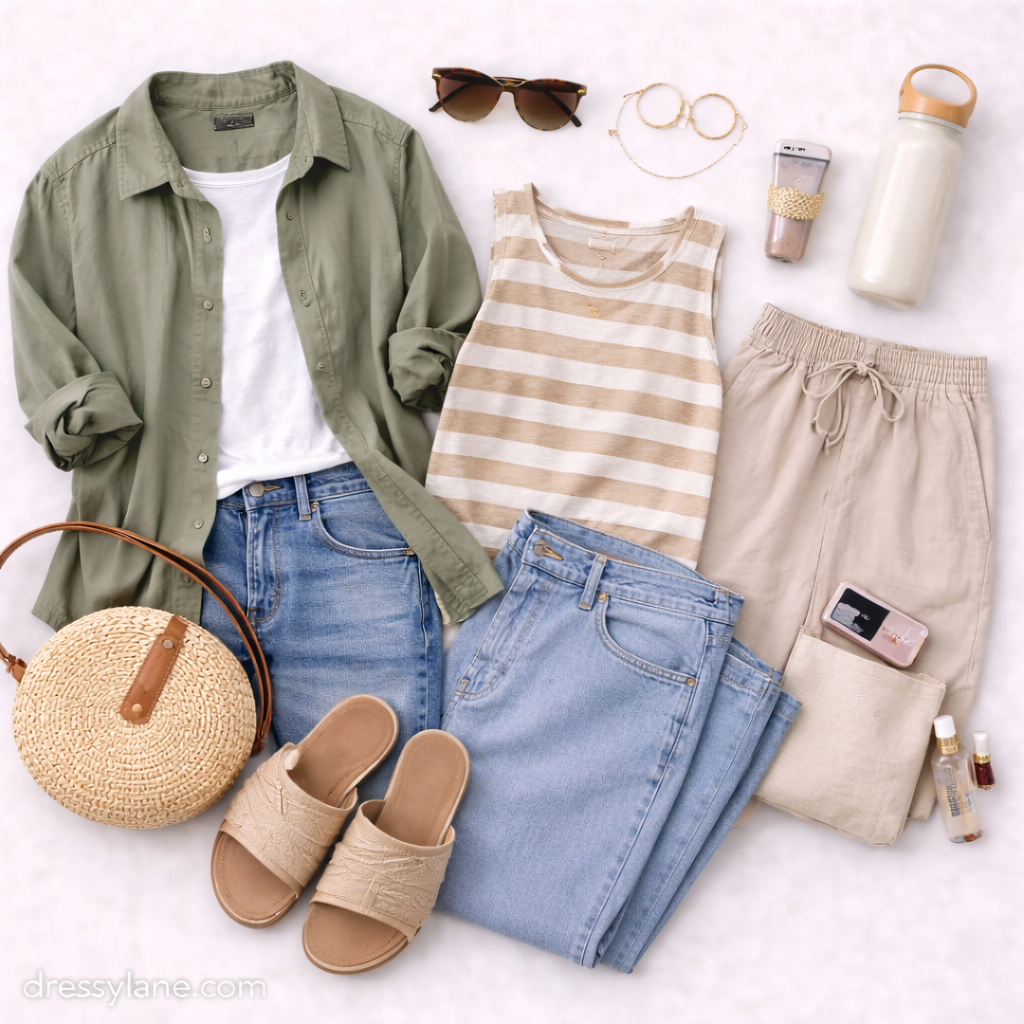
Women’s clothing often sacrifices comfort for structure or trend.
To prioritize comfort without losing style:
- Choose dresses and tops that don’t require constant adjustment
- Opt for flexible waistbands or stretch fabrics
- Keep heels low or rotate with supportive flats
- Layer lightly to adjust throughout the day
Comfort-forward outfit ideas for women:
- Soft dress + lightweight jacket + supportive flats
- Stretchy jeans + breathable top + sneakers
- Knit top + relaxed trousers + loafers
When clothes move with you, confidence follows naturally.
Dressing With Long-Term Comfort in Mind for Men
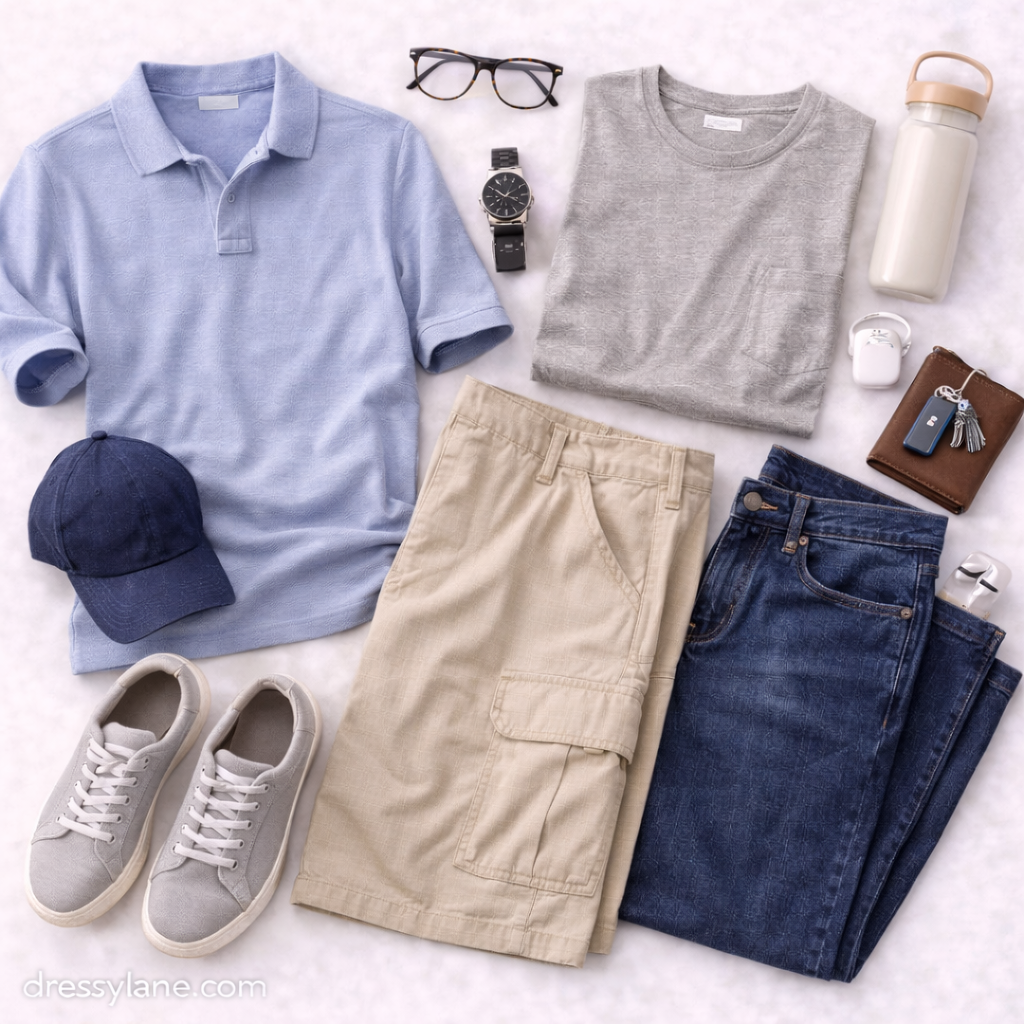
Men’s comfort issues often come from fit and footwear.
To improve long-term comfort:
- Choose pants with stretch
- Avoid overly tight shoulders and collars
- Stick to breathable layers
- Invest in supportive, versatile shoes
Comfort-forward outfit ideas for men:
- Soft t-shirt + stretch chinos + sneakers
- Button-down with ease + relaxed trousers + casual shoes
- Lightweight sweater + breathable pants + comfortable footwear
Comfort improves dramatically when basics fit properly.
Plan for Temperature Changes
Outfits that only work in one temperature create discomfort.
Temperature-smart strategies:
- Use removable layers
- Choose breathable base layers
- Avoid heavy fabrics indoors
- Keep outer layers easy to take off
Layering gives you control throughout the day.
Avoid Clothes That Demand Attention
Comfort drops when clothes need managing.
Clothing that reduces long-term comfort:
- Items that wrinkle excessively
- Fabrics that trap heat
- Shoes that require breaks
- Pieces that shift or slide constantly
The best outfits disappear once you put them on.
Edit Your Wardrobe Based on How Clothes Feel
Pay attention to what you actually enjoy wearing.
Ask yourself:
- Do I feel relief when I change out of this?
- Do I avoid this item during long days?
- Does this piece work for sitting, walking, and standing?
Clothes you don’t want to wear all day don’t belong in a comfort-focused wardrobe.
Build Comfort-Based Outfit Formulas
Reliable comfort formulas reduce daily stress.
Examples include:
- Breathable top + stretch bottoms + supportive shoes
- Soft one-piece outfit + light layer
- Relaxed base + structured outer layer
When you trust the formula, you stop second-guessing.
Final Thoughts
Learning how to dress with long-term comfort in mind is one of the most practical style upgrades you can make. When clothes support your body, movement, and environment, you look more confident—and feel better all day.
Whether you’re building outfits for men or women, comfort-first choices lead to fewer adjustments, less distraction, and style that truly lasts.