Decision fatigue happens when you’re forced to make too many small choices throughout the day — and clothing is often one of the first stress points. Standing in front of a full closet and still feeling like you have nothing to wear is a common sign that your wardrobe is working against you.
This guide explains how to dress in a way that reduces decision fatigue, saves time, and makes getting dressed feel effortless. With practical strategies for both women and men, you’ll learn how to simplify your wardrobe without sacrificing style or comfort.
What Decision Fatigue Looks Like in Everyday Dressing
Decision fatigue isn’t about lacking options — it’s about having too many that don’t work together.
Common signs include:
- Taking too long to get dressed
- Second-guessing outfits repeatedly
- Feeling overwhelmed by your closet
- Defaulting to the same few items
- Feeling mentally drained before the day even starts
The solution isn’t more clothes. It’s fewer, better-aligned choices.
Core Principles of a Low-Decision Wardrobe
Reducing decision fatigue starts with intentional structure.
Limit Your Color Palette
A smaller palette makes mixing effortless.
- Choose 3–5 core colors
- Add 1–2 accent colors if desired
- Stick to tones that work well together
When everything coordinates, fewer decisions are required.
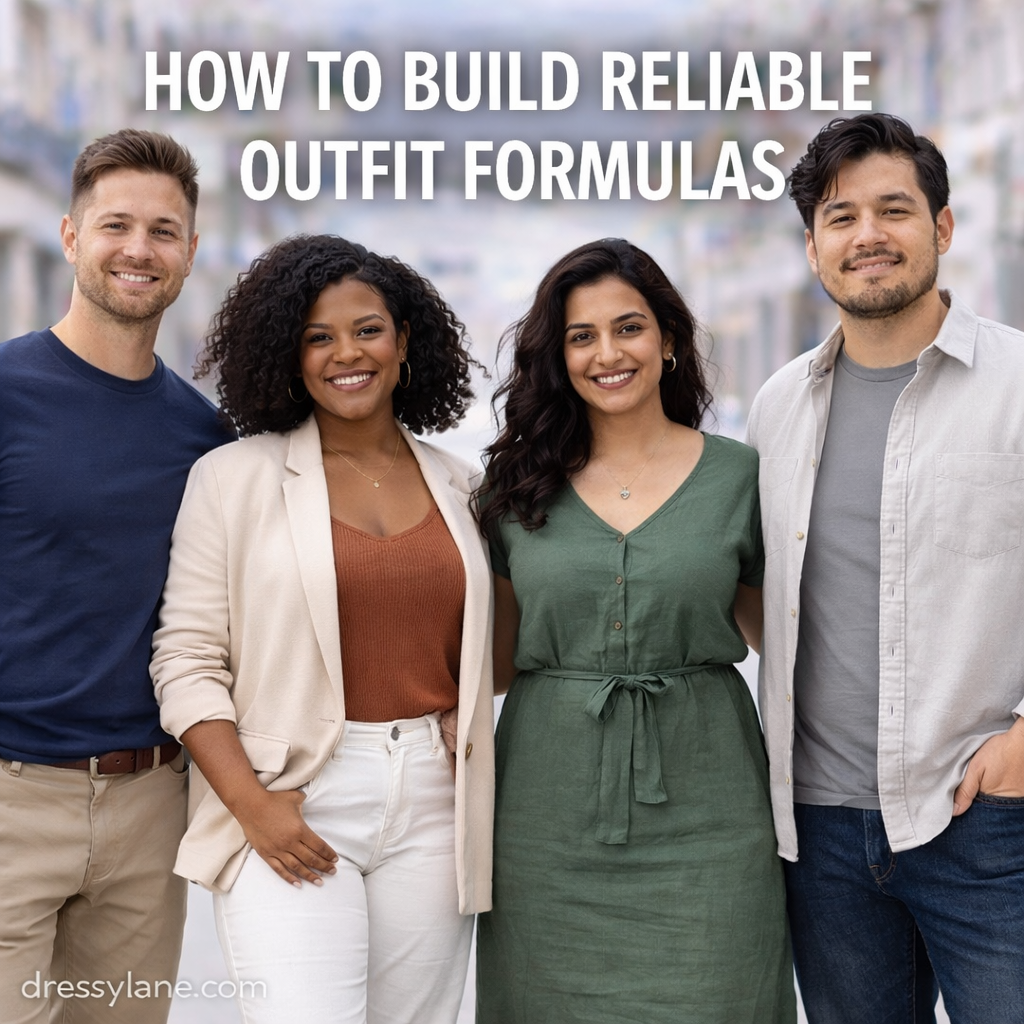
Create Outfit Formulas
Outfit formulas eliminate guesswork.
Examples:
- Top + bottom + layer
- Dress + jacket
- Shirt + pants + shoes
Once a formula works, repeat it.
Prioritize Comfort and Fit
Uncomfortable clothes create hesitation.
- Choose pieces you enjoy wearing all day
- Remove items that require constant adjusting
- Avoid styles that only work in specific situations
Repeat Without Guilt
Repeating outfits reduces mental load.
- Familiar outfits build confidence
- No one notices repetition as much as you think
- Consistency simplifies mornings
Dressing With Less Decision Fatigue: Women’s Guide
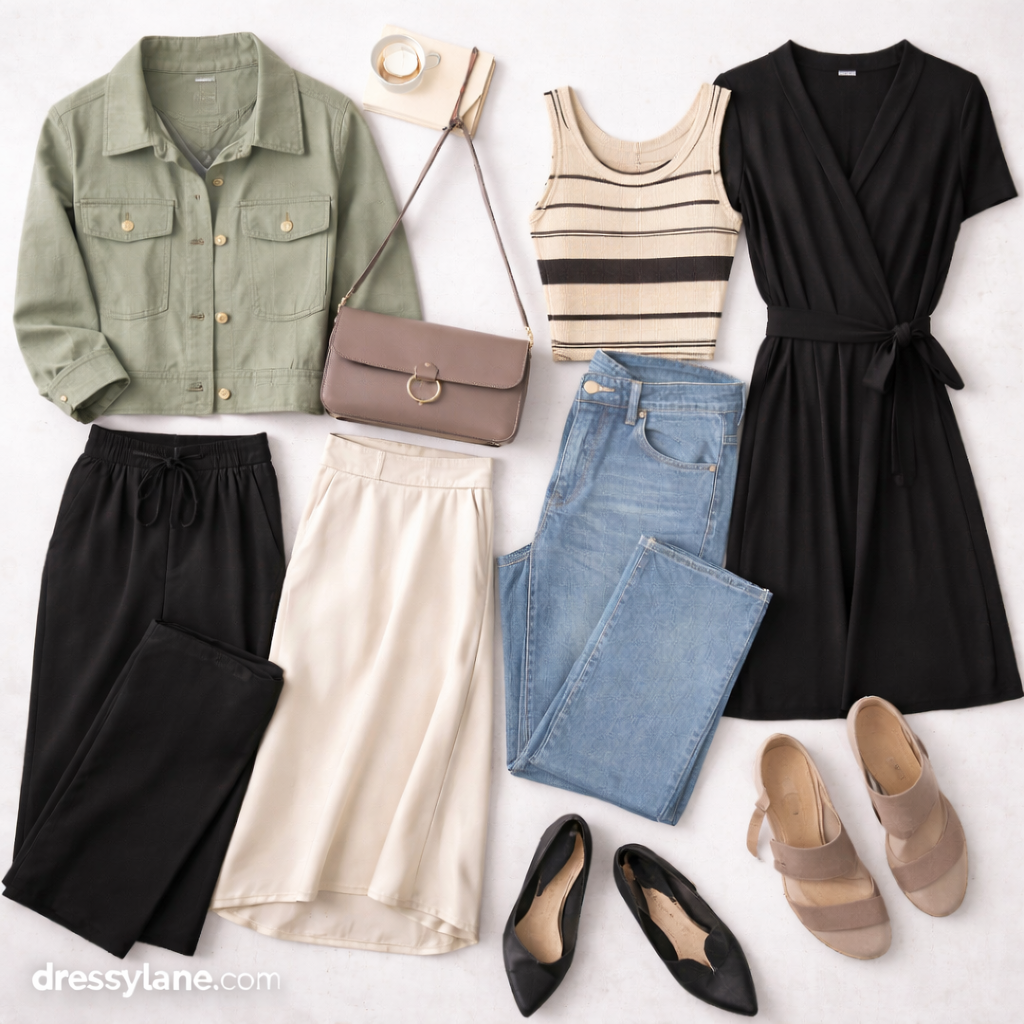
Women’s wardrobes often contain the most variety — which can increase mental effort.
Build a Reliable Core
Focus on versatile essentials:
- Comfortable tops with clean lines
- Stretch-friendly pants or skirts
- Dresses that work across settings
- Neutral layers
If an item only works one way, it increases decision fatigue.
Choose a Signature Silhouette
Wearing similar shapes daily simplifies choices.
Examples:
- Relaxed tops + tailored bottoms
- Dresses with soft structure
- High-rise bottoms + tucked or semi-tucked tops
Once you know what feels best, lean into it.
Limit Shoes and Accessories
Too many options slow you down.
- 2–3 everyday shoes
- Simple, repeatable accessories
- Bags that work with most outfits
Store “Occasion-Only” Items Separately
Formal or special pieces don’t need daily visibility.
- Keeps everyday choices focused
- Reduces visual clutter
- Prevents unnecessary second-guessing
Dressing With Less Decision Fatigue: Men’s Guide
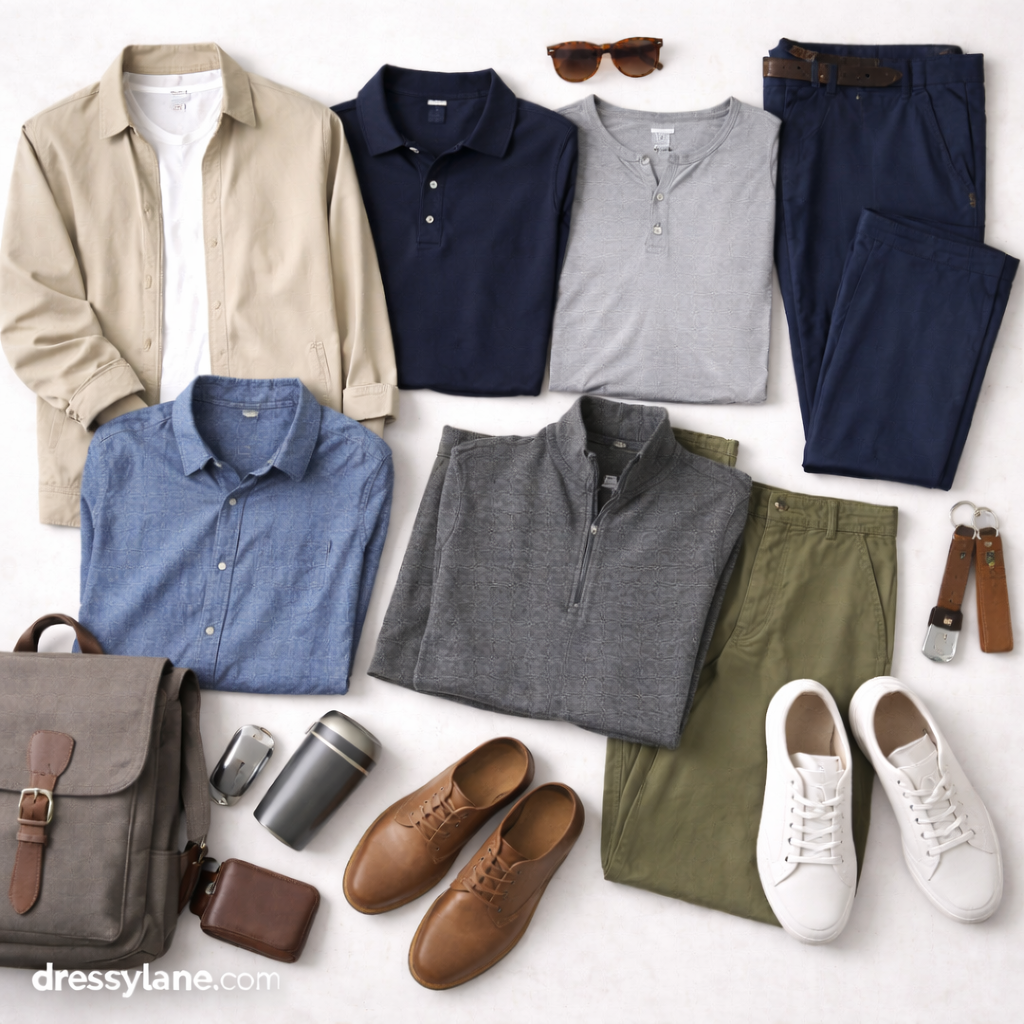
Men’s wardrobes benefit greatly from systems and repetition.
Adopt a Daily Uniform
A uniform doesn’t mean boring — it means efficient.
Examples:
- T-shirt or polo + chinos
- Button-down + jeans
- Sweater + trousers
Change colors, not structure.
Stick to Trusted Fabrics and Fits
Confidence reduces decision fatigue.
- Buy similar items in multiple colors
- Choose fabrics that feel familiar
- Avoid pieces that require styling effort
Keep Shoes Simple
Shoes often complicate decisions.
- One casual pair
- One dressier pair
- One all-day comfort option
That’s usually enough.
Prepare Outfits in Advance
Even minimal prep helps.
- Group shirts and pants together
- Hang complete outfits
- Rotate outfits weekly
How to Build a Low-Fatigue Closet
A simplified wardrobe doesn’t happen overnight.
Edit Regularly
Remove items that:
- Don’t fit comfortably
- Require extra effort
- No longer match your lifestyle
Less visual noise = faster decisions.
Think in Systems, Not Pieces
Ask:
- What does this item pair with?
- Can I wear it in multiple settings?
- Does it fit my existing formulas?
If the answer is no, it adds friction.
Store by Outfit, Not Category
Grouping complete looks reduces effort.
- Tops next to matching bottoms
- Shoes near go-to outfits
- Layers placed strategically
Common Mistakes That Increase Decision Fatigue
Even stylish wardrobes can feel exhausting.
Avoid:
- Buying items without a clear use
- Keeping clothes “just in case”
- Chasing trends that don’t match your style
- Mixing too many aesthetics in one closet
- Holding onto uncomfortable pieces
Clarity beats variety when it comes to daily dressing.
Final Thoughts
Dressing with less decision fatigue is about designing your wardrobe to support your energy, not drain it. When your clothes work together, feel comfortable, and fit your lifestyle, getting dressed becomes automatic instead of overwhelming.
A calm morning often starts with a simpler closet — and the confidence that comes from knowing your outfit will work without overthinking it.