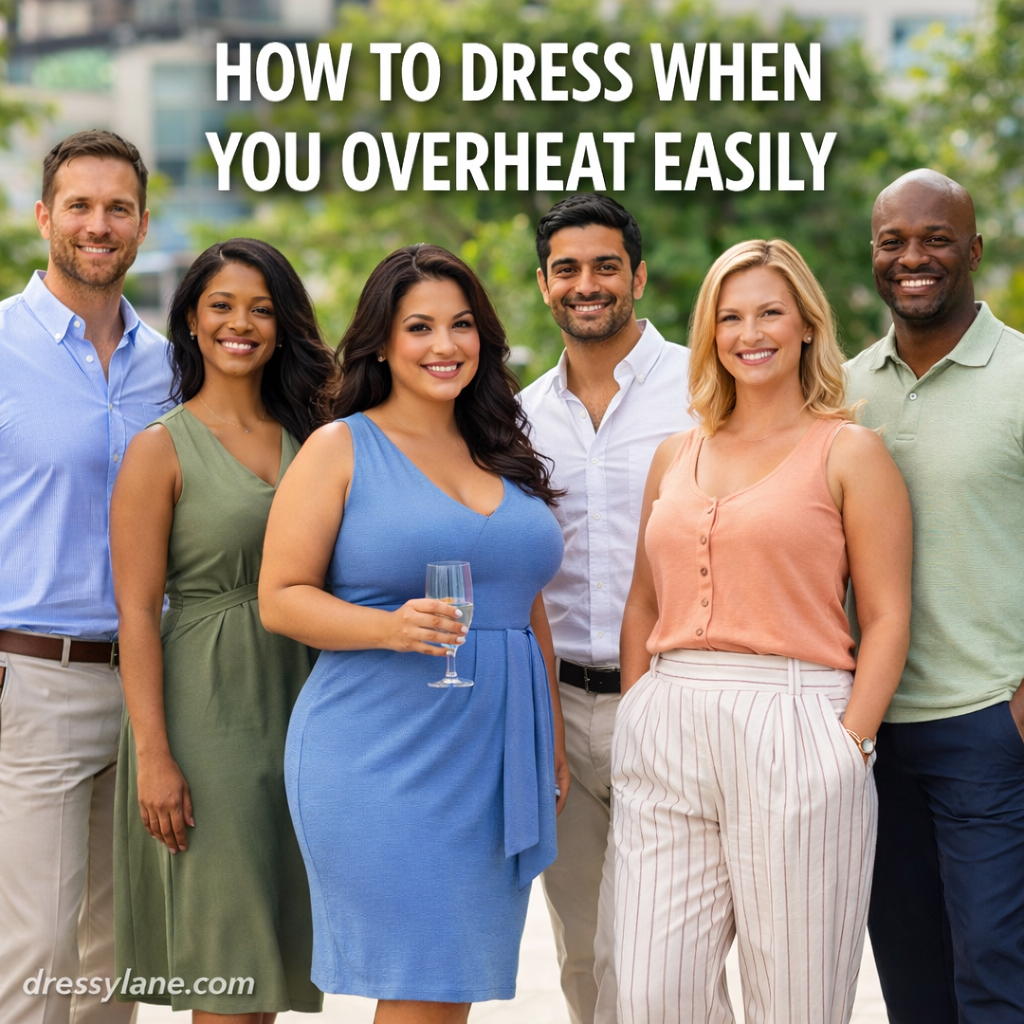
If you overheat easily, you probably already know that an outfit can feel perfectly comfortable when you leave the house and completely wrong 20 minutes later. A fitted shirt starts sticking to your back, a lined blazer feels like a winter coat, or an extra layer you brought “just in case” becomes something you carry around all afternoon.
Dressing for this problem is less about wearing as little as possible and more about controlling airflow, fabric weight, and how easily you can adjust your clothes during the day.
If you tend to run warm, a few specific clothing choices can make a surprisingly large difference without forcing you to dress as though you’re permanently headed to the beach.
Start With the Fabric Against Your Skin
When overheating is the problem, I pay attention to the first layer before anything else.
A loose linen shirt over a lightweight cotton tank, for example, usually feels very different from a fitted polyester blouse even if both outfits technically have two layers. Fabric weight and weave matter just as much as the fiber listed on the label.
Good options include:
- Lightweight cotton poplin
- Linen and linen-cotton blends
- Tencel or lyocell
- Lightweight chambray
- Fine merino wool in the right garment
- Technical moisture-wicking fabrics when appropriate
Linen is particularly useful because its slightly stiff structure tends to hold the fabric away from the skin rather than clinging when you get warm.
Cotton can be excellent too, but don’t assume every cotton garment will feel cool. A heavy cotton sweatshirt or thick denim shirt can obviously trap far more heat than a thin cotton voile or poplin shirt.
I’d also be cautious about judging clothing solely by whether it’s “natural” or “synthetic.” Some lightweight performance fabrics handle sweat extremely well, while a thick natural fabric can still feel miserable in hot conditions.
Give Your Body Some Air
Fit makes an enormous difference when you run warm.
Look for a little space between the garment and your skin: straight-leg trousers instead of skin-tight pants, a relaxed button-down instead of a fitted dress shirt, or an A-line dress rather than a bodycon silhouette.
You don’t need dramatically oversized clothing. Even an extra inch of ease through the torso can improve airflow and prevent damp fabric from sticking to your body.
Pay particular attention to areas where heat tends to build up: the underarms, neck, waistband, back, and inner thighs.
Open collars, camp collars, short sleeves, side vents, wider trouser legs, and skirts with some movement can all help.
How to Dress When You Overheat Easily as a Woman
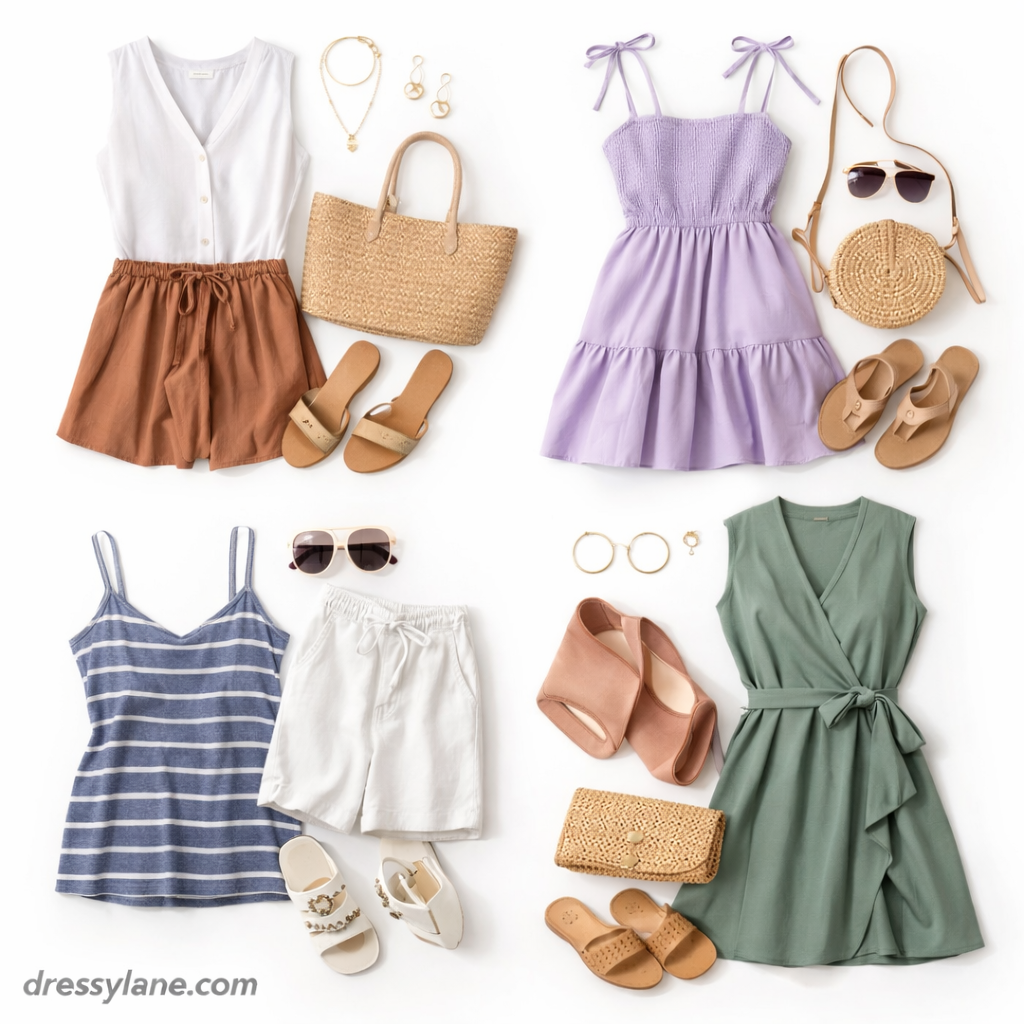
For women, dresses can be one of the simplest solutions because they eliminate the tight waistband and multiple overlapping layers that come with many separates.
A sleeveless linen-blend midi dress with a slightly loose waist, for example, can look polished while allowing considerably more airflow than skinny pants, a tucked-in blouse, and a belt.
Wide-leg trousers are another good option, particularly in linen blends, lightweight crepe, or Tencel. Pair them with a simple sleeveless shell or relaxed short-sleeve top rather than automatically adding another layer.
For work, an unlined blazer is worth seeking out. Many otherwise lightweight-looking blazers have a full polyester lining that makes them noticeably warmer.
I’d actually skip heavy shapewear on days when staying cool is the priority. Adding a tight synthetic layer underneath a breathable dress defeats much of the reason for choosing the dress in the first place.
Undergarments matter for the same reason. Lightweight, breathable options that don’t add unnecessary coverage can make an outfit much more comfortable over several hours.
How to Dress When You Overheat Easily as a Man
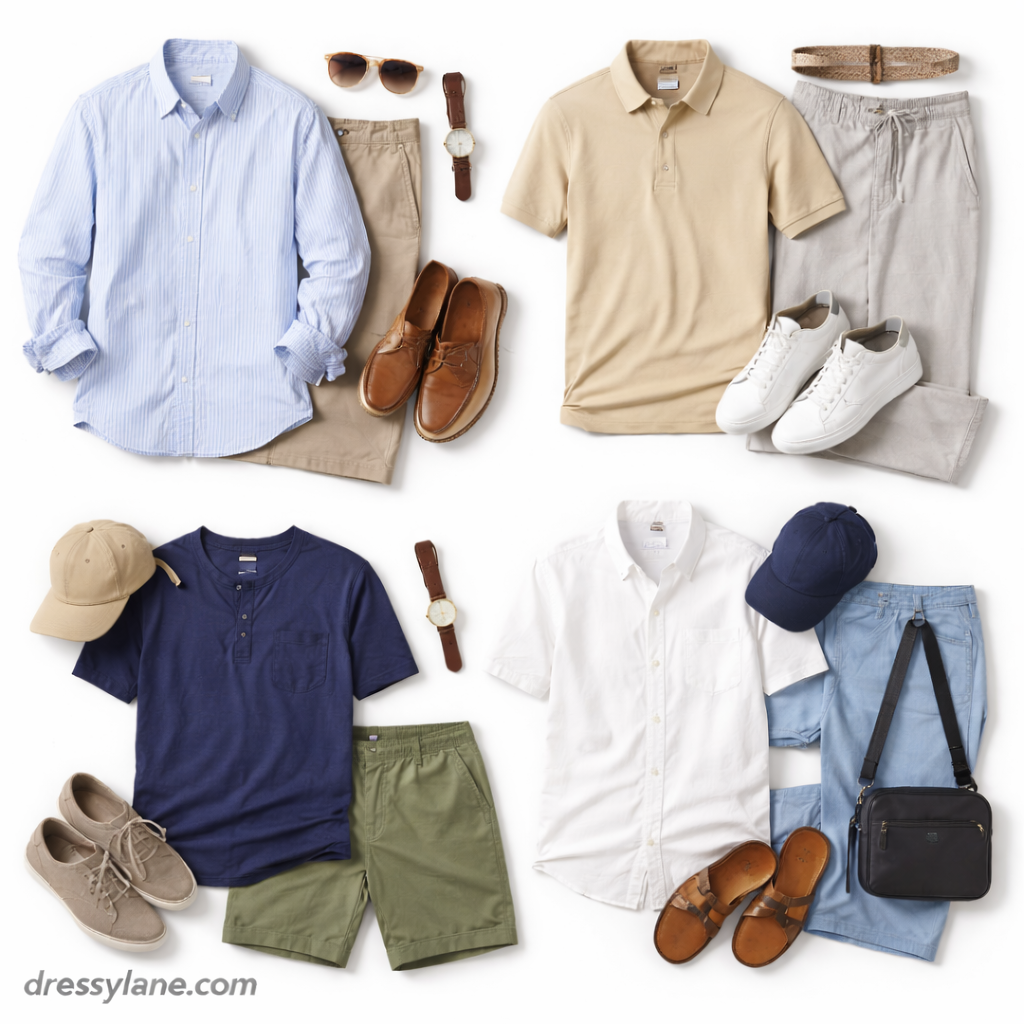
Men often run into a different problem: conventional outfits can involve several layers before you’ve even added a jacket.
An undershirt, dress shirt, tie, and lined blazer can become uncomfortable quickly in a warm office or crowded event.
When the dress code allows it, start by removing layers that aren’t doing anything useful. A lightweight Oxford, linen-cotton shirt, or breathable polo may be enough on its own.
For trousers, look beyond heavy denim and thick chinos. Lightweight cotton twill, tropical-weight wool, linen blends, and breathable performance trousers can provide a cleaner appearance without holding as much heat.
If you need a sport coat or suit jacket, look for an unlined or partially lined construction. The difference becomes obvious when you’re wearing it for several hours rather than simply trying it on in an air-conditioned store.
And don’t overlook socks. Thin merino or moisture-managing socks can be much more comfortable than thick cotton socks once your feet start getting warm.
Be Strategic About Layers
People who overheat easily still need layers. The difference is that every layer should be easy to remove.
A lightweight overshirt, thin cardigan, unlined jacket, or blazer works better than building an outfit around several fitted layers that can’t be taken off without changing the entire look.
For example, if you’re commuting on a cool morning but working in a warm office, dress for the office first. Add one removable layer for the commute rather than dressing warmly underneath and hoping you’ll be comfortable later.
That’s one of the most useful habits I’ve found for temperature-sensitive dressing: dress for the warmest environment you’ll spend significant time in, then add something removable for the colder parts of the day.
Dark Colors Aren’t Automatically the Problem
You’ll often hear that people who overheat should avoid dark clothing entirely.
There is some practical reason to favor lighter colors in strong direct sunlight, but indoors, fabric construction and fit usually matter more to comfort than whether your shirt is navy or pale blue.
A loose black linen shirt can still feel much cooler than a fitted white polyester shirt.
So don’t rebuild your entire wardrobe around beige and pastels unless you actually like wearing them.
Don’t Forget Shoes
Feet can become uncomfortable quickly when the rest of your outfit is designed for warm weather but your shoes aren’t.
Loafers, lightweight sneakers, sandals where appropriate, and shoes with breathable uppers or linings are useful options. In professional settings, leather shoes with lighter construction can be preferable to bulky footwear with thick padding.
Your socks matter too. If you’re wearing closed shoes all day, moisture management can be more important than simply choosing the thinnest sock available.
Plan for Warm Indoor Spaces
One of the hardest situations for someone who overheats easily isn’t necessarily summer weather. It’s an overheated restaurant, office, conference room, train, or crowded event in colder months.
This is where removable outerwear becomes essential.
Instead of wearing a thick sweater underneath a coat, consider a breathable shirt, lighter knit, and warm coat. Once you’re indoors, you can remove the coat and still have an outfit that’s comfortable at room temperature.
The same strategy works for holiday parties and winter events, where dressing for the outdoor temperature can leave you uncomfortably warm once you’re inside.
A Few Things I’d Avoid
If overheating is a recurring problem, I’d be especially careful with garments that combine several heat-trapping features at once.
A fitted polyester blouse with a high neckline is harder to tolerate than a relaxed one with an open collar. Heavy jeans with a tight waistband offer little ventilation. A fully lined synthetic blazer adds an entire extra layer even though you may not notice the lining when shopping.
Also avoid buying clothes based entirely on how they feel during a two-minute fitting-room test. Move around in them. Sit down. Put the jacket over your shirt. Check whether the fabric touches your back and underarms constantly.
Those details matter much more after you’ve been wearing something for three hours.
Final Thoughts
Learning how to dress when you overheat easily doesn’t require abandoning your personal style. It means becoming more selective about fabric weight, construction, fit, and unnecessary layers.
Start with breathable clothing that leaves a little room around the body. Choose removable layers rather than stacking several fitted ones, pay attention to linings and waistbands, and dress for the warmest environment you’ll actually spend time in.
Most importantly, don’t assume that “summer clothing” automatically means comfortable clothing. A loose linen button-down, unlined jacket, wide-leg trouser, or lightweight dress can often keep you more comfortable than something skimpier made from a fabric that traps heat.
If overheating or heavy sweating is new, severe, or unexplained, clothing changes can improve comfort, but they’re not a substitute for discussing the change with a healthcare professional.