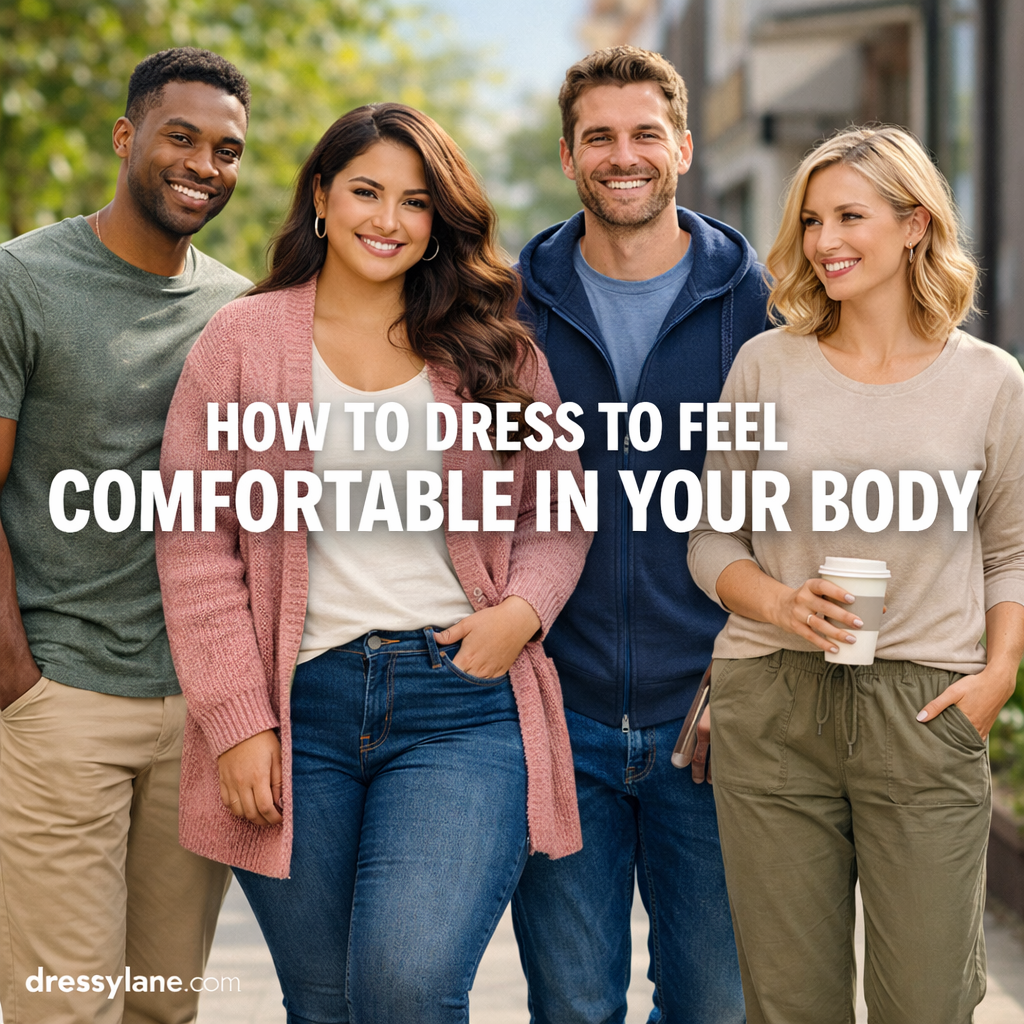
Feeling comfortable in your body often starts with something surprisingly practical: wearing clothes that aren’t bothering you all day.
A waistband that digs in when you sit, a shirt that pulls across your shoulders, jeans you have to keep tugging up, or a bra strap that needs constant adjustment can make you unusually aware of your clothes—and, by extension, your body.
Good clothes should mostly disappear once you put them on.
That doesn’t mean everything has to be oversized, stretchy, or designed as loungewear. You can wear structured trousers, fitted tops, dresses, jeans, and jackets comfortably. The important part is choosing clothes that accommodate how your body actually moves rather than how an outfit looks during the 30 seconds you’re standing still in front of a mirror.
Test Clothes While Moving, Not Just Standing
This is the fitting-room habit I’d recommend above almost everything else.
Don’t just look at yourself in the mirror.
Sit down.
Raise your arms over your head. Bend forward. Cross your legs. Reach as though you’re getting something from a shelf. Walk around for a minute if there’s enough space.
Clothing can look perfectly fitted while you’re standing and become uncomfortable the moment you sit.
Pay particular attention to waistbands, armholes, shoulders, thighs, and the area across your chest or upper back. These are common places where clothing that technically “fits” starts restricting movement.
If you’re already adjusting something repeatedly during a five-minute try-on, you probably won’t enjoy wearing it for eight hours.
Forget the Number on the Label
Sizing isn’t consistent enough to be emotionally invested in the number printed inside your clothes.
You might wear one size in jeans from one manufacturer and need a size larger or smaller in another. Even two cuts from the same company can fit differently.
Instead, look at what the garment is doing.
Can you sit comfortably without the waistband digging into your stomach? Does a button-down lie flat without pulling between the buttons? Can you move your arms forward without the back of a jacket becoming tight?
Sometimes the better fit is simply the larger size.
Other times, sizing up creates new problems—drooping shoulders, excessive fabric, or a waistband that slides down. That’s usually a sign that the cut is wrong for you, not that your body is wrong for the clothing.
I’d try a different cut before endlessly changing sizes in a garment that clearly wasn’t designed around your proportions.
Choose Fabrics Based on What You’ll Actually Be Doing
“Soft” isn’t the only definition of comfortable fabric.
A very soft polyester blouse might feel pleasant indoors but become uncomfortable during a hot commute. Linen breathes beautifully in summer but wrinkles quickly. Heavy cotton denim can feel stiff initially but may become extremely comfortable after repeated wear.
Think about the job the fabric needs to do.
For warm weather, cotton poplin, linen, linen blends, lightweight cotton jersey, and certain lightweight knits allow more airflow.
For trousers and jeans, a small amount of elastane can make sitting and bending easier without turning the garment into leggings.
Merino wool and fine-gauge cotton work particularly well for lightweight sweaters because they can provide warmth without requiring a bulky layer.
And pay attention to seams and texture. If wool feels itchy against your skin, it doesn’t matter how beautiful the sweater is. Wear it over another layer or choose a different fiber.
Comfort is personal enough that fabric recommendations should never become rules.
Dress for the Part of Your Day You Actually Live
A surprisingly common wardrobe problem is owning clothes for an imaginary routine.
If you spend six hours sitting at a desk, trousers need to be comfortable while you’re sitting—not just flattering while standing.
If you walk several miles during your commute, shoes need to survive that walk.
If you’re frequently reaching, lifting, or bending at work, shirts and jackets need enough room through the shoulders and back.
This is why I wouldn’t automatically recommend rigid jeans, narrow pencil skirts, or very fitted jackets to someone whose normal day involves a lot of movement. They can be perfectly comfortable for some people, but they shouldn’t be treated as mandatory wardrobe basics.
Build your everyday wardrobe around your everyday life.
Comfortable Dressing for Women
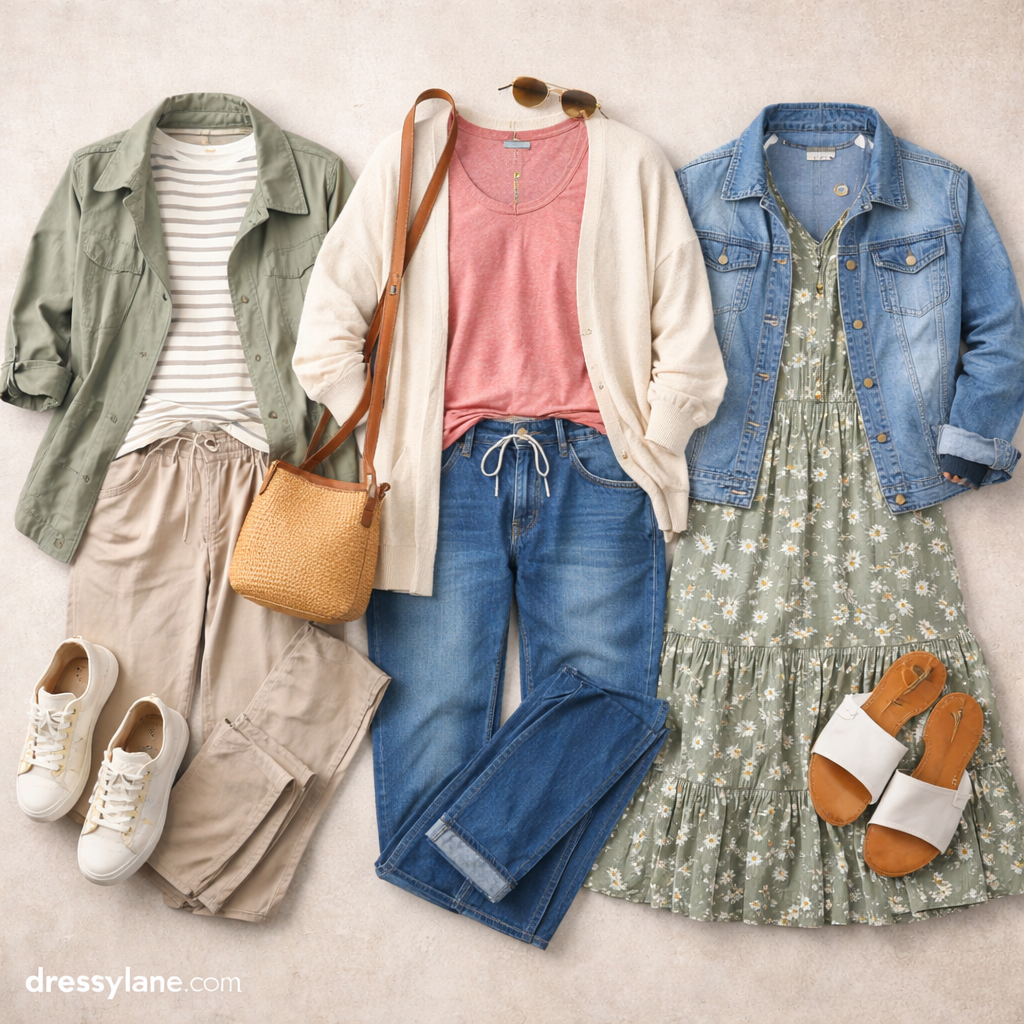
Women’s clothing often presents a strange choice between very fitted and completely oversized. There’s plenty of useful territory between the two.
Straight-leg trousers with a partially elasticized waistband, for example, can look polished without squeezing your waist. A ribbed knit top can follow the body without feeling as restrictive as a stiff woven blouse. A softly structured midi dress gives you shape while leaving room to sit and move.
Useful combinations might include:
- Straight-leg trousers + soft knit top + loafers
- Dark stretch denim + cotton shirt + sneakers
- Midi dress + cardigan + flats
- Wide-leg trousers + fitted jersey top + low boots
- Relaxed button-down + straight jeans + comfortable sandals
I’d pay particular attention to waist placement. If high-rise pants feel restrictive when you’re sitting, don’t keep buying them because they’re supposedly flattering. A mid-rise pair may feel dramatically better.
The same applies to bras. The right band and cup fit can change how tops and dresses feel throughout the day. If you’re constantly repositioning straps, dealing with digging underwire, or pulling the band down, changing the bra may solve more than changing the shirt over it.
Comfortable Dressing for Men
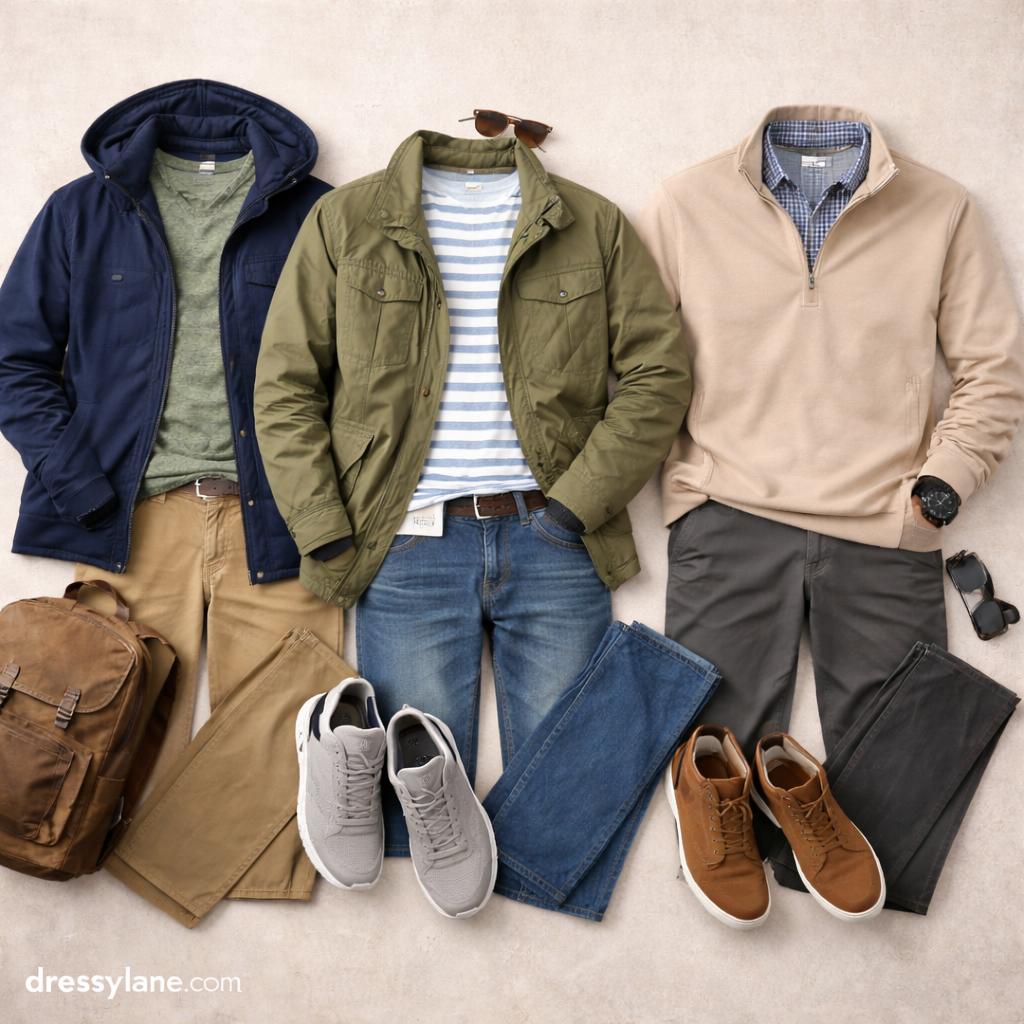
For men, discomfort often hides behind the idea that clothes are supposed to feel a little restrictive to look sharp.
They aren’t.
A button-down shouldn’t pull across the chest when you reach forward. A jacket shouldn’t prevent you from comfortably moving your arms. A shirt collar shouldn’t feel like it’s pressing into your neck before you’ve even left the house.
For everyday outfits, try:
- Chinos with a small amount of stretch + cotton polo + sneakers
- Straight-leg jeans + heavyweight T-shirt + overshirt
- Drawstring trousers with a clean tailored shape + knit polo
- Oxford shirt + relaxed chinos + loafers
- Merino sweater + dark denim + casual boots
Stretch chinos are especially useful for people who sit for long periods. Look for fabric that still resembles cotton twill rather than extremely thin, shiny performance material if you want them to work in slightly dressier settings.
And don’t overlook trouser rise. Pants that sit comfortably at your natural waist or preferred position can feel much better than a fashionable cut that constantly slides down or presses into your stomach.
Your Clothes Should Accommodate Normal Body Changes
Bodies don’t maintain identical measurements every hour of every day.
Eating a meal, sitting for several hours, changes in temperature, normal bloating, and ordinary weight fluctuations can all affect how clothing feels.
Your everyday clothes should have enough tolerance for that.
That might mean choosing trousers with a little stretch, dresses without rigid waist seams, adjustable belts, elastic panels, drawstrings, or simply a slightly more forgiving cut.
I particularly like adjustable features because they let the garment adapt without forcing you into either very tight or very loose clothing.
And if something that used to fit comfortably no longer does, take it out of your everyday rotation. You don’t need to get rid of it immediately, but there’s little benefit in starting every morning with clothes that make you physically uncomfortable.
Stop Saving Uncomfortable Clothes Because They’re “Flattering”
This is one wardrobe habit I’d reconsider.
A pair of pants might make your legs look great while also cutting into your waist every time you sit. A fitted shirt might create a sharp silhouette while making you reluctant to lift your arms.
If you’re constantly adjusting the garment, that discomfort eventually becomes part of how you experience the outfit.
I’d rather slightly relax the fit and feel comfortable for six hours than look marginally more “flattering” during a photograph.
You can still care about silhouette. The goal isn’t to abandon fit—it’s to find shapes that look good and allow normal movement.
Make Small Changes Before Replacing Everything
You may not need an entirely new wardrobe.
Sometimes one alteration fixes the problem.
A tailor can shorten sleeves, adjust trouser length, take in a waistband that gaps, or make relatively small fit corrections. A different bra can change how several existing tops fit. Replacing one uncomfortable pair of everyday shoes can improve dozens of outfits.
Also notice which clothes you reach for when you know you’ll have a long day.
There’s probably a reason.
Maybe those trousers have a softer waistband. Maybe one shirt has slightly dropped shoulders. Maybe your favorite dress doesn’t have a seam cutting across your waist.
Those details are useful information. Look for them the next time you shop.
Final Thoughts
Learning how to dress to feel comfortable in your body isn’t about hiding your shape or switching exclusively to loose clothing.
It’s about noticing what physically works for you.
Choose waistbands that remain comfortable when you sit. Look for shirts and jackets that let your shoulders move. Wear fabrics that make sense for your climate and daily routine. Pick shoes based partly on how far you’ll actually walk in them.
And stop giving the size label more authority than the mirror and your own body.
The best test is often very simple: once you’re dressed and going about your day, how often do you have to think about your clothes?
If the answer is “almost never,” you’ve probably found something that fits the way clothing should.