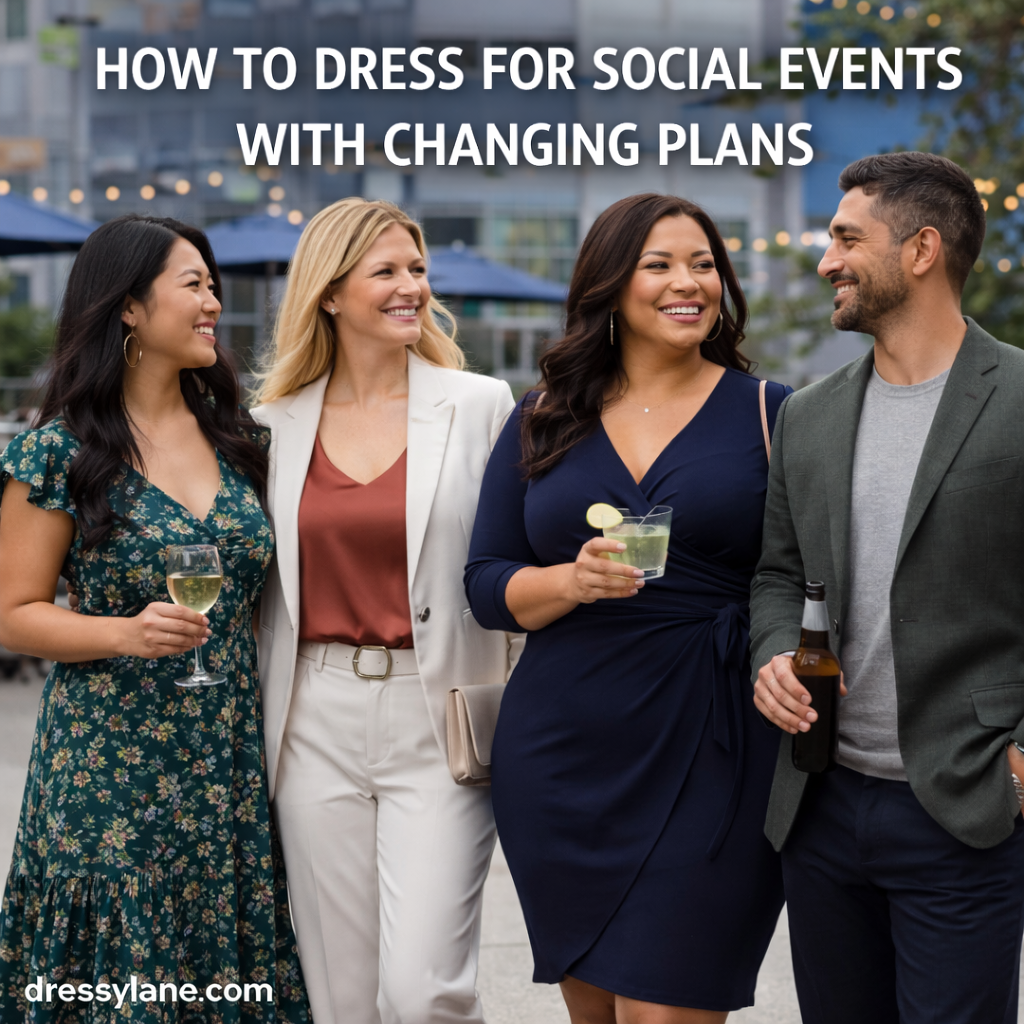
Social plans don’t always stay the same. A casual brunch turns into an afternoon hangout, which suddenly becomes dinner or drinks. When plans shift mid-day, your outfit needs to keep up—without requiring a full change or making you feel underdressed or overdressed.
This guide explains how to dress for social events with changing plans, using flexible outfit strategies and practical styling ideas for both women and men.
Why Flexible Social Dressing Matters
When plans evolve, clothing that’s too specific can quickly feel wrong.
Dressing for adaptability helps you:
- Feel confident no matter where plans lead
- Avoid last-minute outfit stress
- Stay comfortable for extended hours
- Look intentional instead of unprepared
- Enjoy social moments without distraction
The goal isn’t perfection—it’s readiness.
Core Principles for Outfits That Adapt
Before choosing specific pieces, focus on these fundamentals:
- Choose versatile silhouettes
- Stick to neutral or balanced color palettes
- Use layers to control formality
- Wear comfortable shoes that still look polished
- Avoid clothing that only works in one setting
Adaptable outfits are built, not improvised.
What Women Can Wear for Changing Social Plans
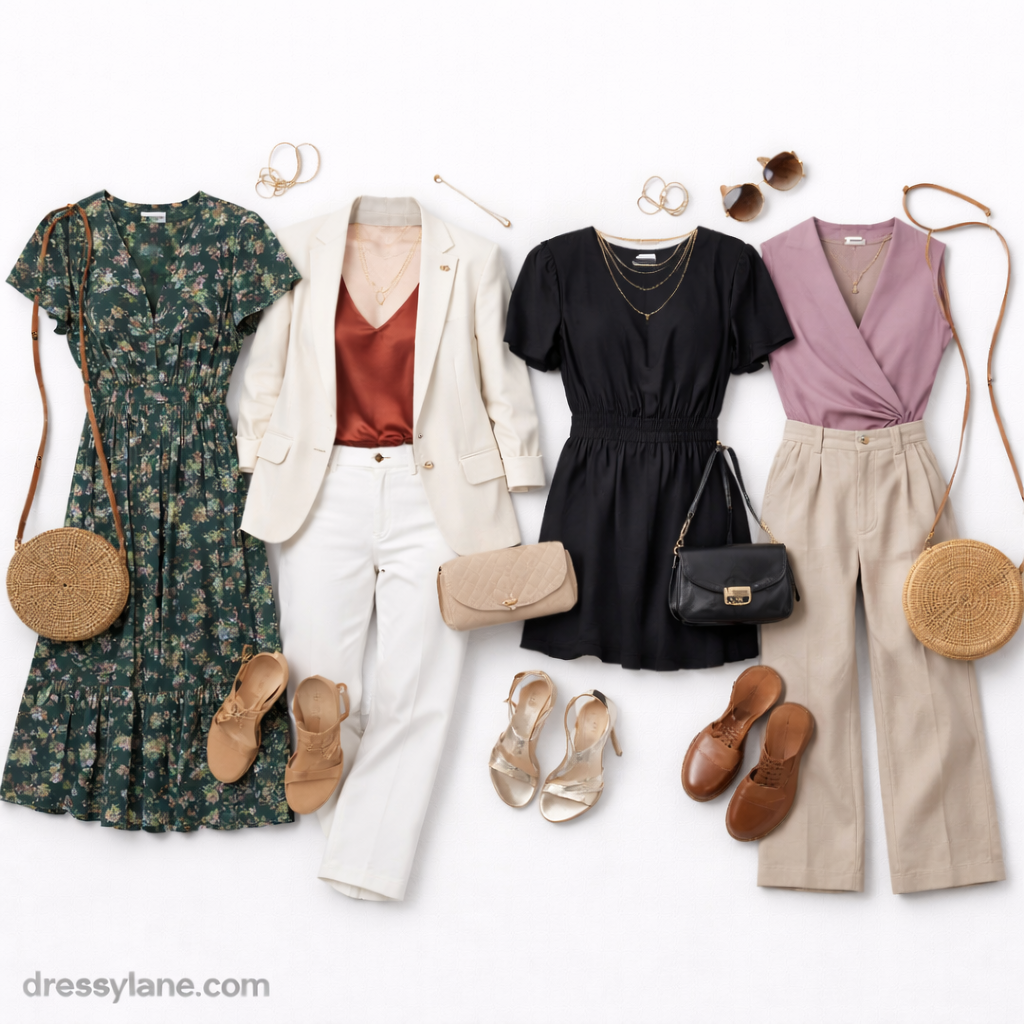
Women have the advantage of easily adjustable pieces that shift tone with simple styling.
Reliable Outfit Foundations
- Midi dresses in breathable fabrics
- Tailored pants with elevated tops
- Casual jumpsuits with structure
- Skirt-and-top combinations that aren’t too formal
Easy Ways to Adjust the Look
- Swap flats for heels or boots
- Add or remove a jacket, blazer, or cardigan
- Change jewelry from minimal to statement
- Switch bags from tote to clutch or crossbody
The right base outfit lets accessories do the work.
What Men Can Wear for Flexible Social Events
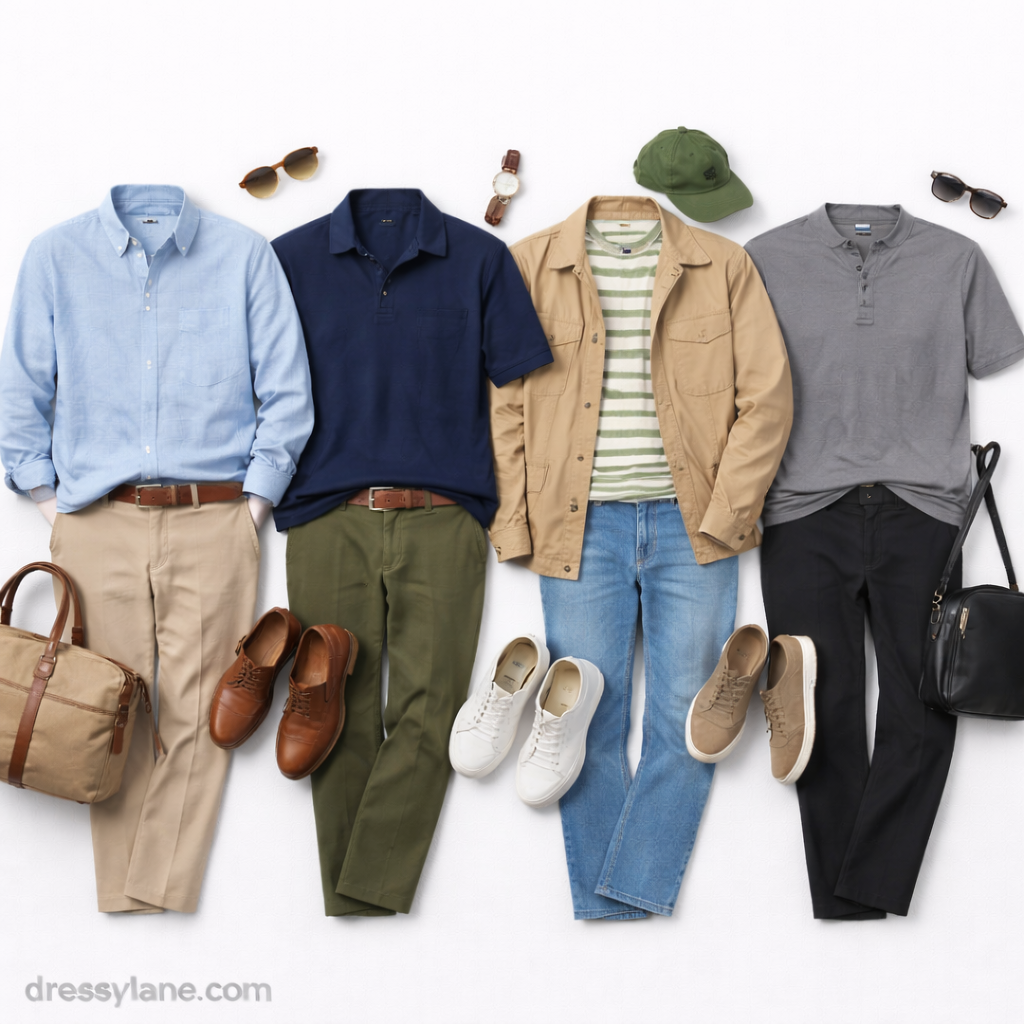
Men benefit from clean, adaptable basics that layer well.
Reliable Outfit Foundations
- Chinos or tailored trousers
- Casual button-downs or knit polos
- Lightweight jackets or unstructured blazers
- Neutral sneakers, loafers, or dressy boots
Easy Ways to Adjust the Look
- Roll or unroll sleeves
- Add or remove a jacket
- Switch shoes if needed
- Tuck or untuck shirts based on setting
Fit and fabric matter more than trend when plans change.
Day-to-Night Dressing Without a Full Change
When daytime plans roll into the evening, subtle shifts make all the difference.
Helpful transitions:
- Darker layers for evening
- Structured pieces over casual bases
- Polished shoes instead of sporty ones
- Minimal grooming refresh if possible
You don’t need a new outfit—just a refined version of the same one.
Choosing Fabrics That Last All Day
Long social days require clothing that holds up.
Look for:
- Wrinkle-resistant materials
- Breathable blends
- Stretch fabrics for comfort
- Colors that don’t show wear easily
Avoid fabrics that crease, cling, or lose shape quickly.
Shoes That Work for Multiple Scenarios
Footwear is often the deciding factor.
Choose shoes that:
- Are comfortable for walking and standing
- Match both casual and semi-dressy outfits
- Don’t look overly athletic or overly formal
Shoes should support the day, not limit it.
Common Mistakes When Plans Change
Avoid these common issues:
- Dressing too casually “just in case”
- Wearing outfits that can’t be dressed up
- Choosing uncomfortable shoes
- Over-accessorizing early in the day
- Packing no layering options
Planning ahead prevents compromise later.
How to Prepare Without Overthinking
You don’t need to predict every scenario.
Instead:
- Start with a versatile base outfit
- Bring one adaptable layer
- Choose shoes you trust
- Keep accessories simple
- Dress with confidence
When your outfit is flexible, you are too.
Final Thoughts
Dressing for social events with changing plans is about balance—comfort, adaptability, and confidence. When your clothing can move with your day instead of fighting it, you’ll feel prepared no matter where plans take you.
The best social outfits aren’t the most dramatic—they’re the most dependable.