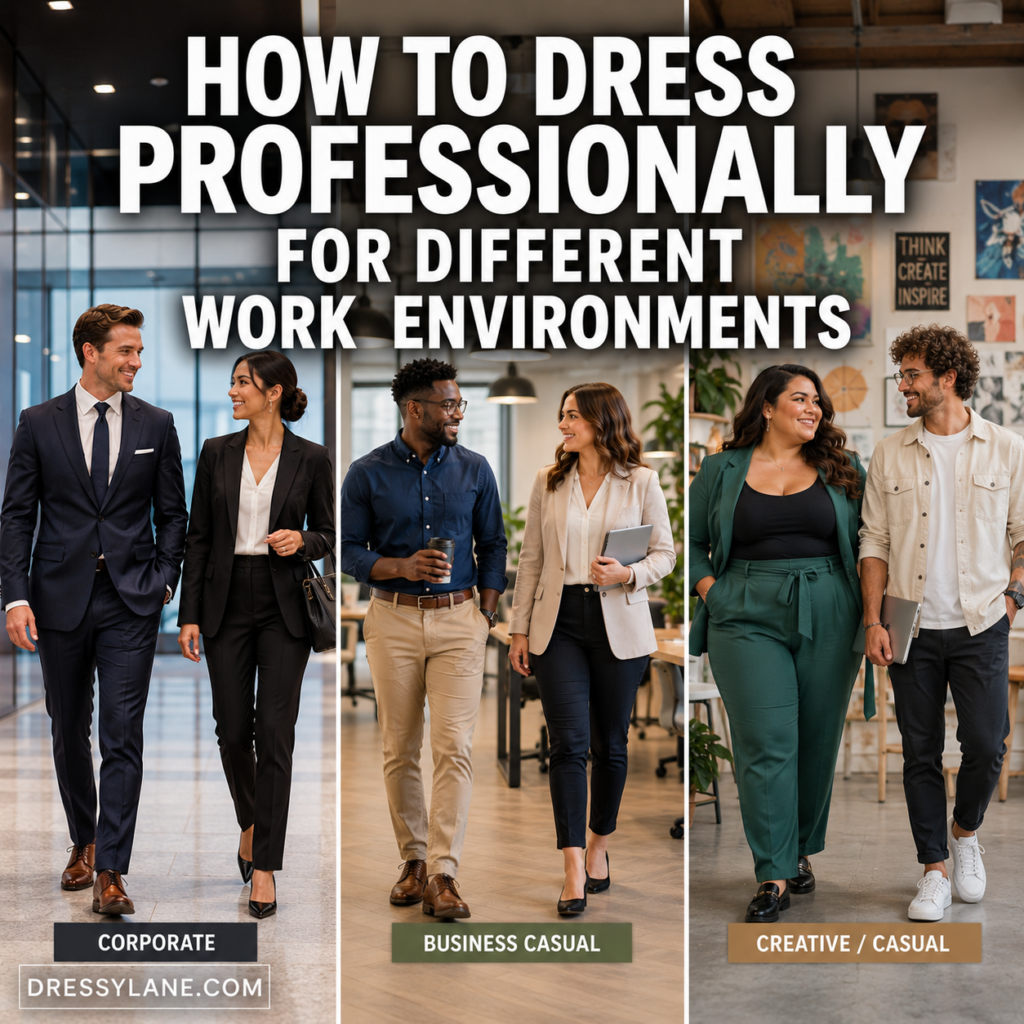
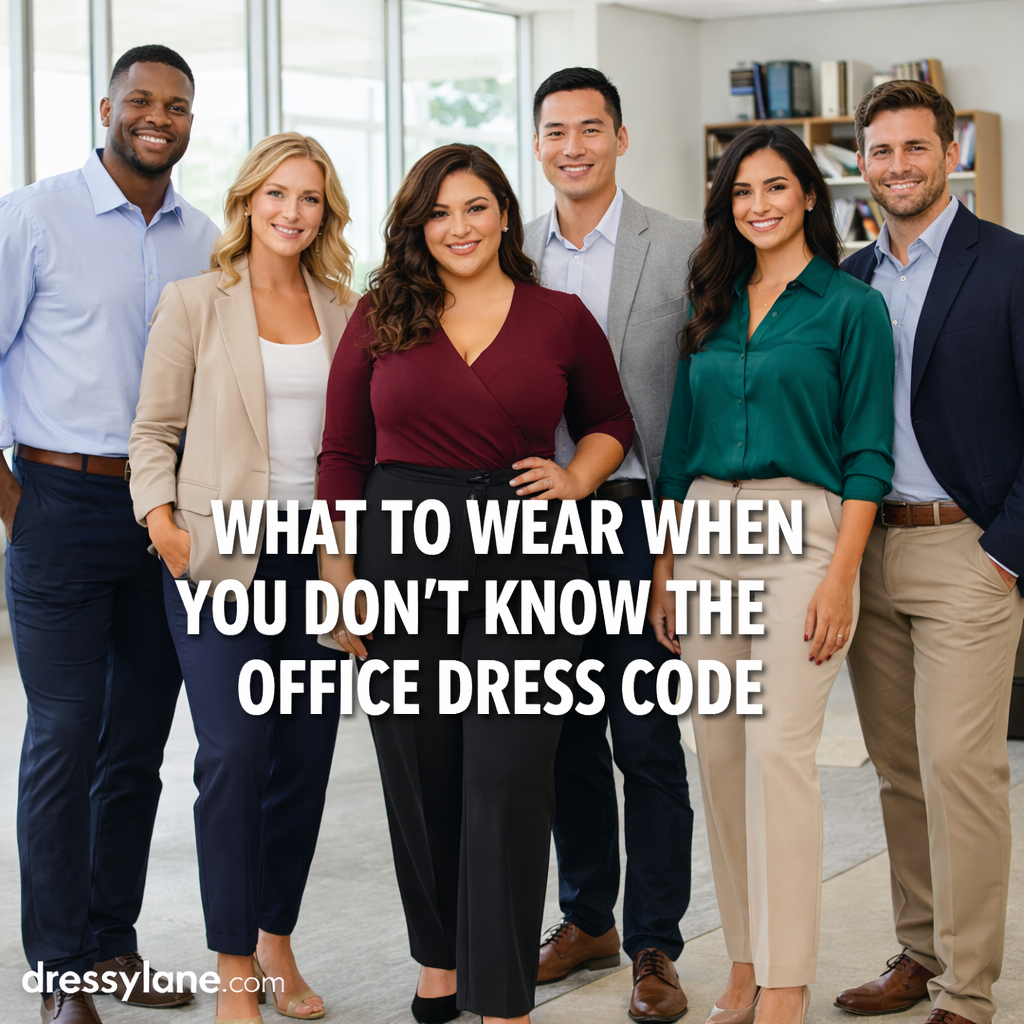
Starting a new job or visiting an unfamiliar office creates a particular wardrobe problem: you have no idea whether everyone will be wearing suits, chinos, or jeans and sneakers.
You don’t want to arrive in a full business suit only to discover that the entire team wears T-shirts. But showing up in distressed denim when everyone else is wearing tailored trousers isn’t ideal either.
When the office dress code is unclear, the most practical approach is to start with a polished business casual outfit that you can easily adjust.
Think tailored trousers, a simple shirt or knit top, comfortable leather shoes, and an optional blazer.
Here’s how to put together an outfit that works for an unfamiliar workplace without buying an entirely new wardrobe.
Start With Business Casual, but Don’t Overdo It
For a typical office with an unknown dress code, business casual is a useful starting point.
It provides enough structure to look professional without automatically requiring a matching suit, tie, or formal dress.
For example, navy trousers, a pale blue shirt, and brown leather loafers create a dependable combination.
For women, charcoal straight-leg trousers, a cream blouse, and black loafers offer a similarly versatile option.
Both outfits can be made more formal with a blazer or relaxed by removing the jacket.
My recommendation is to avoid wearing a full suit on your first day unless the industry, job responsibilities, or information you’ve received suggests it’s expected.
A suit makes sense in many traditional legal, financial, and corporate environments. In a creative agency or technology office, however, tailored separates may feel more natural.
If you’re visiting a client or attending a formal meeting rather than starting a regular office day, use the expectations of that event as your guide.
Look for Dress Code Clues Before Your First Day
You may be able to learn quite a bit about the workplace before you arrive.
Check the company’s website for employee photographs, office event pictures, or team introductions.
If you attended an in-person interview, think about what the employees were wearing. Were most people in blazers, collared shirts, or casual knitwear?
You can also ask your recruiter, manager, or HR contact directly.
A simple question such as “Is the office generally business casual, or is there a more formal dress code I should follow?” is completely reasonable.
I’d trust a direct answer from your new manager over promotional photographs on a company website. Those pictures may have been taken during a special event and might not reflect everyday office clothing.
Also consider whether your first day includes client meetings, orientation, or visits to operational areas where specific footwear or safety clothing may be required.
What Women Can Wear When the Dress Code Is Unknown
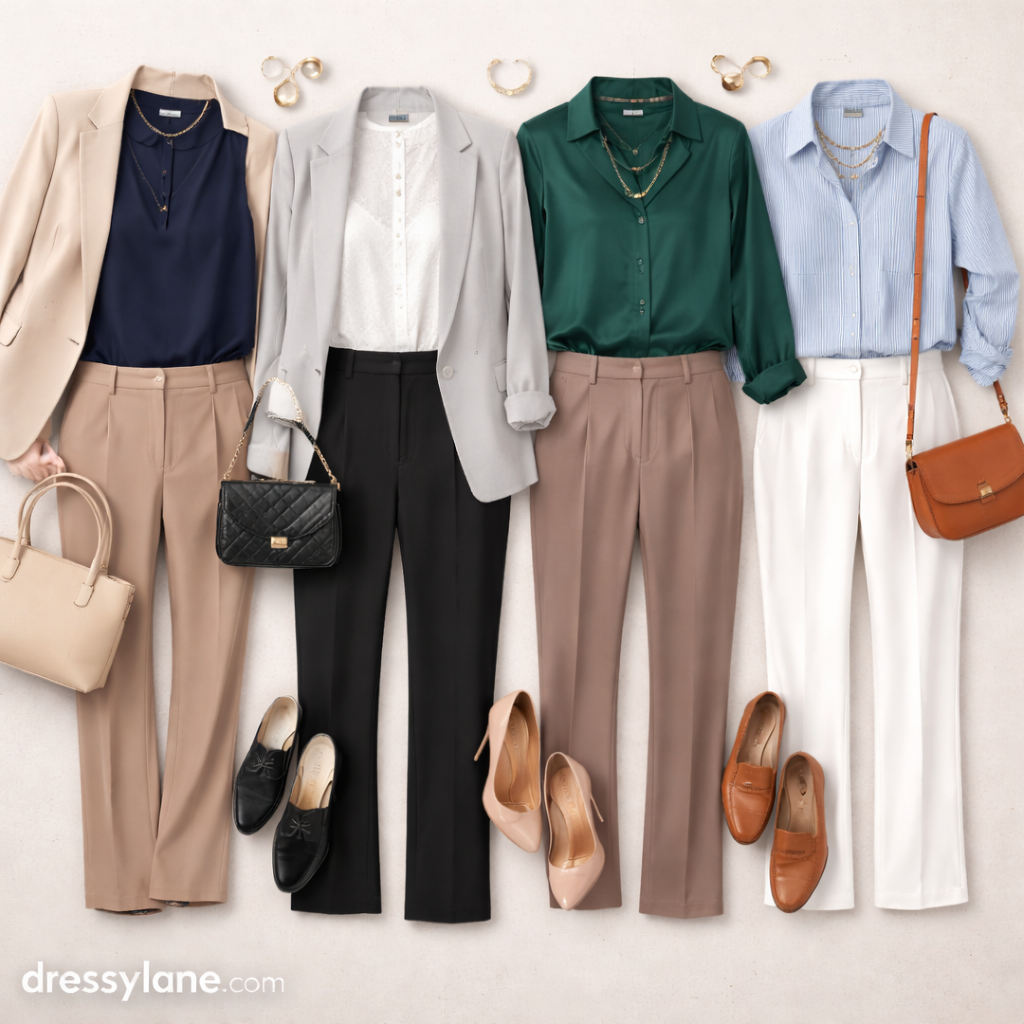
For women, tailored separates offer flexibility because you can adjust their formality without changing your entire outfit.
I’d start with trousers rather than buying a new dress or skirt specifically for the occasion, particularly if you aren’t sure what the office environment will be like.
A comfortable pair of straight-leg trousers works with several different tops and shoes.
A Reliable First-Day Outfit
Try this combination:
- Charcoal or navy straight-leg trousers.
- Cream cotton blouse or fine-gauge knit top.
- Lightweight, single-breasted blazer.
- Black or brown leather loafers.
- Simple tote or structured handbag.
The blazer is particularly useful because you can remove it if the workplace turns out to be more relaxed.
Choose trousers that sit comfortably at the waist and have enough room through the hips and thighs for a full day of sitting and walking.
Wool blends with a small amount of stretch or substantial ponte fabrics can work well.
Other Outfit Options
If trousers aren’t your preference, a simple midi dress with a cardigan or blazer is another option.
A navy shirt dress in cotton poplin, paired with leather flats, looks professional without being overly formal.
A midi skirt with a fine-knit sweater and loafers can also work in many business casual offices.
I’d avoid wearing a brand-new pair of heels on your first day. You may spend more time walking around the building, meeting coworkers, or standing during orientation than you expect.
Comfortable loafers, flats, or low block heels are more practical choices.
Keep accessories manageable, especially if you’ll be carrying paperwork, setting up equipment, or moving between departments.
What Men Can Wear When the Dress Code Is Unknown
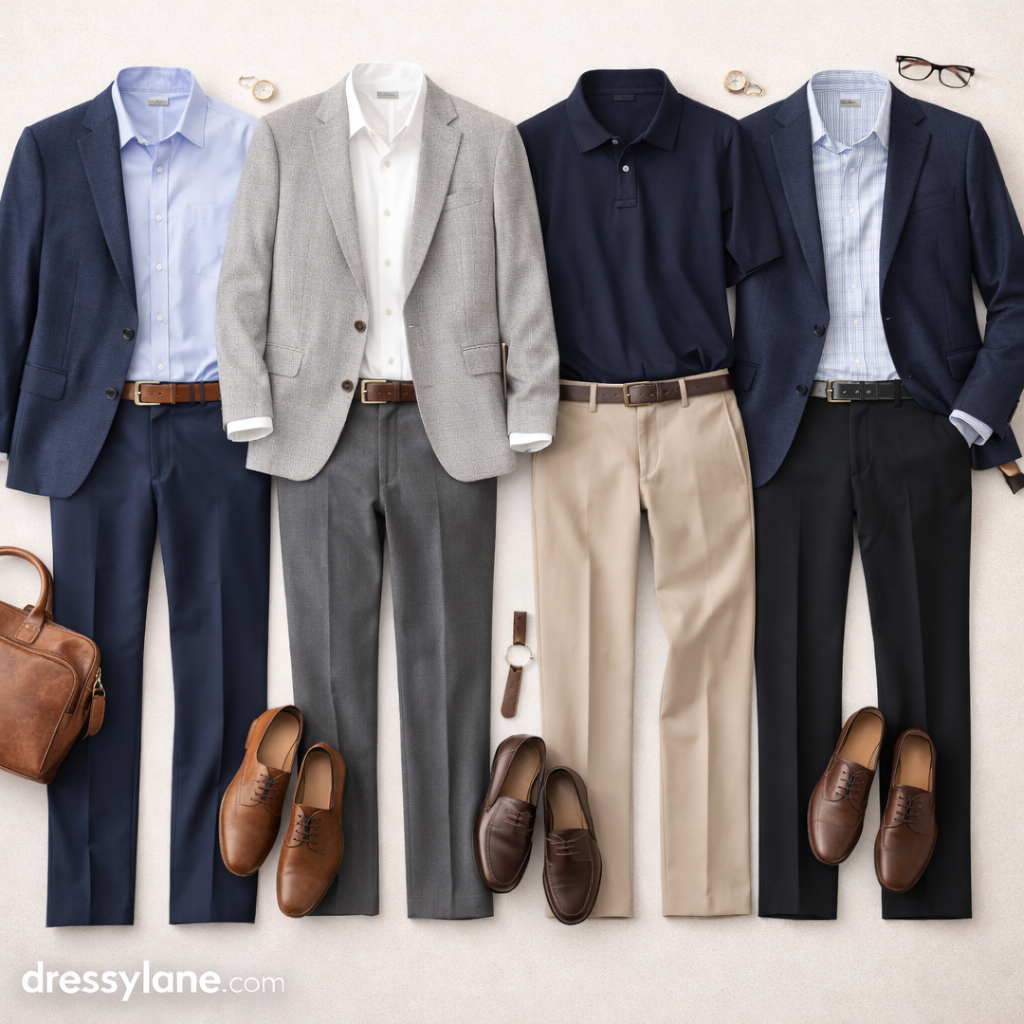
For men, a collared shirt and tailored trousers are a useful starting point when workplace expectations aren’t clear.
The combination works across many office environments and can easily be dressed up with a jacket.
A Reliable First-Day Outfit
Consider wearing:
- Navy or charcoal tailored trousers.
- White or pale blue Oxford shirt.
- Unstructured navy blazer.
- Brown leather loafers or Derby shoes.
- Coordinating leather belt.
An Oxford shirt is particularly versatile because its textured cotton fabric feels slightly less formal than a crisp dress shirt while still looking appropriate for work.
Choose trousers with a straight or gently tapered leg and a hem that falls neatly over your shoes.
If you arrive and discover that everyone wears chinos and polos, you can remove the blazer and still look appropriately dressed.
Should You Wear a Tie?
I wouldn’t automatically wear a tie to an unfamiliar office.
If the company operates in a traditional corporate environment or the role involves formal client interactions, a conservative tie may be appropriate.
For a typical business casual workplace, an open-collar Oxford shirt is usually a more flexible choice.
If you’re unsure whether you’ll need a tie for a meeting, you can keep one in your bag.
What About Jeans and Sneakers?
I’d skip jeans on the first day unless you’ve been told they’re acceptable.
Even dark, well-fitting denim can be too casual for some workplaces.
The same applies to sneakers. Clean leather sneakers may be perfectly normal in a technology office, but leather loafers or Derby shoes are a more adaptable starting point when you don’t know the dress code.
Once you’ve observed what your coworkers wear, you can adjust accordingly.
Choose Colors and Fabrics That Are Easy to Coordinate
You don’t need to wear black from head to toe to look professional.
Navy, charcoal, cream, stone, and soft blue are useful colors because they coordinate easily and work across different levels of formality.
For example, charcoal trousers can be paired with a white shirt, navy blazer, and brown shoes.
A cream knit top also works with navy or olive trousers.
For fabrics, consider cotton poplin shirts, wool-blend trousers, fine-gauge merino sweaters, and lightweight structured jackets.
Avoid clothing that wrinkles heavily during your commute or requires constant adjustment.
Linen can be comfortable in warm weather, but a linen-cotton blend may be easier to maintain if you’re concerned about looking rumpled after sitting.
Fit matters more than wearing expensive clothing. Properly hemmed trousers and a jacket that sits comfortably across your shoulders will usually look better than costly garments that don’t fit.
Small Details That Matter on Your First Day
When you’re unfamiliar with an office, keeping your outfit practical can make the day easier.
Check your shoes for scuffs, remove lint from dark clothing, and make sure your shirt or blouse is freshly pressed.
Choose a bag large enough to carry your essentials without having to juggle several smaller items.
Avoid applying strong fragrance before spending the day in shared offices or meeting rooms.
I’d also recommend checking the weather and planning your outerwear separately. A water-resistant coat or compact umbrella can protect your outfit during a rainy commute.
If your first day involves a lot of walking, comfortable shoes are more useful than footwear chosen purely for appearance.
How to Adjust After Your First Day
Once you’ve spent a day or two in the office, you’ll have a much clearer understanding of what people actually wear.
Pay attention to the clothing worn by coworkers in similar roles rather than assuming that everyone follows the same standard.
A manager who regularly meets clients may dress more formally than someone working primarily behind the scenes.
If most employees wear dark jeans, knitwear, and clean sneakers, you can gradually introduce those pieces into your wardrobe.
If the office leans toward suits and dress shoes, you may need to incorporate more formal clothing.
Don’t feel pressured to buy several new outfits immediately.
Start by adjusting one element at a time. Swap dress trousers for chinos, replace a blazer with a cardigan, or introduce office-appropriate sneakers once you know they’re acceptable.
You can also ask your manager about expectations for client meetings, presentations, and other occasions that may require more formal clothing.
Common First-Day Outfit Mistakes to Avoid
The biggest mistake is assuming that every workplace follows the same dress code.
A few other issues are worth avoiding:
- Dressing too casually without confirmation: Save distressed jeans, graphic T-shirts, and athletic joggers until you know whether they’re permitted.
- Wearing uncomfortable new clothing: Try on your complete outfit beforehand and make sure you can sit, walk, and move comfortably.
- Overdressing without considering the industry: A three-piece suit may feel out of place in a relaxed creative office.
- Ignoring practical requirements: Some workplaces require closed-toe shoes, protective clothing, or specific uniforms.
- Buying an entirely new wardrobe too soon: Wait until you’ve observed the office before investing in several new pieces.
One well-chosen business casual outfit is usually enough to get you through an ordinary first day while you learn what the workplace expects.
Final Thoughts
When you don’t know the office dress code, you don’t need to guess perfectly.
Start with a versatile business casual outfit built around tailored trousers, a simple shirt or knit top, professional shoes, and an optional blazer.
Look for clues before your first day, ask about expectations when possible, and consider any meetings or practical requirements on your schedule.
Once you’ve spent some time in the workplace, adjust your wardrobe to match the actual dress code rather than the one you imagined.
The goal is to arrive looking prepared and feeling comfortable, with an outfit that gives you room to adapt.