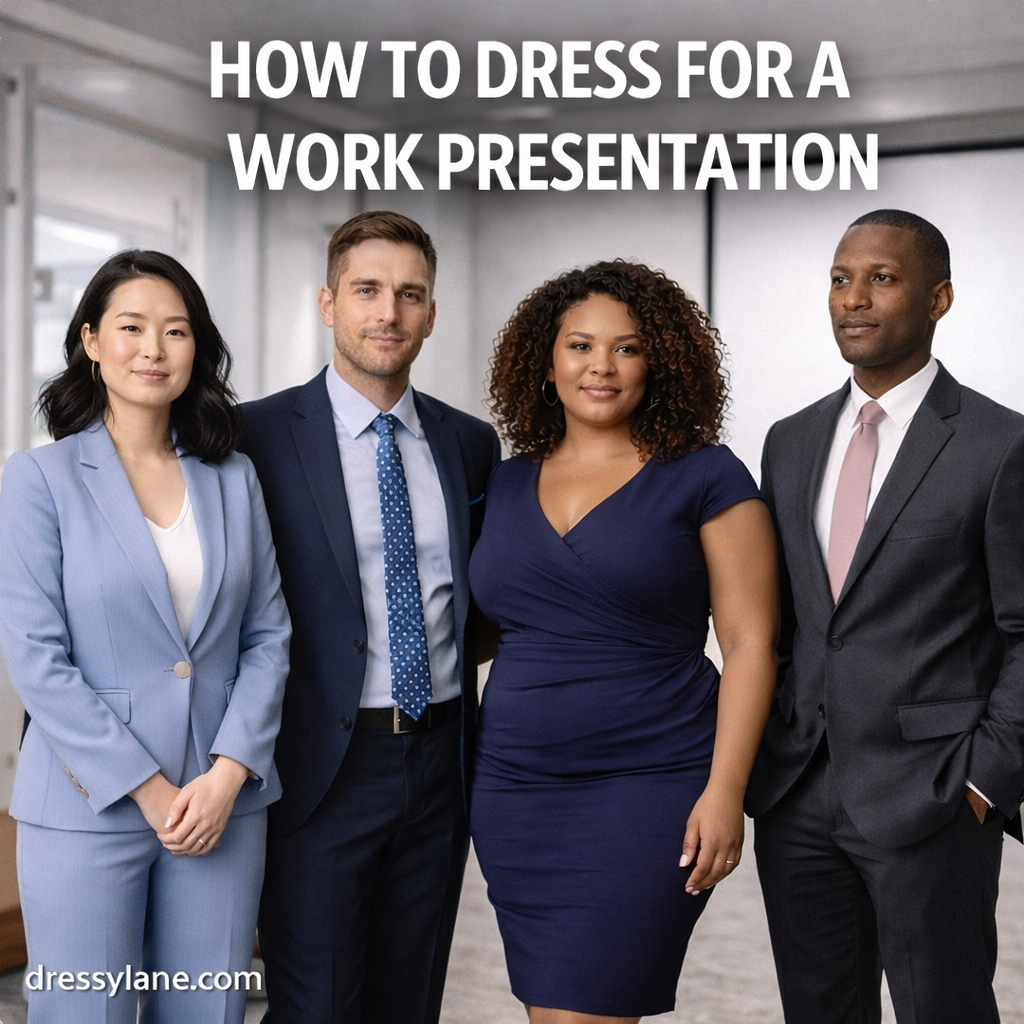
When you’re giving a work presentation, the last thing you want to worry about is a blazer that pulls when you reach for the screen or shoes that become uncomfortable halfway through your talk.
A good presentation outfit should suit the room, allow you to move comfortably, and look polished without requiring constant adjustments. That might mean a matching suit for an executive briefing or tailored trousers and a fine-knit top for an internal team meeting.
Here’s how to dress for a work presentation, with practical outfit ideas for men and women, fabric recommendations, and a few details worth checking before you step in front of an audience.
Start With the Setting, Not the Outfit
Before deciding what to wear, think about where you’re presenting and who will be attending.
An internal project update in a relaxed office rarely requires the same clothing as a formal presentation to prospective clients.
Consider three things:
- Audience: Are you presenting to your immediate team, senior leadership, or external clients?
- Dress code: Does your workplace normally expect business formal, business casual, or smart casual attire?
- Presentation format: Will you be standing behind a lectern, walking across a stage, or presenting from a conference table?
For a traditional corporate presentation, a navy suit or coordinated blazer and trousers may be appropriate. In a creative workplace, dark chinos, a knit polo, and an unstructured jacket might fit the setting better.
I’d avoid automatically dressing several levels more formally than everyone else. If your team normally wears jeans and sneakers, a three-piece suit for a routine project update may feel unnecessarily formal.
Instead, choose a slightly more polished version of what your workplace already considers appropriate.
Choose Clothing That Lets You Move Naturally
Presentation clothing needs to work while you’re standing, walking, gesturing, and occasionally reaching for equipment.
A jacket that fits perfectly when your arms are at your sides might pull across your shoulders when you point toward a screen.
Before wearing an outfit for a presentation, try these simple checks:
- Raise both arms and make sure your shirt or jacket doesn’t restrict movement.
- Sit down to check whether your waistband becomes uncomfortable.
- Walk across the room to see whether your trousers or skirt need adjusting.
- Check that your shoes are comfortable on the flooring you’ll be standing on.
Fabric matters, too.
Lightweight wool and wool blends are useful for suits because they drape neatly. Crepe trousers and ponte knit pieces can offer structure with some flexibility.
For shirts, cotton poplin provides a crisp appearance, while cotton blends with a little stretch may be more comfortable during a long presentation.
I’d skip a brand-new outfit on presentation day. Even expensive clothing can have unexpected problems, from a stiff collar to shoes that rub after 20 minutes.
How to Dress for a Work Presentation: Women
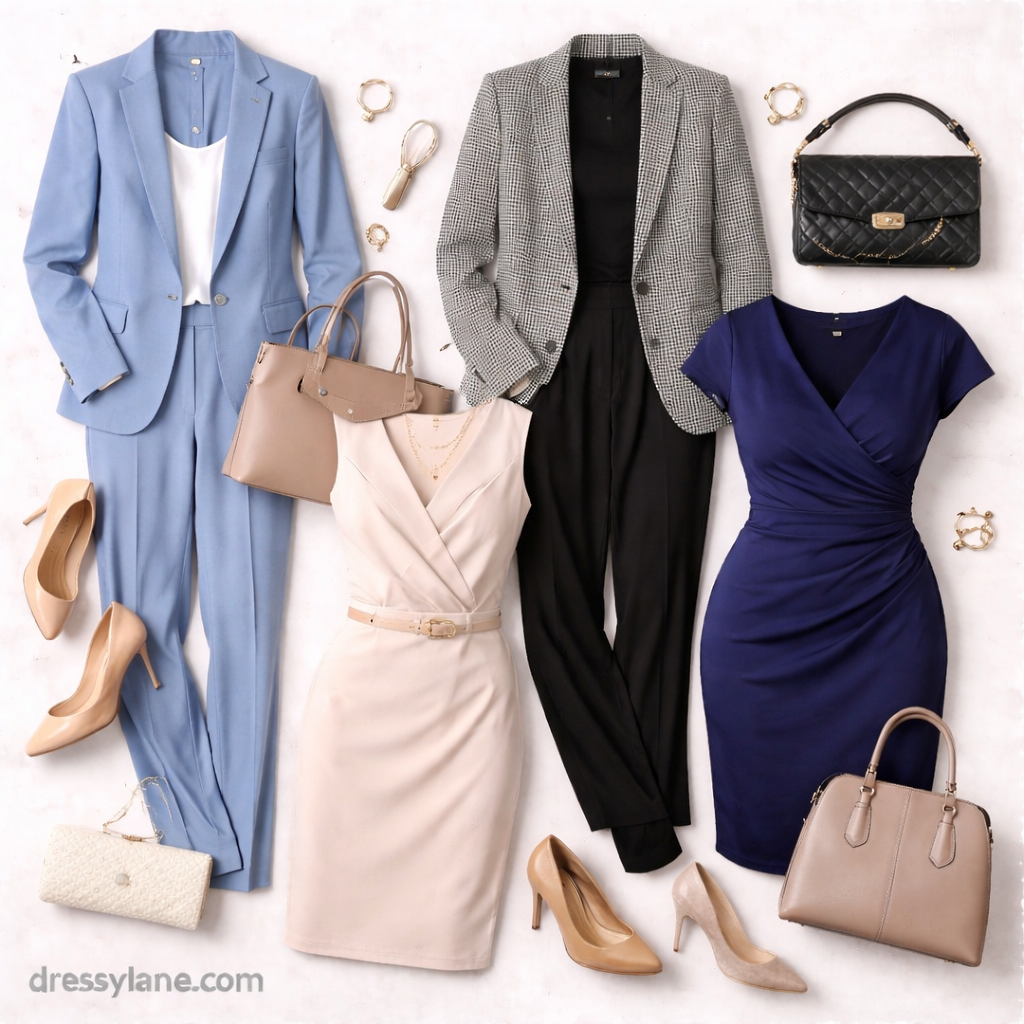
A dependable presentation outfit for women combines tailored pieces with shoes that allow comfortable movement.
Outfit 1: Blazer and Tailored Trousers
Try charcoal straight-leg trousers with an ivory crepe blouse, a navy single-breasted blazer, and black leather loafers.
The structured jacket creates a polished silhouette, while the neutral pieces are easy to coordinate.
Choose trousers that fall neatly over your shoes rather than dragging or bunching around the ankles.
This combination works particularly well for client presentations and business casual offices.
Outfit 2: A Structured Dress
A navy sheath dress or tailored A-line midi dress can be another practical option.
Add a coordinating blazer and low block heels or polished flats.
Make sure the dress allows you to walk comfortably and doesn’t ride up when sitting.
One styling detail I’d prioritize is the neckline. A blouse or dress that stays in place when you lean forward or gesture will be much less distracting than something you need to adjust repeatedly.
Keep accessories simple, particularly if you’re wearing a microphone. Long necklaces or dangling earrings can occasionally brush against equipment and create unwanted noise.
How to Dress for a Work Presentation: Men
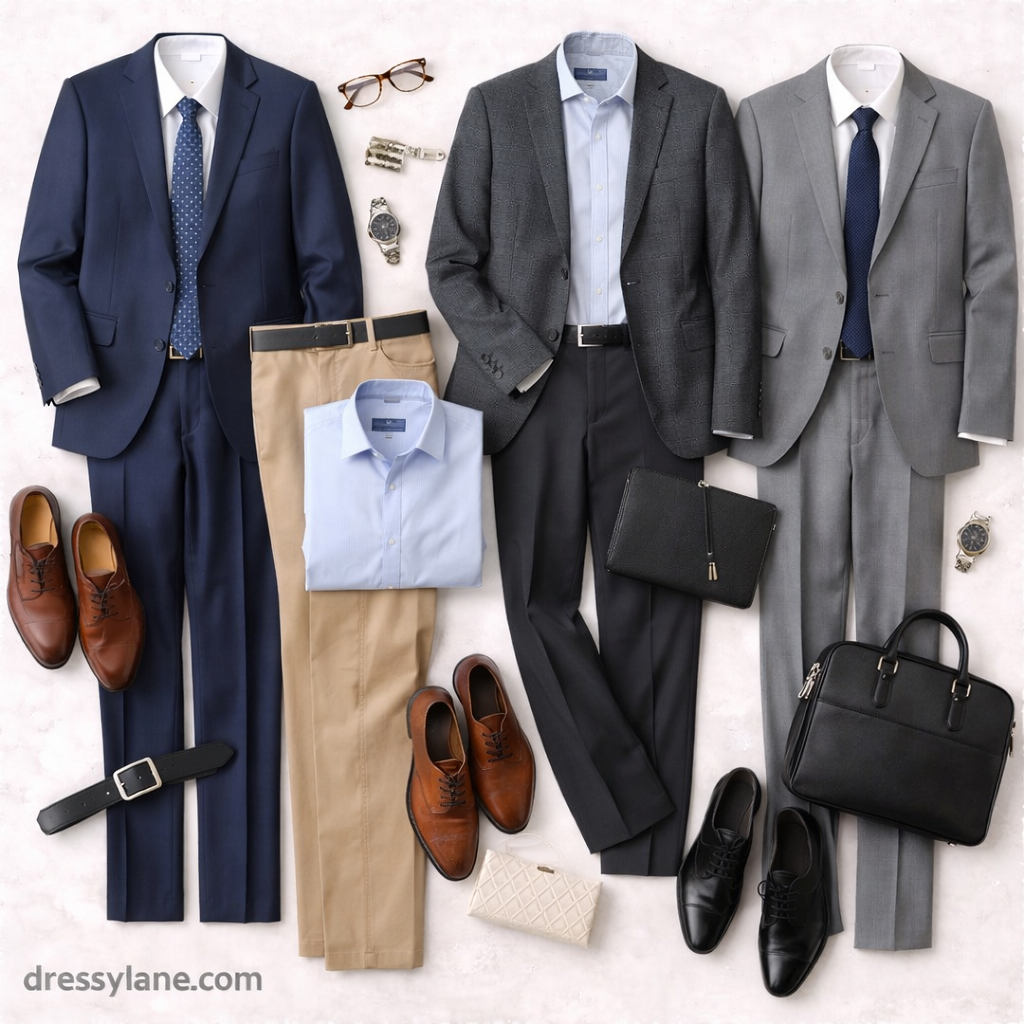
For men, a well-fitting suit or coordinated separates provide a reliable starting point.
Outfit 1: Traditional Business Attire
For a formal presentation, consider:
- A navy or charcoal wool-blend suit.
- A white or pale blue dress shirt.
- A simple tie if the dress code calls for one.
- Black or dark brown leather Oxford shoes.
The jacket should fit comfortably across your shoulders without pulling when you move your arms.
Make sure your shirt collar isn’t excessively tight, especially if you’ll be speaking for an extended period.
Outfit 2: Elevated Business Casual
For an internal presentation, try navy chinos with a light blue Oxford shirt, a charcoal unstructured blazer, and brown leather loafers.
A fine-gauge merino sweater can replace the blazer in a more relaxed office.
I’d avoid wearing a heavily structured suit jacket with very casual chinos. The difference in fabric and formality can make the combination look mismatched.
An unstructured blazer in matte wool or cotton generally works better with business casual trousers.
The Best Colors for Presentation Outfits
Navy, charcoal, gray, cream, and muted blue are versatile choices because they’re easy to coordinate and work in many professional settings.
However, you don’t need to avoid color entirely.
A burgundy blouse with charcoal trousers or a forest-green sweater beneath a navy blazer can add personality without overwhelming the outfit.
Small patterns are also acceptable, but consider how they’ll appear on camera if the presentation is being recorded.
Very fine stripes, tight checks, and tiny repeating patterns can sometimes create distracting visual effects on video.
For a hybrid presentation, test your outfit using the actual camera and lighting beforehand. A white shirt may appear overly bright under strong lighting, while a dark jacket can lose detail against a black background.
Choose Shoes for the Room
Footwear deserves more attention than it usually receives in presentation planning.
If you’ll be standing for 45 minutes or walking across a large conference room, comfort becomes particularly important.
Leather loafers, supportive flats, low block heels, and well-fitting dress shoes are dependable choices.
Check the flooring, too. Hard-soled shoes can make considerable noise on wooden floors, while narrow heels may be awkward on carpeted stages.
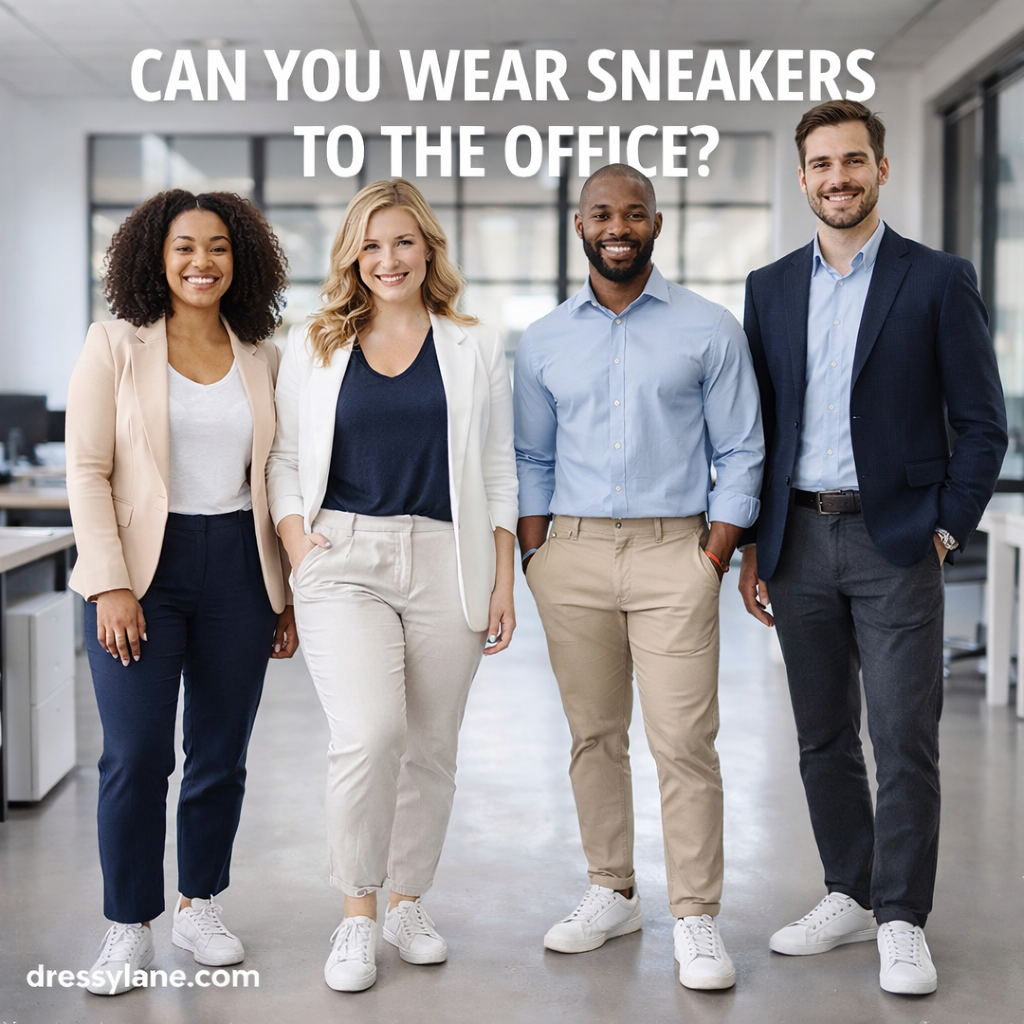
If your workplace allows sneakers, clean minimalist leather sneakers may be appropriate for an informal presentation. For a formal client event, traditional dress shoes are generally a safer choice.
Small Details That Make a Difference
A few practical checks can prevent unnecessary distractions during your presentation.
- Empty your pockets: Bulky phones, keys, and wallets can distort the shape of tailored trousers.
- Check your sleeves: Make sure cuffs don’t catch on a watch or interfere with gestures.
- Consider microphone placement: If you’re wearing a clip-on microphone, choose a neckline, lapel, or collar that can accommodate it.
- Avoid noisy accessories: Stacked bracelets and loose jewelry can create sound when you gesture or touch a table.
- Check your clothing under the lighting: Thin fabrics may become more transparent under bright conference-room lights.
If you tend to get warm while presenting, choose breathable fabrics and removable layers rather than a heavy sweater beneath a lined blazer.
What to Wear for Different Presentation Settings
The same outfit won’t suit every professional environment.
| Presentation Type | Outfit Approach |
|---|---|
| Executive or board presentation | Coordinated suit or structured professional attire |
| Client presentation | Business formal or polished business casual, depending on expectations |
| Internal team meeting | Tailored trousers, a blouse or collared shirt, and an optional blazer |
| Creative industry presentation | Smart casual with refined fabrics and comfortable footwear |
| Virtual presentation | Camera-friendly colors, a neat neckline, and professional upper layers |
For virtual presentations, don’t ignore your entire outfit just because the camera only shows your upper body. You may need to stand unexpectedly, adjust equipment, or move away from your desk.
Choose clothing that works for the full situation.
Prepare Your Outfit the Night Before
One of the easiest ways to reduce presentation-day stress is to prepare your clothing in advance.
Try on the complete outfit, including shoes and accessories. Check for wrinkles, loose buttons, lint, and visible wear.
Hang your jacket properly and make sure your shoes are clean.
If you’re traveling to the presentation, consider how the fabric will hold up during the commute. A wrinkle-resistant wool-blend suit or crepe trousers may be more practical than linen or easily creased cotton.
Keep a lint roller or small stain-removal pen in your bag if you’re presenting after a full day at work.
These details take only a few minutes to address but can save you from last-minute wardrobe problems.
Final Thoughts
Knowing how to dress for a work presentation starts with understanding the audience, the workplace, and how much movement your presentation requires.
Choose clothing that fits properly, allows you to gesture comfortably, and suits the level of formality expected in the room.
A tailored blazer, well-fitting trousers, a structured dress, or a coordinated suit can all work, depending on the occasion.
My final recommendation is simple: Wear an outfit you’ve already tested, rather than something new that only looks good on the hanger. When you aren’t thinking about uncomfortable shoes, shifting clothing, or a restrictive jacket, you can devote more attention to delivering your presentation.