Wedding guest color etiquette sounds simple until you’re standing in a fitting room wondering whether a pale champagne dress is technically beige or whether an all-black outfit looks too somber.
Some rules are fairly consistent: don’t wear something that could reasonably be mistaken for bridal attire. Others depend heavily on the couple, culture, venue, season, and dress code.
Black, for example, is perfectly normal at many modern evening weddings. Bright pink isn’t automatically inappropriate. And a man wearing a white dress shirt with a navy suit isn’t breaking the “don’t wear white” rule.
Rather than treating wedding colors as a long list of forbidden shades, it helps to understand why certain colors can create problems.
White Is Still the Color I’d Avoid First
For women attending a traditional Western wedding, solid white remains the clearest color to avoid unless the couple specifically requests it.
The same caution applies to shades that are essentially variations of bridal white:
- Ivory
- Ecru
- Cream
- Bridal champagne
- Very pale beige
- White-based metallics
The issue isn’t that the bride literally owns the color white. It’s that a cream satin midi dress or ivory lace dress can read as bridal, particularly in photographs.
This is one area where I wouldn’t try to find a loophole.
If you’re holding an ivory dress against a white dress and trying to convince yourself that they’re completely different colors, I’d choose something else. There are too many good wedding guest colors available to spend the day wondering whether your dress was too close to white.
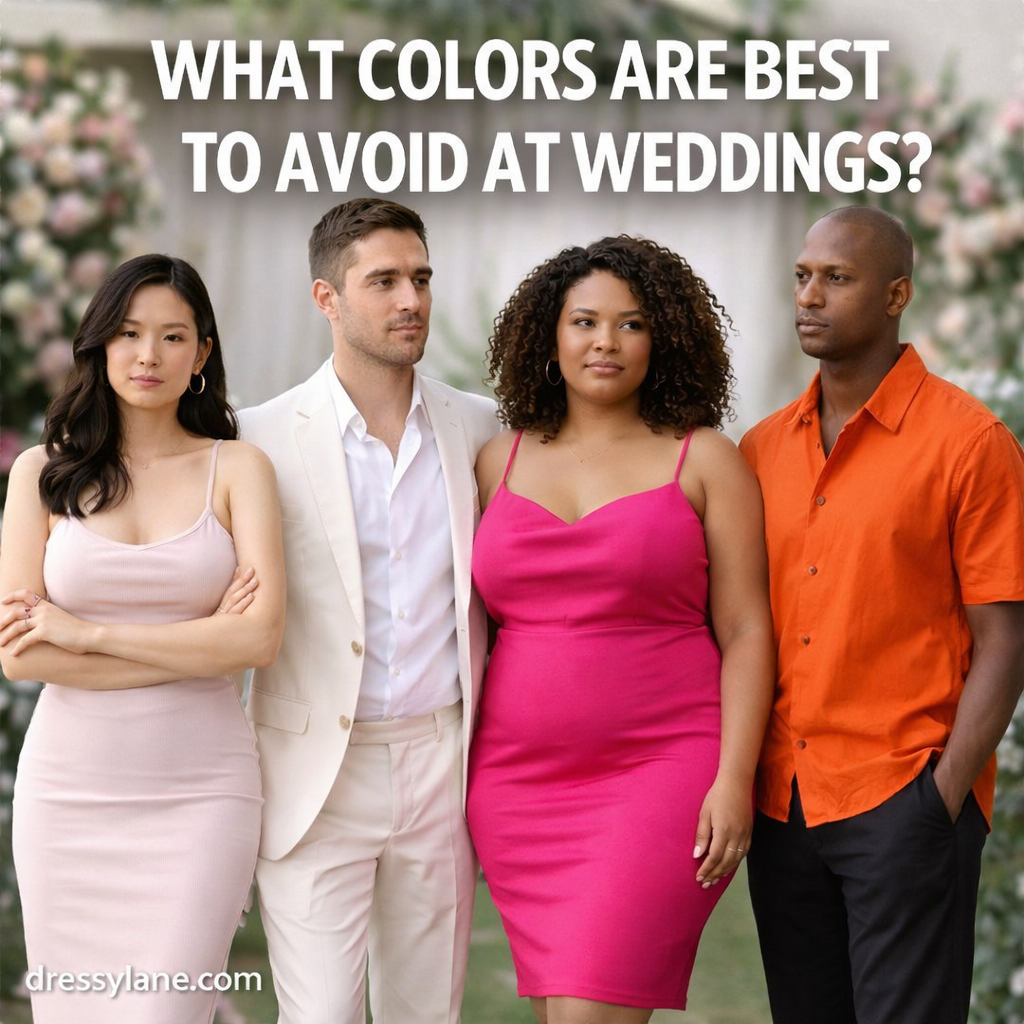
For men, this rule works differently. A white dress shirt worn underneath a navy, charcoal, brown, or other colored suit is completely conventional wedding attire. A head-to-toe white suit is another matter, especially if the groom or wedding party may be wearing white.
Be Careful With Colors That Look White From Across the Room
Sometimes the problem isn’t the color’s name. It’s how the garment actually looks.
A very pale blush, icy blue, light silver, or washed-out beige can photograph much lighter than it appears under fitting-room lighting.
Fabric matters too.
A pale-blue cotton dress clearly reads blue. A nearly colorless blue satin gown with bridal draping may look much closer to white or silver in photographs.
My practical test is simple: step several feet away from the garment or take a photograph of yourself in natural light.
Does it obviously look pink, blue, gray, or beige?
If you have to inspect it closely to see the color, I’d probably skip it for a wedding.
This matters most with dresses, jumpsuits, suits, and other garments covering a large portion of the body. A cream handbag or pale pair of shoes isn’t likely to create the same issue.
Red Depends on the Wedding
Red is a good example of why universal wedding-color rules don’t work.
At many Western weddings, a burgundy, wine, or red dress can be perfectly appropriate. There’s no general rule that wedding guests can’t wear red.
But red has particular significance in some cultures and wedding traditions. In many Chinese weddings, for example, red is strongly associated with celebration and may be worn by the bride. Red also has bridal significance in a number of South Asian wedding traditions.
That doesn’t mean every guest at every Chinese or South Asian wedding must automatically avoid every shade of red. Traditions differ among families, regions, ceremonies, and individual couples.
It means you should check.
If you’re attending a wedding with traditions you’re unfamiliar with, I’d ask the couple, a member of the wedding party, or someone close to the family rather than relying on a generic color-etiquette list.
Black Is Usually Fine—But Read the Room
The old idea that guests shouldn’t wear black to a wedding is much less useful than it once was.
A black crepe midi dress with gold earrings and heeled sandals can look completely natural at an evening hotel wedding. A black suit with a white shirt is equally conventional for men.
Where I’d think twice is an especially casual daytime celebration where an austere black outfit feels disconnected from the setting.
For example, a heavy black long-sleeved dress, opaque tights, and black pumps may feel unnecessarily severe at a sunny garden wedding in June. The problem isn’t that black is forbidden; it’s that the entire outfit may feel more formal or somber than the event.
You can also soften black with texture and accessories—a colorful scarf, metallic jewelry, tan shoes, a patterned tie, or a lighter bag.
You Don’t Have to Avoid Bright Colors
Neon is one thing. Color is another.
Emerald green, cobalt blue, coral, magenta, mustard, and bright florals can all work beautifully at weddings, particularly spring and summer celebrations.
I wouldn’t tell someone to avoid a color simply because it’s noticeable.
What I’d avoid is an outfit where every element is competing for attention: fluorescent fabric, oversized accessories, reflective sequins, dramatic shoes, and a very revealing or theatrical silhouette all at once.
A saturated fuchsia midi dress with simple sandals and small earrings can be perfectly tasteful. A fluorescent hot-pink sequined mini dress with equally loud accessories communicates something very different.
The question isn’t simply, “Is this color bright?”
Ask, “Does the entire outfit feel appropriate for the event?”
Metallics Need the Same Context
Gold and silver aren’t automatically off-limits either.
A muted bronze pleated skirt, champagne-gold shoes, silver jewelry, or a pewter evening bag can be excellent wedding choices.
Head-to-toe reflective metallics are harder.
A full silver sequined gown can look more like New Year’s Eve or a formal gala than wedding guest attire, particularly at an afternoon ceremony.
If you like metallics, I generally prefer using them as texture or an accent rather than making maximum shine the entire outfit—unless the wedding’s dress code clearly supports that level of glamour.
Should You Avoid the Bridesmaid Colors?
If you know what the wedding party is wearing, avoiding an exact match can save you an awkward moment.
This is particularly true for women. Showing up in the same dusty-sage chiffon floor-length dress as six bridesmaids can make you look unintentionally connected to the wedding party.
But you don’t need to panic because your tie, shirt, dress, or accessories happen to contain a similar color.
Look at the complete outfit.
A navy cocktail dress isn’t suddenly inappropriate because the bridesmaids are wearing navy. But if you know they’re wearing a specific floor-length navy satin style and your dress looks extremely similar, I’d choose another option if it’s easy to do so.
I also wouldn’t message an already busy couple weeks before their wedding simply to ask what color you’re “allowed” to wear. Ask only if there’s a genuine reason for uncertainty.
Wedding Colors for Women: What I’d Watch Most Closely
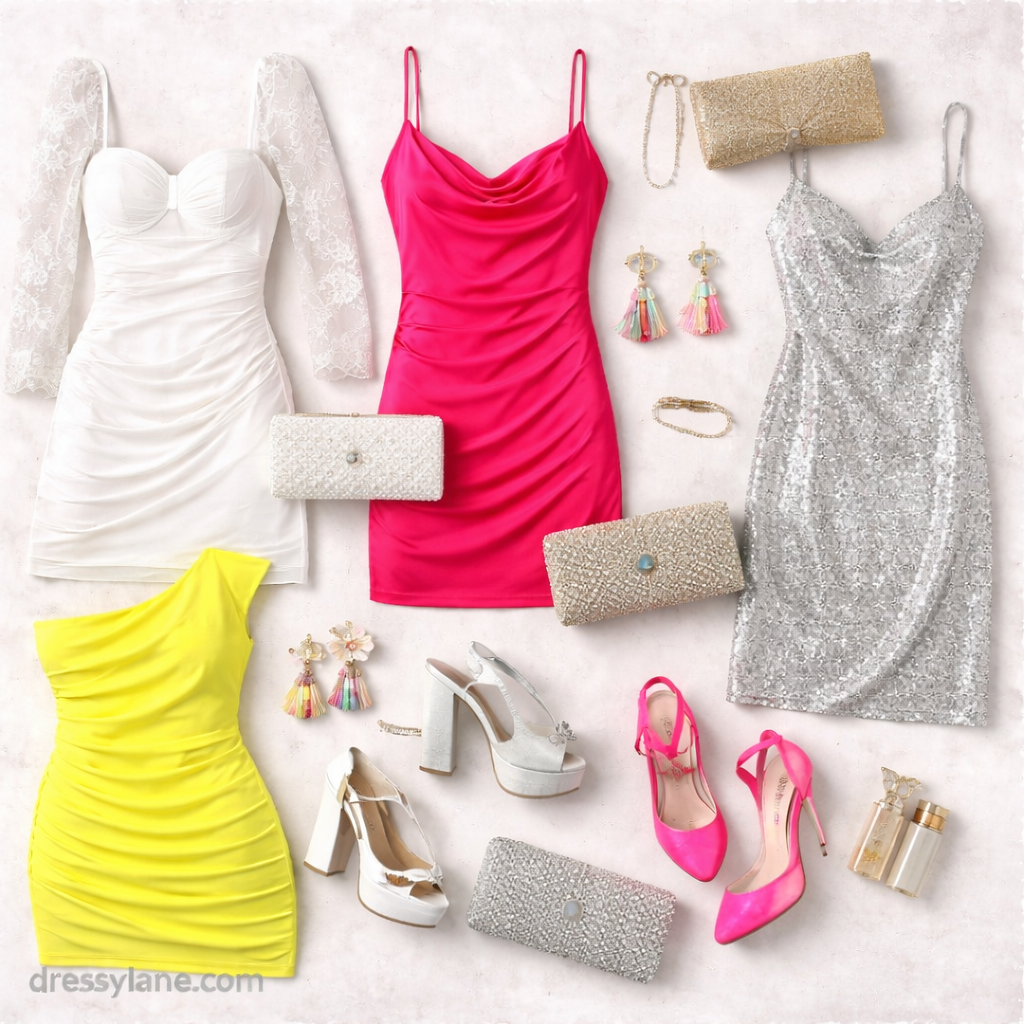
For women, the most important issue is usually avoiding an outfit that reads as bridal.
I’d be cautious with:
- Solid white, ivory, or cream dresses
- Extremely pale champagne or blush that appears white
- White lace dresses with bridal silhouettes
- White or ivory jumpsuits with formal bridal-style tailoring
- Heavily embellished pale gowns that resemble reception dresses
Prints are more nuanced.
A floral dress with some white in the background isn’t automatically inappropriate. If most of the dress is covered in blue, green, pink, or another obvious color, it generally doesn’t read as bridal.
I’d judge the whole garment rather than calculate what percentage of it is white.
When you want an easy alternative, jewel tones such as emerald, sapphire, burgundy, and plum work well for evening weddings. Olive, terracotta, dusty blue, rose, and patterned mid-tone dresses can work beautifully for daytime and outdoor events.
Wedding Colors for Men: The Rules Are Less Complicated
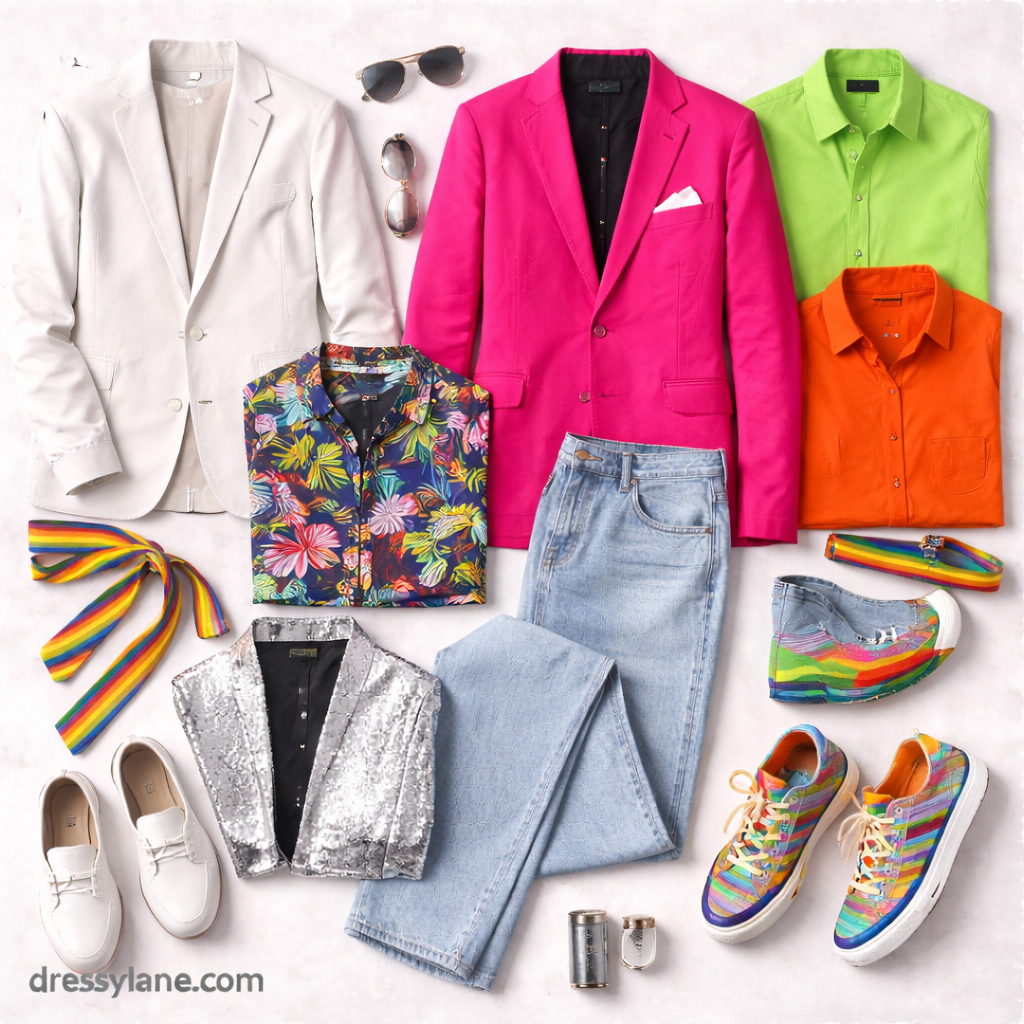
Men generally don’t need to worry about avoiding white in the same way women do.
A white dress shirt is standard.
Instead, I’d pay attention to the suit or jacket.
Navy, charcoal, medium gray, brown, and lighter blues are versatile choices depending on the season and dress code. Tan and light gray can work especially well for daytime or warm-weather weddings.
I’d be more cautious with a white or ivory suit, particularly when you don’t know what the groom is wearing.
Extremely loud novelty colors can also feel out of place. A bright neon suit doesn’t become wedding-appropriate simply because it technically avoids white.
For most men, it’s easier to introduce color through a tie, pocket square, shirt, or subtle patterned accessory rather than making the entire suit the statement.
Cultural Traditions Matter More Than Generic Internet Rules
This is the area where it’s worth doing a little homework.
Colors don’t carry the same meaning at every wedding.
White can have mourning associations in some cultures. Red may have important bridal or celebratory significance in others. Particular religious ceremonies may also have expectations around modesty, head coverings, or clothing colors that have nothing to do with mainstream Western wedding etiquette.
Don’t assume that etiquette from one tradition transfers directly to another.
If the invitation mentions traditional attire or you’re attending ceremonies from a culture you’re unfamiliar with, look for guidance from the couple first. Wedding websites often include exactly this information.
When they don’t, asking someone involved with the wedding is more reliable than guessing.
The Couple’s Dress Code Overrides General Advice
Sometimes you’re supposed to wear white.
All-white weddings, black-and-white dress codes, themed celebrations, and color-specific guest attire are increasingly common.
If an invitation says, “Guests are encouraged to wear white,” you don’t need to worry that you’re violating traditional etiquette by following the instructions.
Likewise, if guests are specifically asked to wear jewel tones, tropical colors, black, or traditional clothing, take that guidance seriously.
The couple knows what they want their celebration to look like.
A Quick Test When You’re Still Unsure
Before settling on a questionable color, ask yourself three things:
Could this reasonably look bridal?
Does this color have a special meaning at this particular wedding?
Does the outfit fit the stated dress code and setting?
If those answers don’t raise concerns, the color itself is probably less important than you think.
I wouldn’t reject an otherwise excellent wedding guest outfit because an old etiquette list says black is too gloomy, red is too attention-grabbing, or bright colors aren’t sophisticated enough.
Context matters more.
Final Thoughts
So, what colors are best to avoid at weddings?
For a traditional Western wedding, white, ivory, cream, and colors so pale that they appear bridal are still the clearest choices to avoid. I’d also be cautious with an all-white suit, highly reflective head-to-toe metallics, and any color you know has specific significance to the couple’s culture or ceremony.
Beyond that, there are fewer universal rules than wedding etiquette guides sometimes suggest.
Black can be elegant. Red can be appropriate. Bright colors can look fantastic. A white dress shirt on a man is completely normal.
When you’re unsure, consider the entire outfit rather than judging the color in isolation. Look at the fabric, silhouette, dress code, venue, time of day, and cultural context.
And if a pale dress leaves you repeatedly asking, “Is this too close to white?” I’d choose another color.
You’ll enjoy the wedding much more when you’re not thinking about your outfit every time someone takes a photograph.