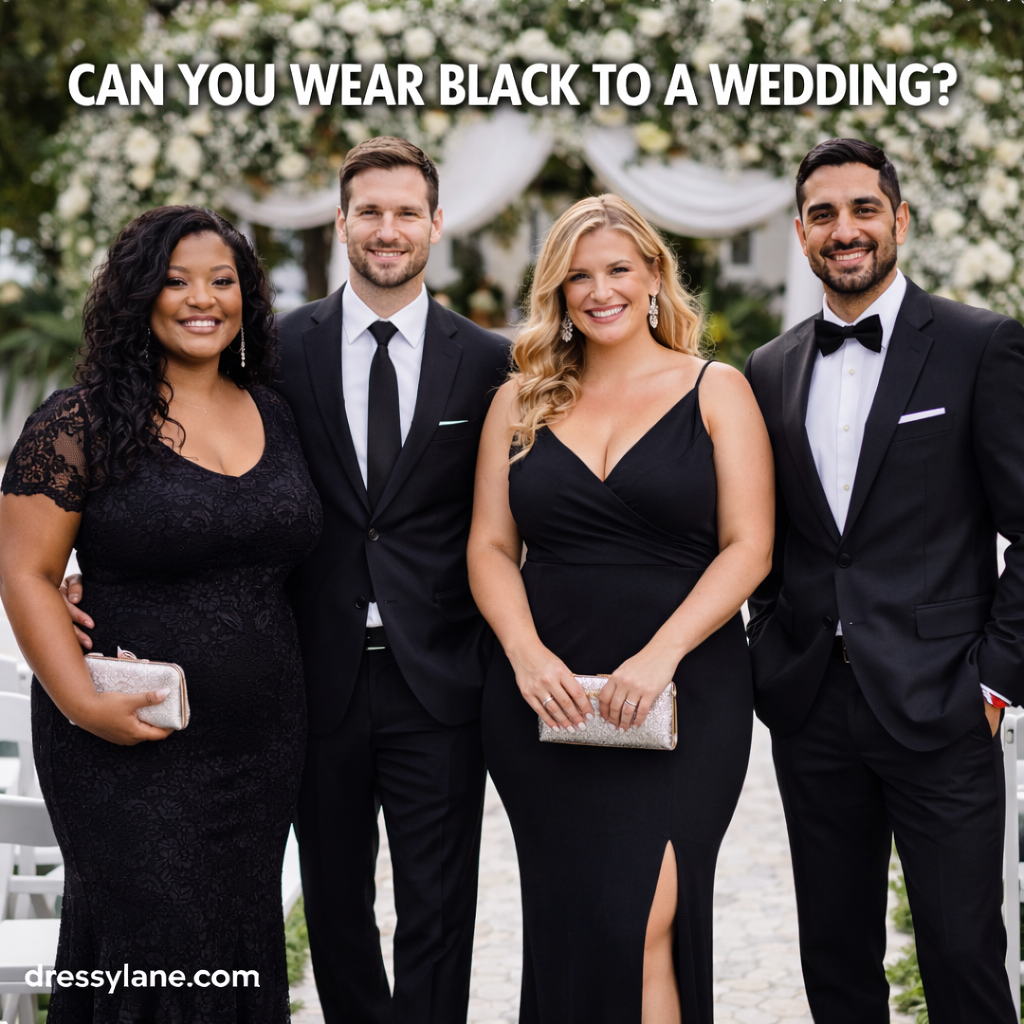
Wearing black to a wedding used to be considered a fashion faux pas, but modern wedding etiquette has evolved. Today, black is often seen as elegant, timeless, and perfectly acceptable—when styled appropriately and suited to the wedding’s tone.
This guide explains whether you can wear black to a wedding, what factors matter most, and how both men and women can wear black respectfully and stylishly.
Why Black Was Traditionally Avoided at Weddings
Historically, black was associated with mourning, funerals, and somber occasions. Because weddings celebrate joy and new beginnings, guests were encouraged to wear lighter or more festive colors.
However, fashion norms have shifted, and black is now widely accepted in many formal and semi-formal settings—including weddings.
When It’s Acceptable to Wear Black to a Wedding
In most modern contexts, black is acceptable when:
- The wedding is formal, semi-formal, or evening-based
- The venue is upscale or elegant
- The couple has not specified a color restriction
- The outfit is styled to feel celebratory, not somber
Black often works especially well for evening weddings, city venues, and colder seasons.
When You Should Avoid Wearing Black
There are still situations where black may not be the best choice.
Avoid wearing black if:
- The wedding is daytime and very casual
- The ceremony is held outdoors in summer
- Cultural or religious traditions discourage black
- The couple has requested bright or specific colors
When in doubt, always check the invitation details or wedding website.
How Women Can Wear Black to a Wedding
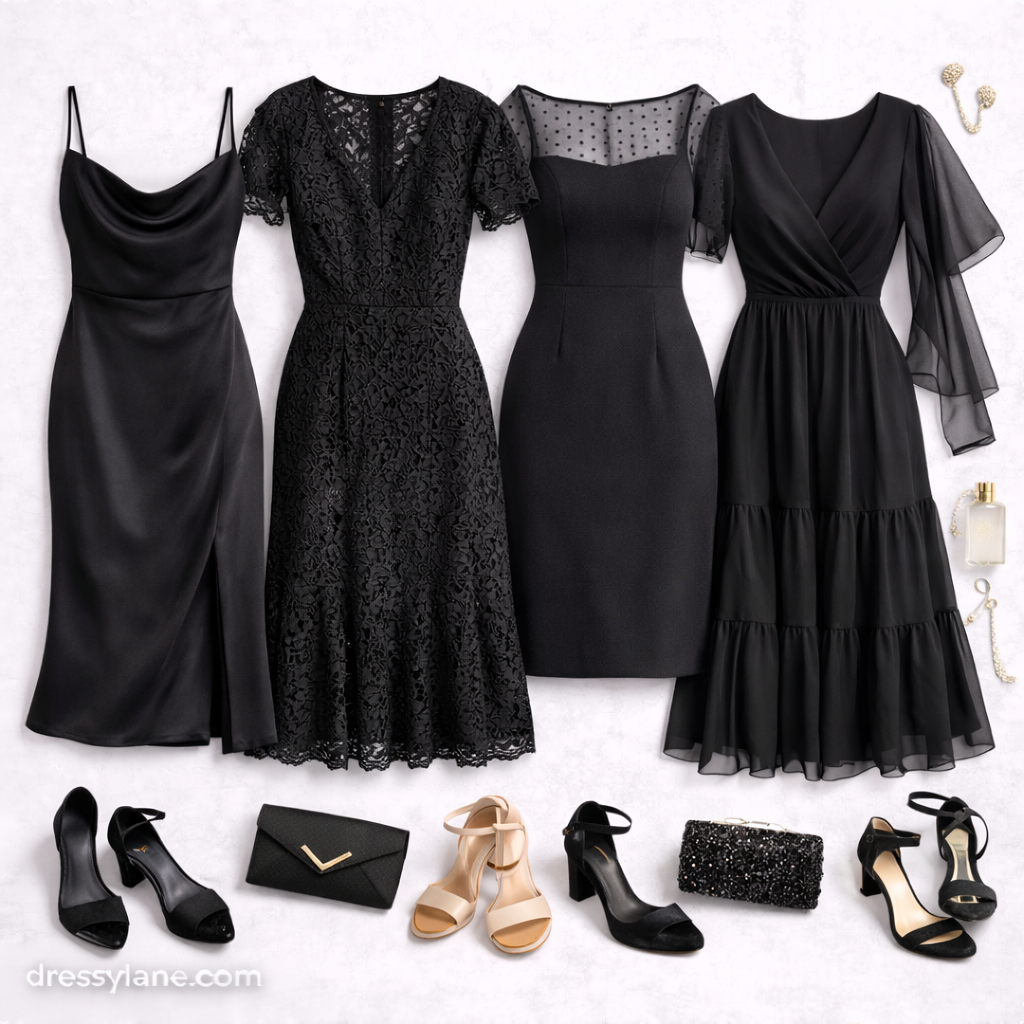
Black can look elegant and wedding-appropriate with the right styling.
Choose the Right Silhouette
- Midi or floor-length dresses
- Structured or flowing styles
- Avoid overly tight or revealing cuts
Add Soft or Festive Elements
- Metallic or colorful accessories
- Elegant jewelry
- Textured fabrics like lace, satin, or chiffon
Balance the Look
- Pair black dresses with lighter shoes or bags
- Add warmth with makeup or hair styling
- Avoid funeral-style minimalism
Black should feel celebratory, not severe.
How Men Can Wear Black to a Wedding
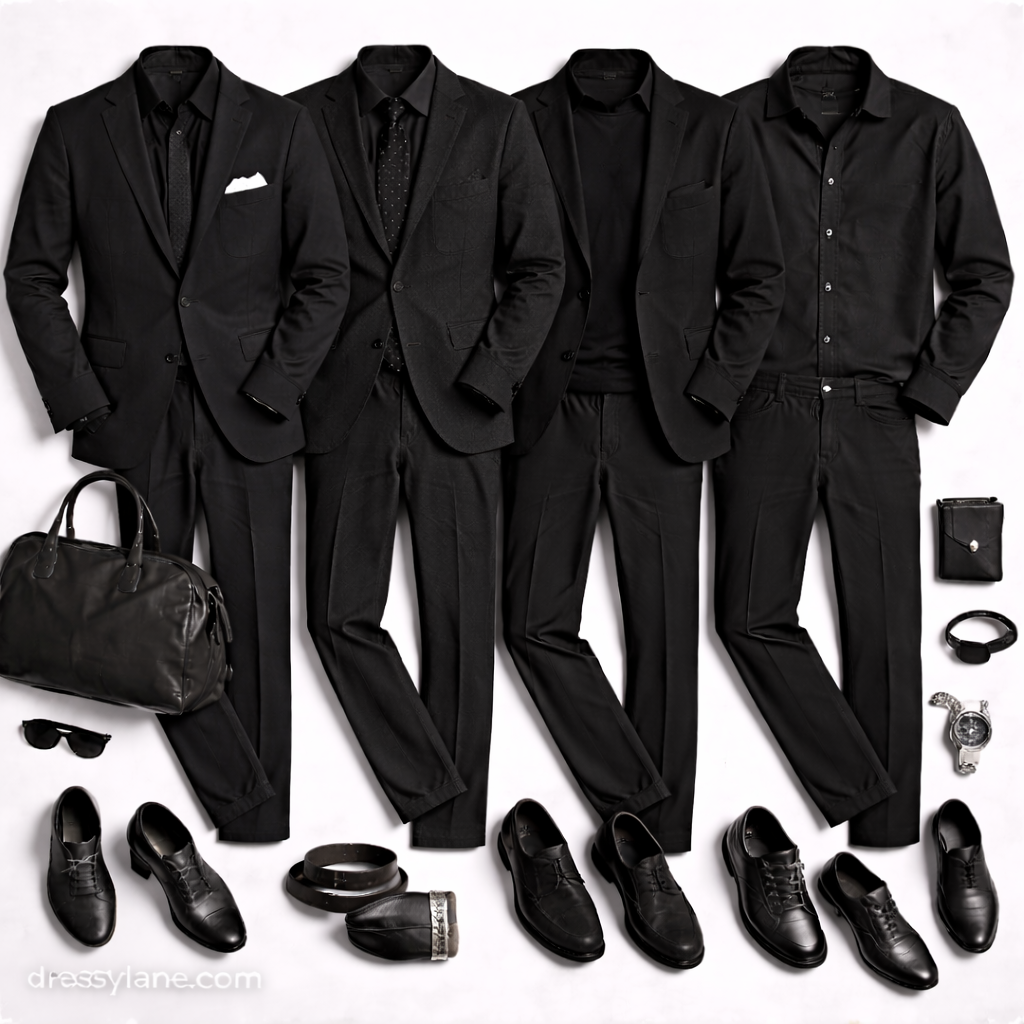
Men can wear black comfortably in many wedding settings.
Appropriate Black Options for Men
- Black suits for formal or evening weddings
- Black blazers paired with lighter shirts
- Black trousers styled with contrast pieces
Styling Tips
- Pair black with white, ivory, or soft-toned shirts
- Use polished shoes and a well-fitted jacket
- Avoid all-black outfits unless the wedding is black-tie
Contrast and fit keep black looking intentional.
Fabrics and Details That Make Black Wedding-Appropriate
Fabric choice matters just as much as color.
Good fabric options include:
- Satin
- Crepe
- Chiffon
- Velvet (especially for winter weddings)
- Fine wool blends
Avoid flat, matte fabrics that feel too serious or casual.
Seasonal Considerations for Wearing Black
Black works better in some seasons than others.
Fall and Winter Weddings
- Black is widely accepted
- Pair with rich textures and layers
- Ideal for evening ceremonies
Spring and Summer Weddings
- Black can feel heavy
- Choose lighter fabrics and silhouettes
- Balance with bright or soft accessories
Cultural and Religious Considerations
Some cultures associate black strongly with mourning, while others embrace it as formal wear.
Before choosing black:
- Consider the couple’s background
- Check if there are cultural guidelines
- When unsure, choose a softer dark color instead
Respect always comes first.
Common Mistakes When Wearing Black to a Wedding
Avoid these pitfalls:
- Dressing too minimally or starkly
- Wearing casual black clothing
- Choosing outfits that resemble funeral attire
- Ignoring the wedding’s formality level
Black should enhance the celebration, not distract from it.
Final Thoughts
So, can you wear black to a wedding? In most modern weddings, yes—when done thoughtfully. Black can be elegant, flattering, and appropriate when it matches the season, venue, and dress code.
By focusing on fit, fabric, and styling, both men and women can wear black to a wedding while still honoring the joy of the occasion.