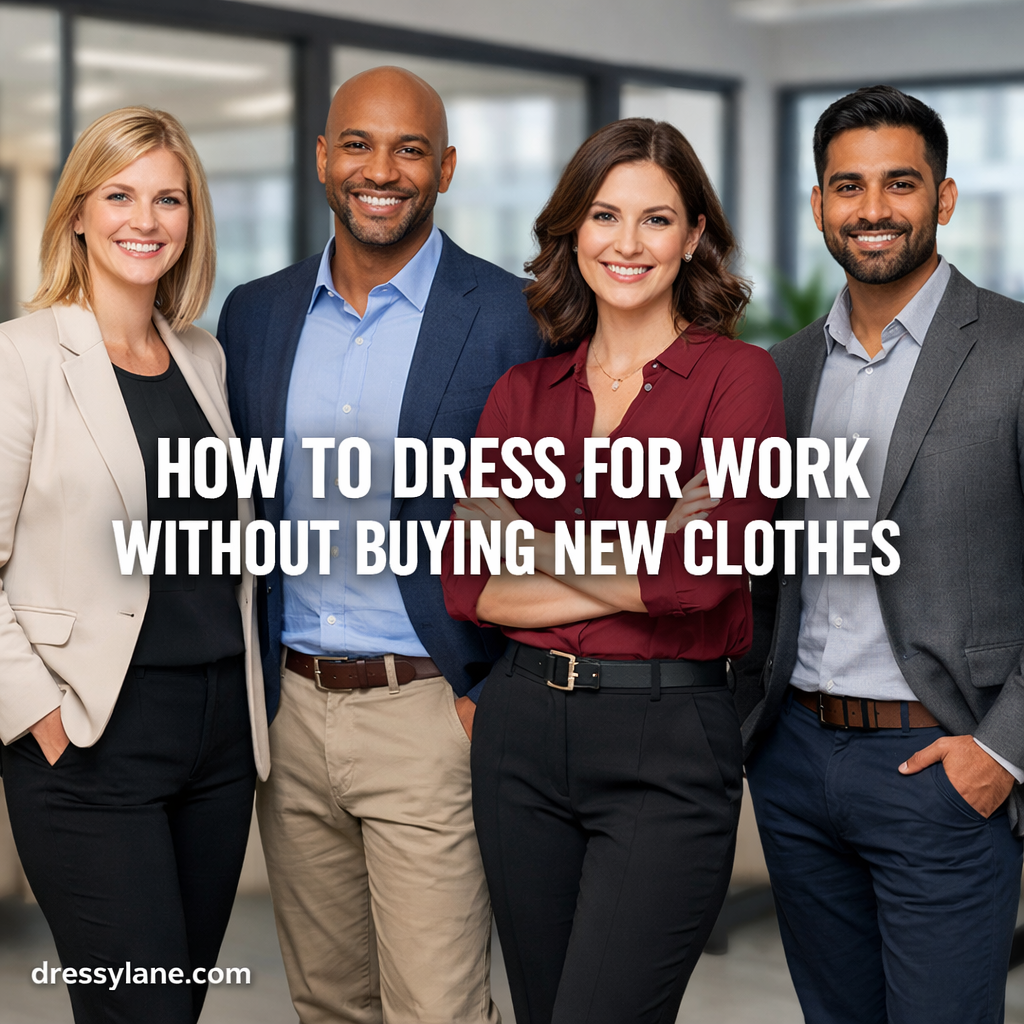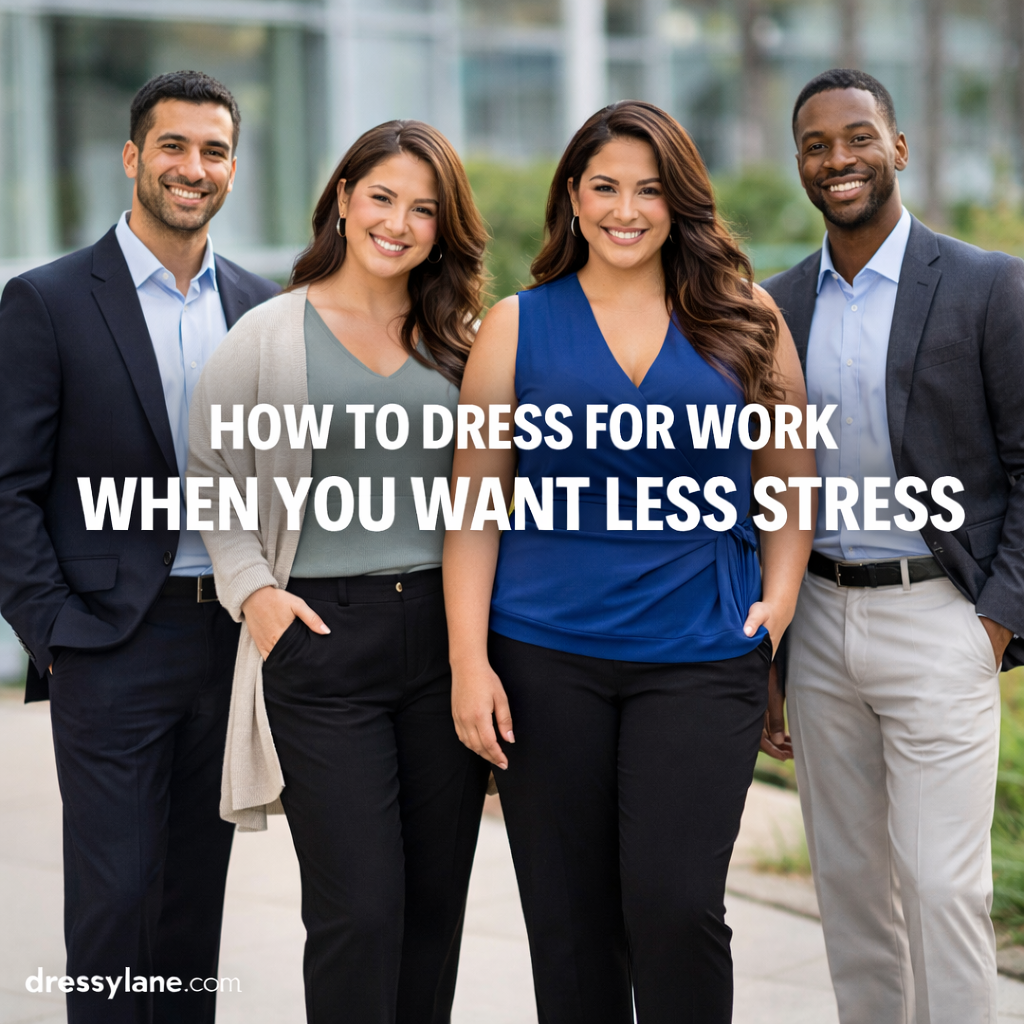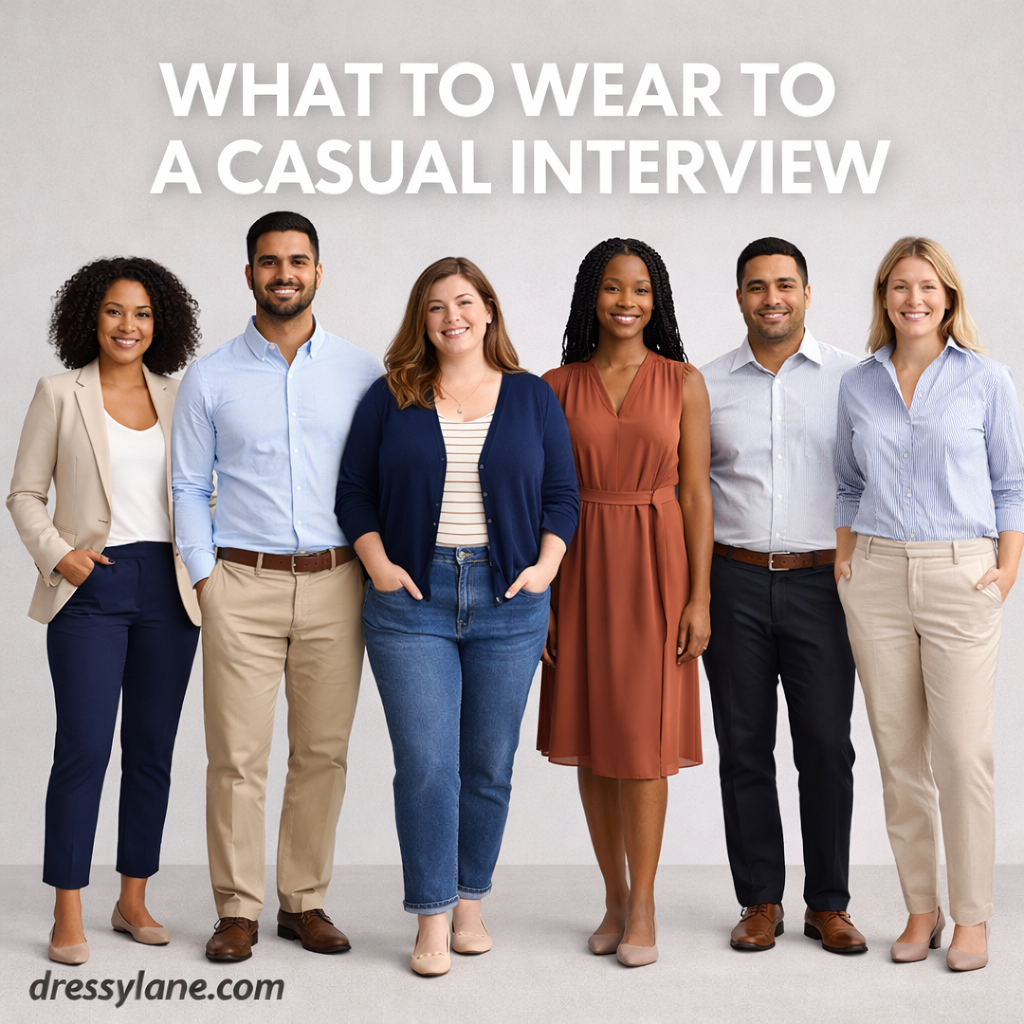
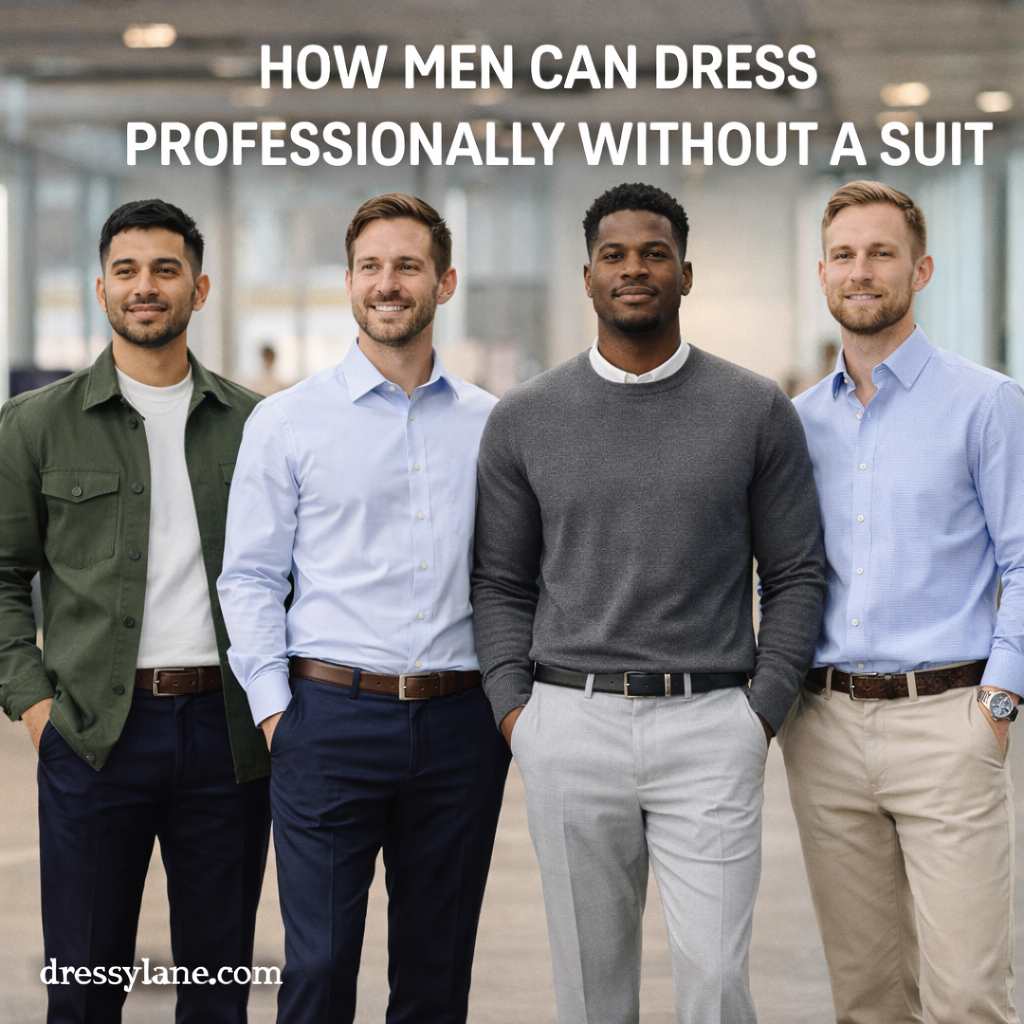
Not every professional environment requires a full suit and tie. In many modern workplaces, men are expected to look polished, competent, and intentional—without the rigidity of traditional formalwear.
Dressing professionally without a suit is about structure, fit, and smart coordination. This guide focuses exclusively on men and explains how to build professional outfits that feel confident, comfortable, and workplace-appropriate without relying on a suit.
What Professional Style Means Without a Suit
Professional dressing is less about specific garments and more about how your outfit presents you.
A professional non-suit look typically communicates:
- Reliability and competence
- Attention to detail
- Respect for the workplace
- Confidence without flashiness
If your outfit looks intentional and well-maintained, it will read as professional.
Core Principles of Suit-Free Professional Dressing for Men
Before choosing specific items, understand the fundamentals.
Non-Negotiable Style Rules
- Clothes must fit properly
- Colors should be neutral or muted
- Fabrics should look structured and clean
- Shoes should be polished and appropriate
Even simple outfits look professional when these basics are respected.
Essential Clothing Pieces Every Man Should Own
Building a professional wardrobe without a suit starts with versatile staples.
Professional Essentials
- Button-down shirts (white, light blue, soft patterns)
- Tailored chinos or dress trousers
- Knit polos or fine-gauge sweaters
- Structured overshirts or lightweight jackets
- Leather belts and classic shoes
These items mix easily and work across many business settings.
Professional Outfit Ideas for Men Without a Suit
You don’t need many pieces—just the right combinations.
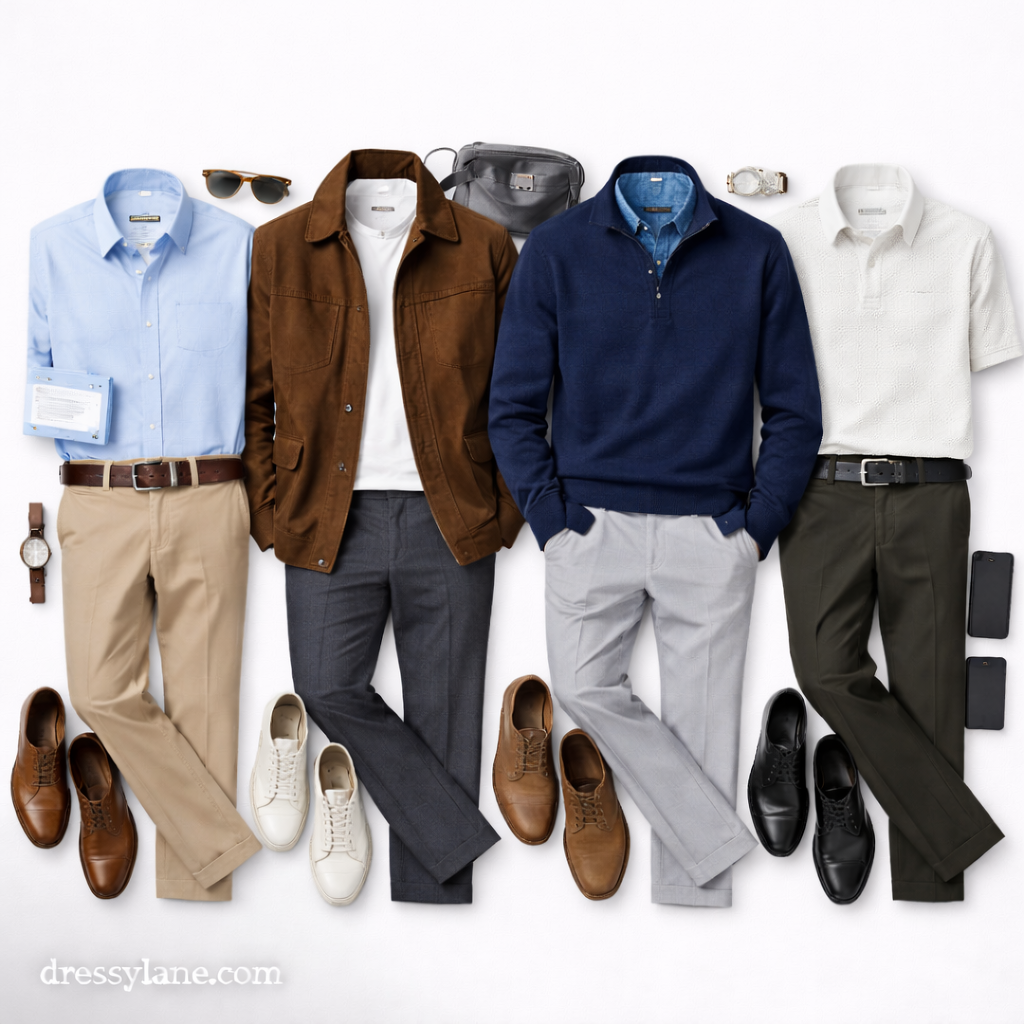
Smart Outfit Combinations
- Button-down shirt with tailored chinos and leather loafers
- Knit polo paired with dress pants and minimalist shoes
- Sweater layered over a collared shirt with clean trousers
- Structured overshirt with a neutral shirt and polished shoes
Stick to clean lines and avoid unnecessary layering.
Choosing the Right Colors for a Polished Look
Color plays a major role in how professional your outfit appears.
Safe, Professional Color Choices
- Navy
- Gray
- Beige
- Olive
- White and soft blues
Limit outfits to two or three colors to maintain a clean appearance.
Shoes That Look Professional Without a Suit
Footwear often determines whether an outfit feels professional or casual.
Best Shoe Options
- Leather loafers
- Derby or Oxford shoes
- Chelsea boots in professional offices
- Minimal leather sneakers (only if workplace allows)
Shoes should always be clean and in good condition.
Grooming Matters More Without a Suit
When you remove the suit, grooming becomes even more important.
Grooming Basics
- Neatly styled hair
- Trimmed facial hair
- Clean nails
- Ironed, wrinkle-free clothing
A well-groomed appearance reinforces professionalism instantly.
Fabrics That Elevate Suit-Free Outfits
Fabric choice affects how refined your outfit looks.
Best Fabrics for Professional Settings
- Cotton twill
- Wool blends
- Structured knits
- Performance fabrics designed for workwear
Avoid overly thin or casual materials that lose shape easily.
Common Mistakes to Avoid
Suit-free doesn’t mean casual.
What Undermines Professionalism
- Wrinkled shirts
- Athletic shoes
- Distressed or casual denim
- Loud patterns or logos
- Poorly fitting pants
These details quickly shift an outfit out of professional territory.
When Dressing Without a Suit Works Best
Suit-free professional attire is ideal for:
- Business casual offices
- Tech and startup environments
- Creative industries
- Daily office wear
- Informal client meetings
Always consider your workplace culture before dressing down.
Final Thoughts
Men can dress professionally without a suit by focusing on fit, structure, and simplicity. Clean lines, neutral colors, polished shoes, and good grooming do far more for your professional image than a jacket alone.
Professionalism isn’t about wearing more—it’s about wearing better.